






 Philippines
Metro Manila
San Juan City informal settlers relocate to give way to flood control project
Philippines
Metro Manila
San Juan City informal settlers relocate to give way to flood control project
San Juan City informal settlers relocate to give way to flood control project


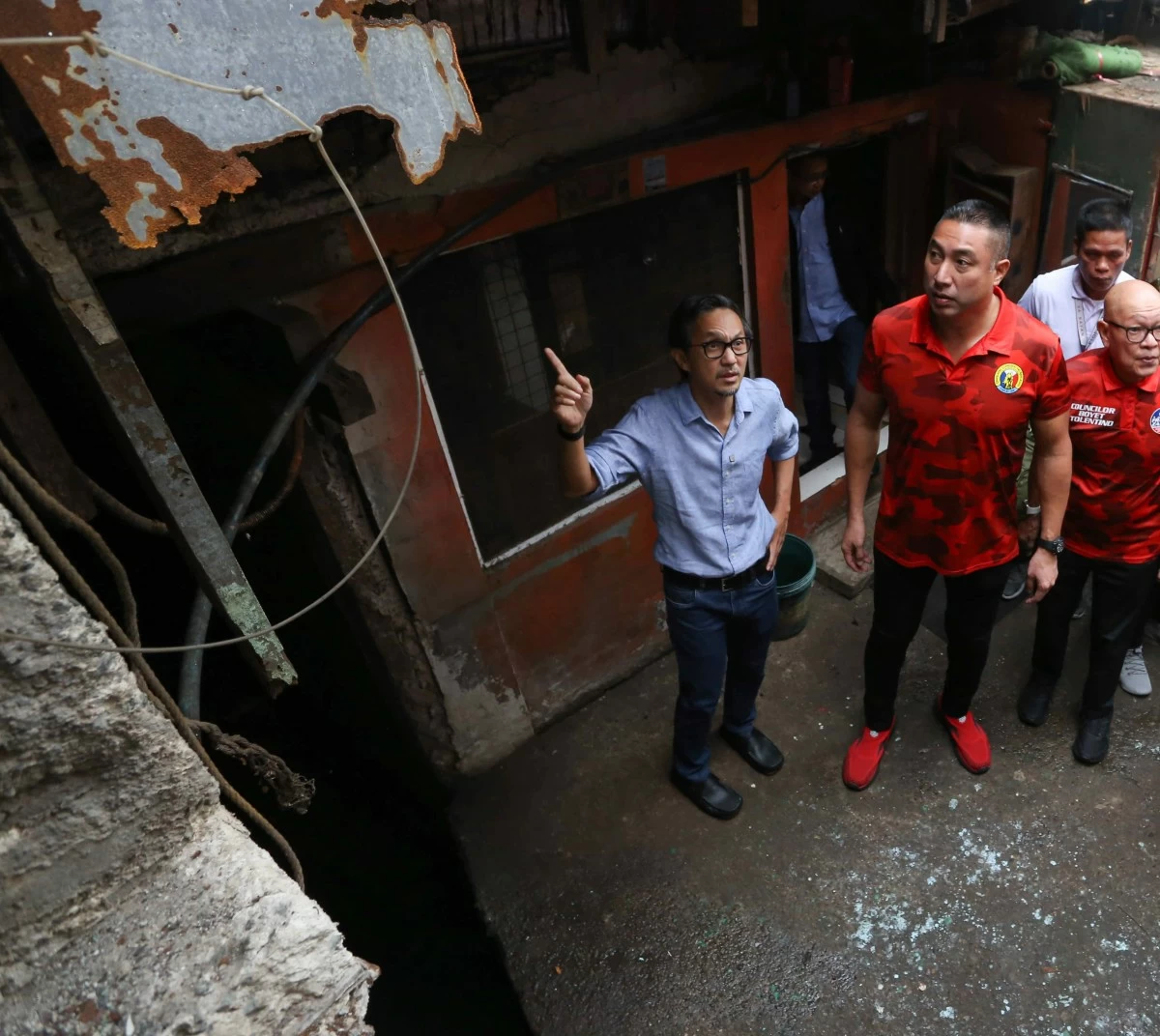
Several families living on top of a major drainage line on San Venancio Street in Barangay San Perfecto, San Juan City voluntarily relocated to newly-built housing units created by the Department of Human Settlements and Urban Development (DHSUD) on Wednesday, Dec. 3, to give way to the ongoing Oplan Kontra Baha program launched by the national government to mitigate flooding in Metro Manila.
San Juan City Mayor Francis Zamora and Department of Public Works and Highways (DPWH) Secretary Vince Dizon witnessed the voluntary clearing of eight residential structures built by the informal settler families (ISFs) along the drainage line.
"The eight families occupying these structures voluntarily agreed to vacate the site after it was determined that their houses obstructed rainwater flow, significantly contributing to flooding during heavy rains," Zamora said.
Under his directive, the families have been transferred to prefabricated housing units at the staging area in Barangay Batis, where they will occupy these units rent-free, paying for just electricity and water.
Each 15-square-meter temporary housing unit is equipped with its own toilet and bath and a provision for a kitchen.
The housing units were inaugurated last Nov. 18. A total of 110 units were turned over by the city government to residents who lost their homes in a fire that hit Barangay Batis last April 16. 2024.
During the inspection, Dizon stressed that the relocation of the ISFs does not just help mitigate flooding in San Juan City but also ensures the families' safety in times of heavy rains and flooding.
“Humihingi tayo ng paumanhin doon sa mga pamilya, pero para sa ikabubuti ng community na binabaha. Nagpapasalamat din tayo sa kanila, at nandito si Mayor Francis para bigyan sila ng temporary na tirahan at later on permanenteng tirahan (We apologize to the families, but it is for the greater good of the community that is being flooded. We are also grateful to them for voluntarily relocating, and to Mayor Francis for providing them with temporary housing and later on permanent housing)," Dizon said.
According to the mayor, the residents have expressed gratitude for the alternative housing provided by the city government, noting that the clearing of structures above the drainage system is a crucial step toward easing the persistent flooding in San Venancio Street.
"As one of the lowest-lying catchment areas in San Juan City, San Venancio Street is highly susceptible to flooding; with the removal of obstructions, the community is hopeful that floodwaters will now recede more quickly during heavy rainfall," he noted.
Oplan Kontra Baha
Oplan Kontra Baha is considered the most synchronized flood control master plan the National Capital Region (NCR) has ever undertaken.
Under the program, concerned national and local agencies, as well as the private sector, will restore waterways, revive long-buried rivers, and repair clogged drainage systems with the aim to remove four million cubic meters of silt and waste, clear 142.4 kilometers of rivers, creeks, and esteros, and restore 333 kilometers of drainage networks.
"The initial phase alone can reduce flooding by up to 60 percent within nine months of continuous dredging, followed by sustained annual funding to secure long-term results," Zamora said.
"The program will also remove obstructions that block the natural flow of water, including structures built along rivers and creeks even if they are DPWH-funded for as long as LGUs declare them as nuisance infrastructure projects. We will do this responsibly. Families whose houses are blocking drainage systems will be relocated and will receive proper housing and livelihood support. Protecting our waterways must go hand in hand with protecting our people," he added.
The initiative will also strengthen NCR's solid waste management system by converting garbage collected in the region's waterways into energy with the help of private sector partners to establish modern waste-to-energy facilities.
"These facilities will reduce landfill waste, keep trash out of waterways, and support our long-term goal of cleaner and healthier cities," the mayor noted.