






Manila Bulletin
 Philippines
National
PH allies cites community-driven security in safeguarding West Philippine Sea
Philippines
National
PH allies cites community-driven security in safeguarding West Philippine Sea
Philippines
National
PH allies cites community-driven security in safeguarding West Philippine Sea
PH allies cites community-driven security in safeguarding West Philippine Sea
Published Dec 3, 2025 04:03 pm


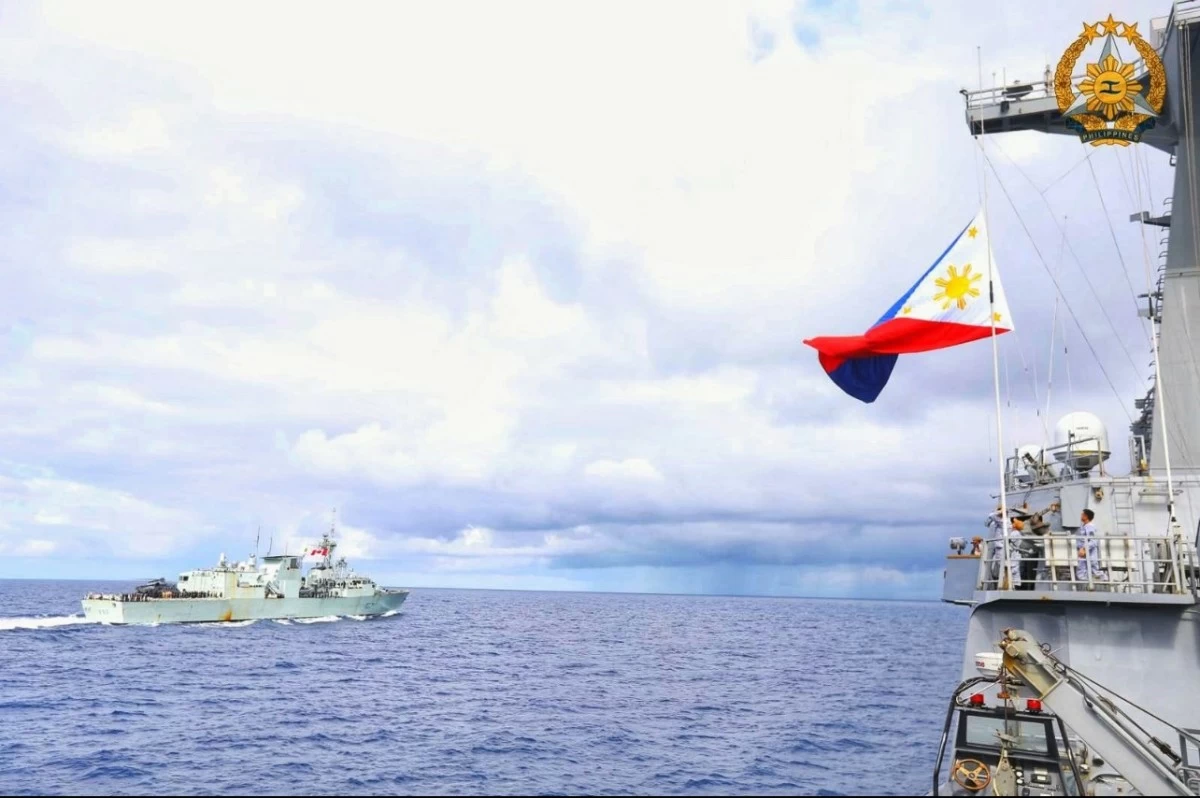
(Photo courtesy of Armed Forces of the Philippines)
Key international partners of the Philippines have reinforced their commitment to collective security, rule of law, and stronger community-based monitoring in the West Philippine Sea.
During the Stratbase Institute’s “Eyes on the Sea: Community-Based Maritime Monitoring and Reporting in the West Philippine Sea” forum, the international community reiterated their support to the country in improving its maritime capabilities amid maritime challenges.
Australian Ambassador Marc Innes-Brown highlighted the depth of strategic cooperation between Australia and the Philippines, describing the friendship of the two countries as “enduring.”
“Australia remains steadfastly committed to working with the Philippines and the region to improve maritime capabilities and oversight, uphold international law and contribute to our
collective security and prosperity for the years to come,” he shared.
This, as Ines-Brown announced the two countries' plans next year.
“In early 2026… the Embassy will officially launch the next phase of Australia's civil maritime investment in the Philippines, with a double funding allocation of $18 million… This investment will retain strong focus on equipment, capacity building systems and exchange and scholarship opportunities,” he said.
New Zealand Ambassador Catherine McIntosh also underscored regional cooperation, stating “no country can address maritime challenges on its own."
McIntosh stressed that New Zealand is working with regional partners to strengthen maritime safety, environmental protection, and long-term governance.
“Modern maritime domain awareness tools, including IORIS and Starboard, are helping New Zealand and its partners detect threats, coordinate operations, and strengthen regional security through shared information systems,” McIntosh shared.
Meanwhile, Vietnamese Ambassador Lai Thai Binh reaffirmed peaceful but resolute action, stressing that “Vietnam is committed to resolving South China Sea issues peacefully in accordance with international law, while firmly defending its sovereignty and sovereign rights.”
He highlighted the importance of local engagement, saying "community-based monitoring is central to Vietnam’s maritime awareness efforts, empowering local fishers and coastal residents to report illegal activities and contribute to national databases that guide policy."
"Vietnam values regional cooperation, believing that shared training, digital platforms, and coordinated responses are essential to strengthening resilience and ensuring the sea remains a source of prosperity,” he added.
Stratbase Institute President Prof. Victor Andres “Dindo” Manhit underscored the public mandate for action, citing that “72 percent of Filipinos want the government to protect our country’s territory and marine resources, as well as the rights of people and fishing communities. We always say we put a human face for our policy.”
“Our interest, I think, must be to defend what's ours, to protect our seas, to protect our archipelagic sea lanes, our archipelagic nation... People think it's simply about transparency. But it's putting a light on what is happening,” Manhit explained.
“I care about the Filipino people defining what is ours—and that is the West Philippine Sea... I speak of protecting our seas; I speak of what I call comprehensive maritime governance. Governance that is based and that has a role for the public sector. There's a role for the private sector, the non-governmental organizations, academics, and civil society," Manhit added.
"And there's also a role for the international community,” he also said.
Regina Burns MacKenzie, Director of the US Embassy’s Regional Foreign Assistance Section, emphasized the importance of maritime resilience.
“We believe maritime security is fundamental to national resilience. It shapes economic stability, food systems, and the rules-based order that underpins peace and prosperity in the Indo-Pacific region,” she said.
MacKenzie also highlighted the long-term impact of community-based reporting.
“By advancing the capacity of coastal communities to report illegal activity, the Philippines expands its maritime visibility and improves its ability to deter threats,” she said.
“When maritime spaces are secure, communities are more stable, markets function predictably, and nations can pursue long-term development grounded in transparency and international law,” she added.
PH's steady stand on WPS keep the region stable
Civic leader Jose Antonio Goitia stressed that the country's stand in the West Philippine Sea has taken on greater meaning.
"The Philippines is not just defending a claim. We are helping defend the principle that the strong cannot simply overrun the rights of the smaller," Goitia said, adding that the country's maritime position “must be guided by law, clarity, and the dignity of the Filipino people — never by fear.”
Goitia cited a new international think tank report which has placed the Philippines at the heart of a growing global concern.
"The think tank explains that because China is pushing well beyond its borders, the Philippines has become a stabilizing presence. When we insist on the 2016 Arbitral Ruling and refuse to adjust our claims just to appease Beijing, we help maintain balance in the region," Goitia said.
"If we waver, uncertainty spreads. If we stand firm, it steadies the neighborhood," he added.
"When a country grounded in truth refuses to bend to pressure, the message goes far beyond its own shores," he further said.
He also noted that "strength is not always loud. Sometimes it is found in a country that knows what is right and stays the course."