






Manila Bulletin
 Business
Trade & Industry
Government turns to 'Tatak Pinoy' push to revive slumping manufacturing sector
Business
Trade & Industry
Government turns to 'Tatak Pinoy' push to revive slumping manufacturing sector
Business
Trade & Industry
Government turns to 'Tatak Pinoy' push to revive slumping manufacturing sector
Government turns to 'Tatak Pinoy' push to revive slumping manufacturing sector
Published Dec 3, 2025 12:32 pm
|
Updated Dec 3, 2025 01:14 pm


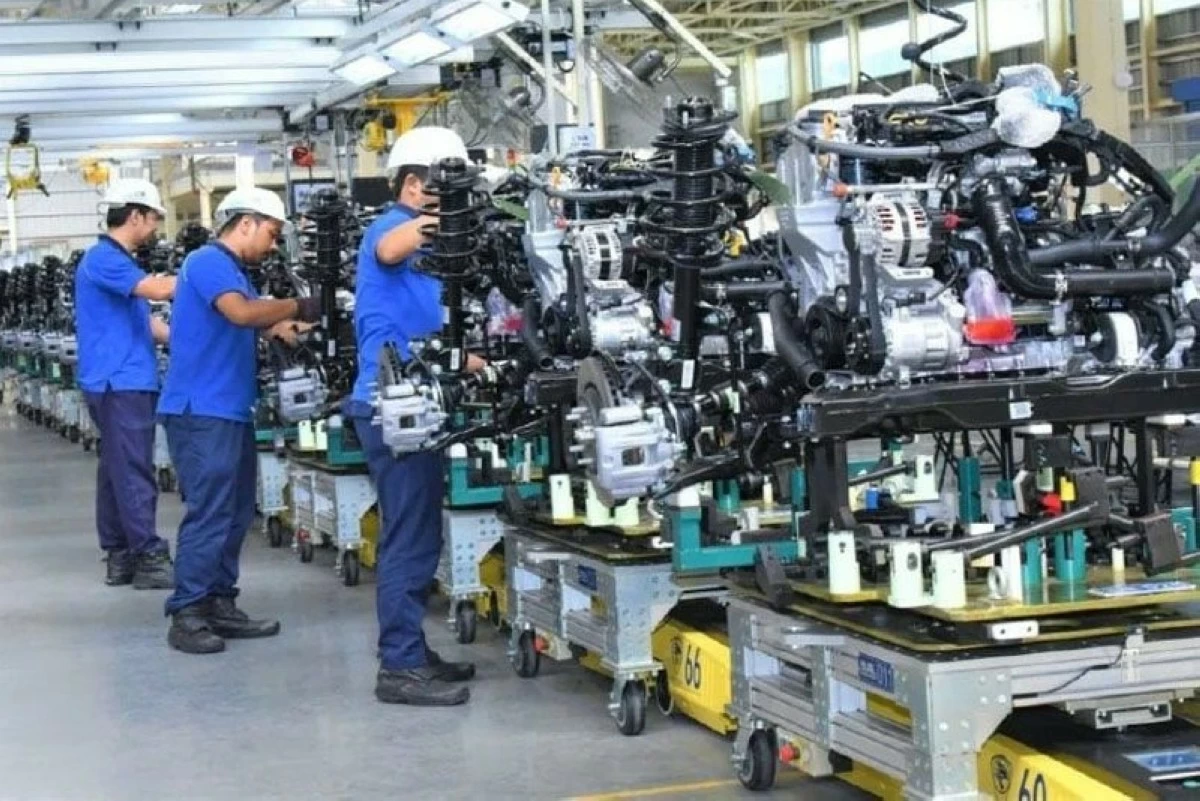
The government will ramp up the procurement of locally made goods, as embodied under the Tatak Pinoy Strategy (TPS), to breathe new life into the manufacturing sector, which slumped to an over-four-year low last month.
Under Republic Act (RA) No. 11981 or the Tatak Pinoy Act, TPS outlines the multiyear roadmap to empower domestic manufacturers to compete in the global market.
Central to this effort is the mandated domestic preference in government procurement, where preference and priority shall be given to local products and services.
Under the strategy, local firms can be awarded contracts even if the bid is up to 25-percent higher than the lowest foreign bid.
Trade Secretary Cristina Roque said this provides a focused path to boost productivity in the manufacturing sector, while strengthening competitiveness and charting the path toward a more inclusive and future-ready economy.
“We are using the power of public spending to fuel innovation, strengthen our supply chain, and ensure that progress begins at home,” said Roque.
Department of Economy, Planning, and Development (DEPDev) Undersecretary Rosemarie Edillon said TPS could be the government’s response to the sharp decline in manufacturing.
“We were all concerned that the manufacturing PMI [purchasing managers’ index] has gone down. But thankfully, we have [TPS]. And one of the pillars that we know is the government procurement,” said Edillon.
S&P Global earlier reported that the country’s manufacturing PMI slipped to 47.4 in November, the worst performance since August 2021.
PMI is a barometer of manufacturing activity, with a reading below 50 indicating contraction and a reading above 50 signaling expansion.
“The government delivers a lot of public goods and public services, and most of these can make use of locally produced products,” noted Edillon.
Edillon said the government could tap locally made goods for a wide range of programs, including supplementary feeding, healthcare, and education.
Philippine Chamber of Commerce and Industry (PCCI) vice president for trade facilitation Bryan Ang said the private sector welcomes the government’s move to procure more goods locally.
“We want the government to spend as much as it is capable of spending in an efficient way. When government spending is down, consumer demand goes down,” said Ang.
“Next year, we hope government spending is up, but it is spent wisely and efficiently,” he added.
Ang, however, stressed that government procurement alone is not enough to boost local manufacturing as he pushed for more support to strengthen the competitiveness of businesses.
He said the Department of Trade and Industry (DTI) could consider imposing temporary safeguard duties on imported goods to prevent further harm to local products.
“The DTI has been doing that for the cement industry, they can expand this to other local industries,” he said.
The DTI earlier adopted the recommended measures of the Tariff Commission (TC) to slap a safeguard duty of ₱14 per 40-kilogram (kg) bag, or ₱349 per metric ton (MT), of ordinary Portland cement type 1 and blended cement for a period of three years.
This comes after the agency found a causal link between the increased imports of cement products and the serious injury to the domestic industry, which was later confirmed by the TC.
Ang also said that the government may temporarily suspend the 12-percent value-added tax (VAT) on electricity sales to lower power costs.
“If you want to help the manufacturing sector, electricity is one of the main inputs. And to suspend this temporarily, I think will help a lot of our manufacturers,” he added.