

ADVERTISEMENT

Filipino talent in demand as Finland braces for labor shortage by 2040

Published Dec 3, 2025 05:09 pm

At A Glance

  • Finland faces a looming labor shortage, with nearly half of its workforce set to retire by 2040.
  • Strong demand exists for Filipino professionals in healthcare, industrial technology, and emerging tech.
  • Hiring of Filipino workers typically takes two to three months, depending on immigration processing.
  • Ethical recruitment is emphasized, with all companies complying with Department of Migrant Workers regulations.
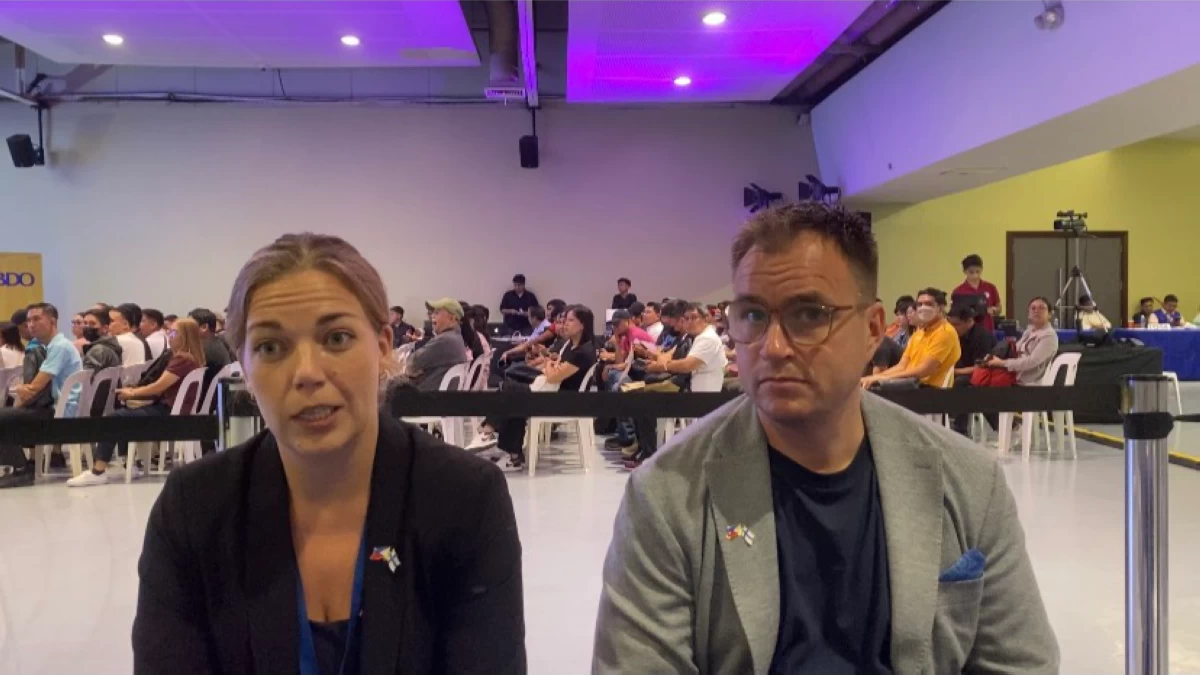
Rebekka Kiljunen, Partnership Director at Bondata, and Joonas Halla, Business Development Manager at Business Finland, during a one-on-one interview with Manila Bulletin on December 3, 2025, at the Megatrade Hall, SM Megamall (Mega B), Mandaluyong City. (Trixee Rosel/Manila Bulletin)
Finland is turning to the Philippines to fill a looming labor shortage, as nearly half of its workforce will retire by 2040, and demand for Filipino professionals in healthcare, industrial technology, and emerging tech sectors remains high.
Business Finland’s Joonas Halla and Bondata Partnership Director Rebekka Kiljunen said during the Philippines–Finland Friendship Week that the Nordic nation is facing an accelerating workforce crisis, one that cannot be filled solely by the local population.
Halla noted that Finland’s aging demographic is reshaping demand in healthcare, caregiving, industrial roles, and specialist fields such as ICT, quantum computing, and artificial intelligence.
Kiljunen described a “huge, huge” shortage of welders, CNC machinists, and technical workers across Finland.
She added that the healthcare sector will feel the pressure even sooner, as many staff are projected to retire within the next three to five years.
Finnish representatives confirmed sustained openings for practical nurses and professional caregivers beyond nursing, the traditionally familiar pathway for Filipinos.
They also said opportunities exist to advance into regulated roles depending on language proficiency and curriculum qualifications.
The officials noted that while some positions require Finnish, many employers still accept English-speaking applicants.
On the hiring process for Filipinos, Kiljunen said the realistic timeline from job offer to arrival in Finland ranges from two to three months, though this may vary depending on immigration processing beyond the country’s control.
Finnish officials emphasized that ethical recruitment remains central to their framework.
All companies operating in the Philippines strictly comply with the Department of Migrant Workers’ (DMW) regulations on fair hiring and worker protection.
Halla added that fairness, honesty, and equal treatment are core Finnish values.
This is why Filipino workers arrive with full work permits granting the same rights, obligations, and mobility as Finnish nationals, including freedom to travel within Europe and reunite with family.
To illustrate integration, Kiljunen shared that a worker she assisted in 2018 is now fluent in Finnish, holds a Finnish passport, and even became her neighbor.
While Finland projects a need for 1.3 million workers by 2040, officials said it remains difficult to quantify how many will come from international recruitment.
They confirmed, however, that the Philippines is currently Finland’s biggest source of foreign labor.
Finnish authorities also said discussions with the DMW are ongoing to strengthen government-to-government hiring frameworks.
A joint declaration of intent is already in place, and talks on a possible memorandum of understanding are underway.

Related Tags

Philippines Findland Filipino workers labor shortage DMW ethical recruitment
ADVERTISEMENT
.most-popular .layout-ratio{ padding-bottom: 79.13%; } @media (min-width: 768px) and (max-width: 1024px) { .widget-title { font-size: 15px !important; } }

{{ articles_filter_1561_widget.title }}

.most-popular .layout-ratio{ padding-bottom: 79.13%; } @media (min-width: 768px) and (max-width: 1024px) { .widget-title { font-size: 15px !important; } }

{{ articles_filter_1562_widget.title }}

.most-popular .layout-ratio{ padding-bottom: 79.13%; } @media (min-width: 768px) and (max-width: 1024px) { .widget-title { font-size: 15px !important; } }

{{ articles_filter_1563_widget.title }}

{{ articles_filter_1564_widget.title }}

.mb-article-details { position: relative; } .mb-article-details .article-body-preview, .mb-article-details .article-body-summary{ font-size: 17px; line-height: 30px; font-family: "Libre Caslon Text", serif; color: #000; } .mb-article-details .article-body-preview iframe , .mb-article-details .article-body-summary iframe{ width: 100%; margin: auto; } .read-more-background { background: linear-gradient(180deg, color(display-p3 1.000 1.000 1.000 / 0) 13.75%, color(display-p3 1.000 1.000 1.000 / 0.8) 30.79%, color(display-p3 1.000 1.000 1.000) 72.5%); position: absolute; height: 200px; width: 100%; bottom: 0; display: flex; justify-content: center; align-items: center; padding: 0; } .read-more-background a{ color: #000; } .read-more-btn { padding: 17px 45px; font-family: Inter; font-weight: 700; font-size: 18px; line-height: 16px; text-align: center; vertical-align: middle; border: 1px solid black; background-color: white; } .hidden { display: none; }
function initializeAllSwipers() { // Get all hidden inputs with cms_article_id document.querySelectorAll('[id^="cms_article_id_"]').forEach(function (input) { const cmsArticleId = input.value; const articleSelector = '#article-' + cmsArticleId + ' .body_images'; const swiperElement = document.querySelector(articleSelector); if (swiperElement && !swiperElement.classList.contains('swiper-initialized')) { new Swiper(articleSelector, { loop: true, pagination: false, navigation: { nextEl: '#article-' + cmsArticleId + ' .swiper-button-next', prevEl: '#article-' + cmsArticleId + ' .swiper-button-prev', }, }); } }); } setTimeout(initializeAllSwipers, 3000); const intersectionObserver = new IntersectionObserver( (entries) => { entries.forEach((entry) => { if (entry.isIntersecting) { const newUrl = entry.target.getAttribute("data-url"); if (newUrl) { history.pushState(null, null, newUrl); let article = entry.target; // Extract metadata const author = article.querySelector('.author-section').textContent.replace('By', '').trim(); const section = article.querySelector('.section-info ').textContent.replace(' ', ' '); const title = article.querySelector('.article-title h1').textContent; // Parse URL for Chartbeat path format const parsedUrl = new URL(newUrl, window.location.origin); const cleanUrl = parsedUrl.host + parsedUrl.pathname; // Update Chartbeat configuration if (typeof window._sf_async_config !== 'undefined') { window._sf_async_config.path = cleanUrl; window._sf_async_config.sections = section; window._sf_async_config.authors = author; } // Track virtual page view with Chartbeat if (typeof pSUPERFLY !== 'undefined' && typeof pSUPERFLY.virtualPage === 'function') { try { pSUPERFLY.virtualPage({ path: cleanUrl, title: title, sections: section, authors: author }); } catch (error) { console.error('ping error', error); } } // Optional: Update document title if (title && title !== document.title) { document.title = title; } } } }); }, { threshold: 0.1 } ); function showArticleBody(button) { const article = button.closest("article"); const summary = article.querySelector(".article-body-summary"); const body = article.querySelector(".article-body-preview"); const readMoreSection = article.querySelector(".read-more-background"); // Hide summary and read-more section summary.style.display = "none"; readMoreSection.style.display = "none"; // Show the full article body body.classList.remove("hidden"); } document.addEventListener("DOMContentLoaded", () => { let loadCount = 0; // Track how many times articles are loaded const offset = [1, 2, 3, 4, 5, 6, 7, 8, 9, 10]; // Offset values const currentUrl = window.location.pathname.substring(1); let isLoading = false; // Prevent multiple calls if (!currentUrl) { console.log("Current URL is invalid."); return; } const sentinel = document.getElementById("load-more-sentinel"); if (!sentinel) { console.log("Sentinel element not found."); return; } function isSentinelVisible() { const rect = sentinel.getBoundingClientRect(); return ( rect.top < window.innerHeight && rect.bottom >= 0 ); } function onScroll() { if (isLoading) return; if (isSentinelVisible()) { if (loadCount >= offset.length) { console.log("Maximum load attempts reached."); window.removeEventListener("scroll", onScroll); return; } isLoading = true; const currentOffset = offset[loadCount]; window.loadMoreItems().then(() => { let article = document.querySelector('#widget_1690 > div:nth-last-of-type(2) article'); intersectionObserver.observe(article) loadCount++; }).catch(error => { console.error("Error loading more items:", error); }).finally(() => { isLoading = false; }); } } window.addEventListener("scroll", onScroll); });

Sign up by email to receive news.