

ADVERTISEMENT

A closer look at Avel Bacudio's 'Laro ng Lahi' design for PH team at 2025 SEA Games

The Philippine team's uniform is all about recapturing the joy of play and empowering

Published Dec 3, 2025 10:34 pm
Photos by Gerald Pingol courtesy of Avel Bacudio's team
For its 33rd edition, the Southeast Asian (SEA) Games is heading to Thailand, drawing the region’s gaze to Bangkok and Chonburi as athletes compete in various multi-sport events from Dec. 9 to 20, 2025. As excitement continues to build for Filipino sports fans, Avel Bacudio gives them another reason to look forward to this year’s games.
The Filipino designer hailed from Camarines Sur recently unveiled his creations for the Philippine team. Dubbed “Laro ng Lahi,” the collection will be worn by Filipino athletes and officials from the Philippine Olympic Committee (POC) and Philippine Sports Commission (PSC) during the opening ceremony on Dec. 9 at the Rajamangala National Stadium in Bangkok.
Avel joined forces with POC president Abraham Tolentino to create a design that aims to achieve two goals: helping the Philippines’ elite athletes bring home gold while empowering and sustaining communities of Filipino artisans nationwide. Here’s what you need to know about the “Laro ng Lahi” collection:
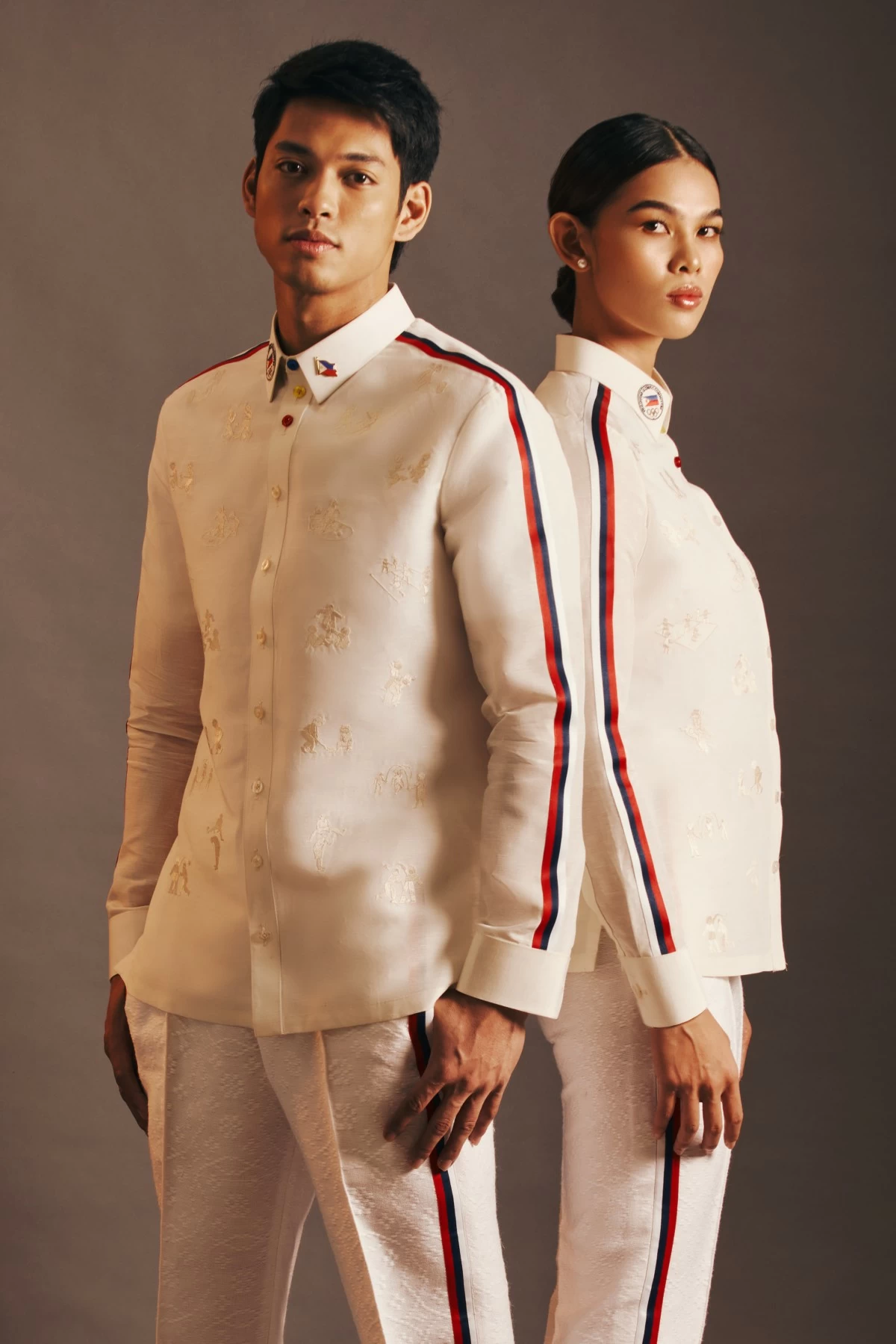
1. A reimagination of the Barong Tagalog
Avel looked to the timeless Barong Tagalog as the canvas for the collection. He modernized it through piñavel, a textile he developed with the Department of Science and Technology–Philippine Textile Research Institute (DOST-PTRI). It features a blend of indigenous fibers—bamboo, pineapple, abaca, banana, and water hyacinth. The result is a barong that’s featherlight and resilient but still captures the essence of the Filipino garment.
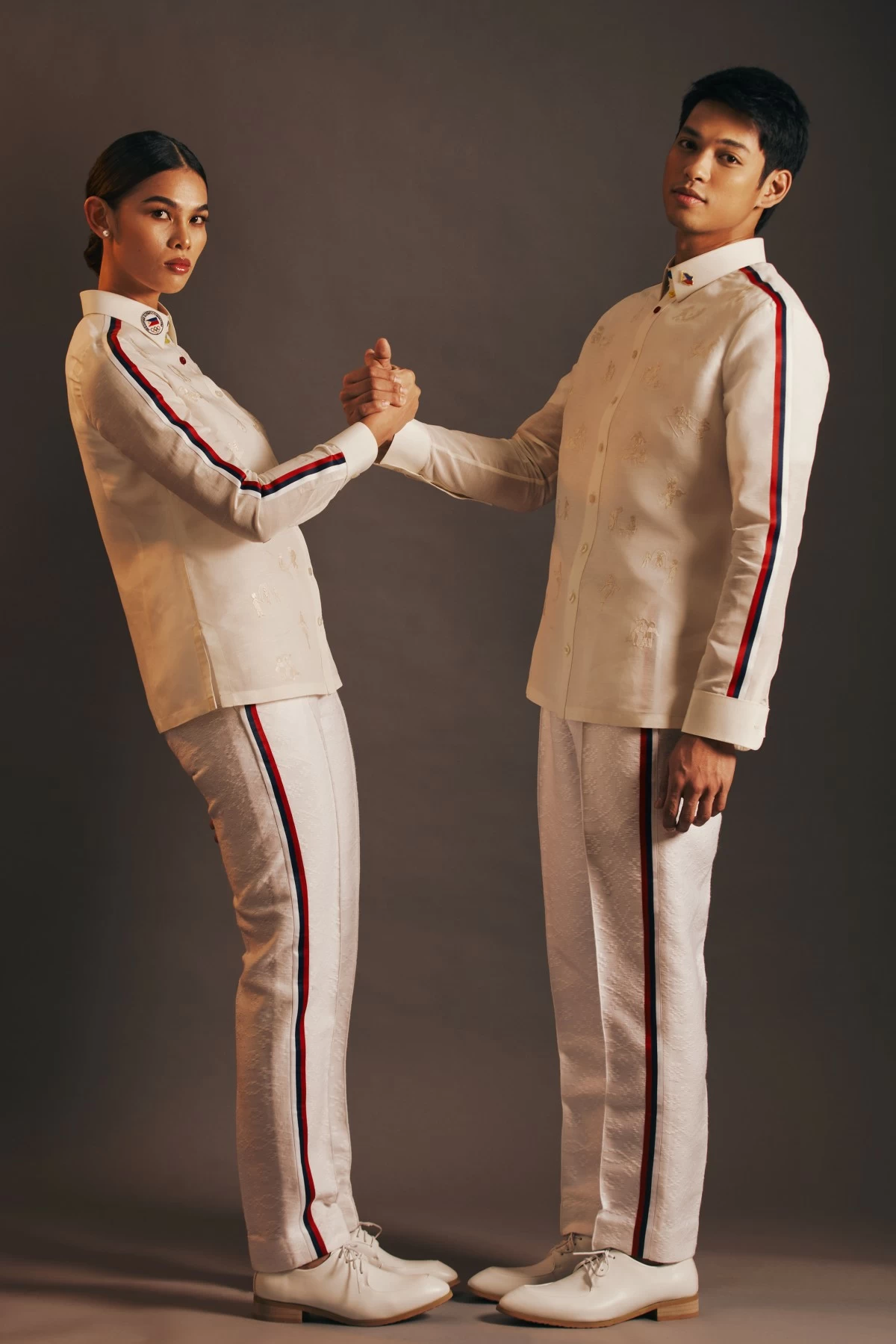
2. An ode to traditional Filipino games
As its name suggests, “Laro ng Lahi” is rooted in beloved Filipino games that shaped the childhood of many Filipinos. The garments feature intricate embroidery inspired by games such as tumbang preso, trumpo, luksong baka, yoyo, luksong tinik, patintero, piko, luksong lubid, sipa, luksong kalabaw, and syato.
3. Texture play on trousers
The trousers ground the collection with a profound respect for regional weaving traditions. They showcase an elegant interplay of textures, blending the charm of trambia (a traditional woven kumot from La Union) with resilient poly-piña, a combination of pineapple fiber (piña) and polyester.
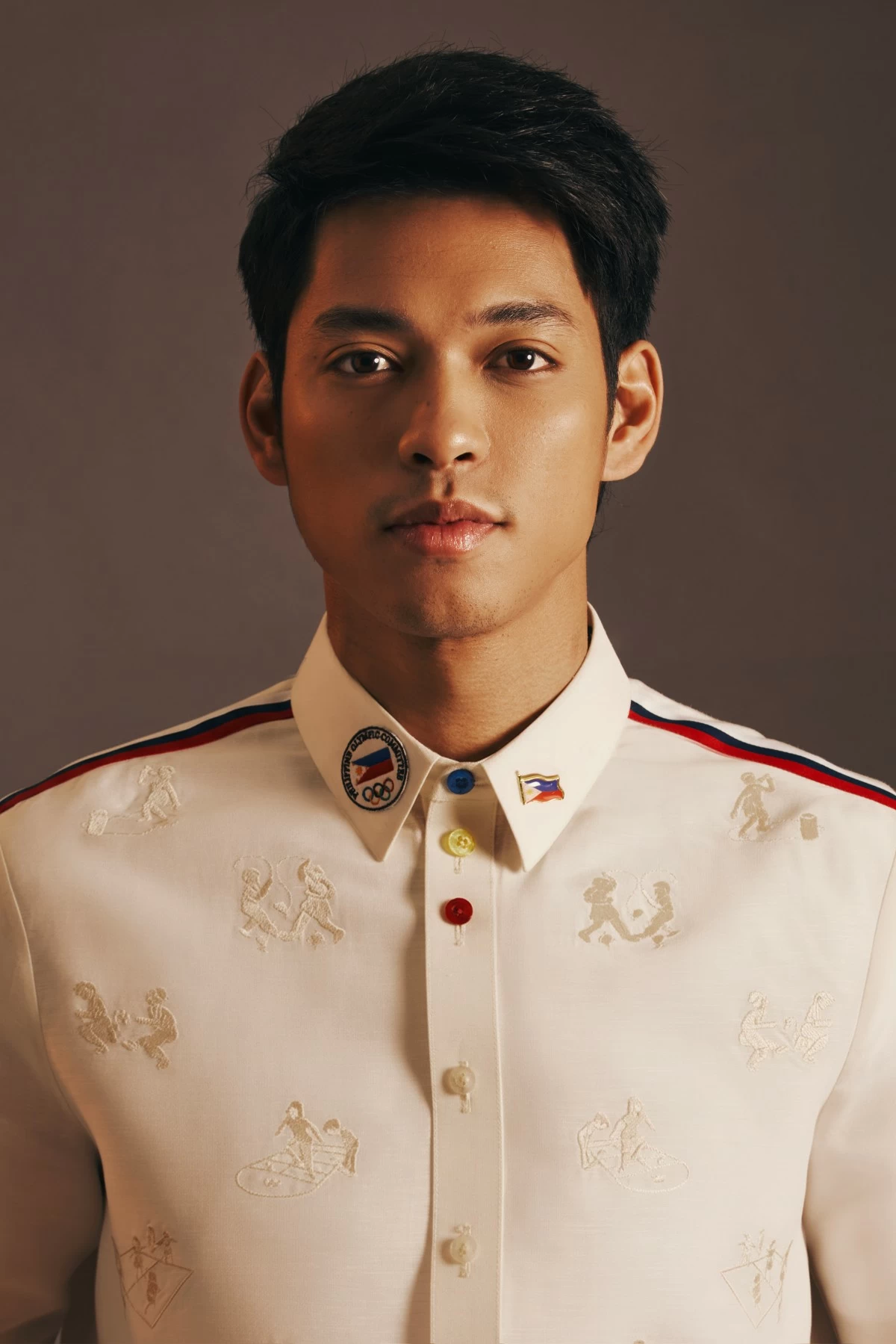
4. Colors of the Philippine flag
“Laro ng Lahi” also incorporates the colors of the Philippine flag. Each barong and pair of trousers is finished with tricolor trimming. The hues are also visible on the first three buttons of the Philippine team’s barong.
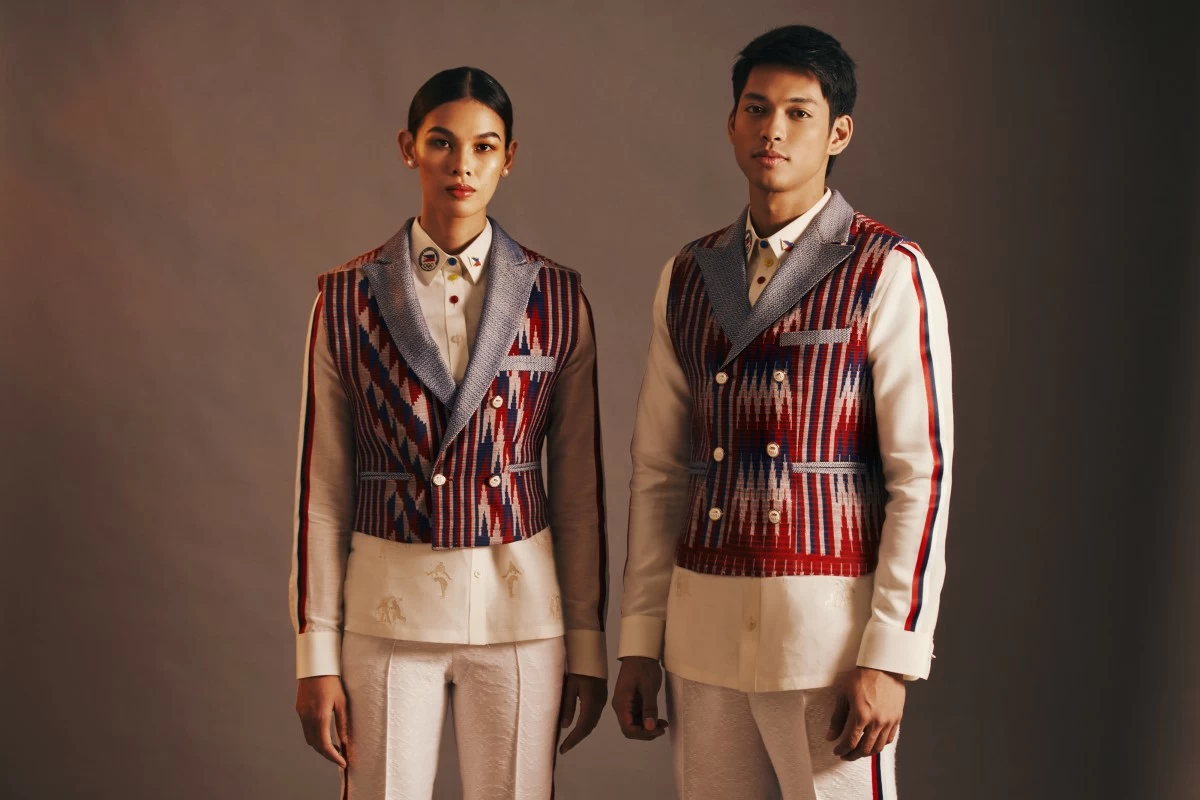
5. A layer of tradition
Completing the collection is an additional layer of heritage. The uniform’s vest features intricately woven fabric sourced directly from local Filipino artisans. According to Avel, the piece serves as a tactile connection to the hands that shaped Filipino culture, wrapping athletes in the literal fabric of the nation’s artistry and resilience.
For Avel, his latest creation is more than fashion. It is a “it is a meticulously crafted textile manifesto, marrying the soul of Filipino heritage with cutting-edge scientific innovation, all in pursuit of Olympic glory.”
“They are wearing their culture, their future, and their ambition for gold,” Avel concludes.

Related Tags

fashion and beauty SEA Games Avel Bacudio
ADVERTISEMENT
.most-popular .layout-ratio{ padding-bottom: 79.13%; } @media (min-width: 768px) and (max-width: 1024px) { .widget-title { font-size: 15px !important; } }

{{ articles_filter_1561_widget.title }}

.most-popular .layout-ratio{ padding-bottom: 79.13%; } @media (min-width: 768px) and (max-width: 1024px) { .widget-title { font-size: 15px !important; } }

{{ articles_filter_1562_widget.title }}

.most-popular .layout-ratio{ padding-bottom: 79.13%; } @media (min-width: 768px) and (max-width: 1024px) { .widget-title { font-size: 15px !important; } }

{{ articles_filter_1563_widget.title }}

{{ articles_filter_1564_widget.title }}

.mb-article-details { position: relative; } .mb-article-details .article-body-preview, .mb-article-details .article-body-summary{ font-size: 17px; line-height: 30px; font-family: "Libre Caslon Text", serif; color: #000; } .mb-article-details .article-body-preview iframe , .mb-article-details .article-body-summary iframe{ width: 100%; margin: auto; } .read-more-background { background: linear-gradient(180deg, color(display-p3 1.000 1.000 1.000 / 0) 13.75%, color(display-p3 1.000 1.000 1.000 / 0.8) 30.79%, color(display-p3 1.000 1.000 1.000) 72.5%); position: absolute; height: 200px; width: 100%; bottom: 0; display: flex; justify-content: center; align-items: center; padding: 0; } .read-more-background a{ color: #000; } .read-more-btn { padding: 17px 45px; font-family: Inter; font-weight: 700; font-size: 18px; line-height: 16px; text-align: center; vertical-align: middle; border: 1px solid black; background-color: white; } .hidden { display: none; }
function initializeAllSwipers() { // Get all hidden inputs with cms_article_id document.querySelectorAll('[id^="cms_article_id_"]').forEach(function (input) { const cmsArticleId = input.value; const articleSelector = '#article-' + cmsArticleId + ' .body_images'; const swiperElement = document.querySelector(articleSelector); if (swiperElement && !swiperElement.classList.contains('swiper-initialized')) { new Swiper(articleSelector, { loop: true, pagination: false, navigation: { nextEl: '#article-' + cmsArticleId + ' .swiper-button-next', prevEl: '#article-' + cmsArticleId + ' .swiper-button-prev', }, }); } }); } setTimeout(initializeAllSwipers, 3000); const intersectionObserver = new IntersectionObserver( (entries) => { entries.forEach((entry) => { if (entry.isIntersecting) { const newUrl = entry.target.getAttribute("data-url"); if (newUrl) { history.pushState(null, null, newUrl); let article = entry.target; // Extract metadata const author = article.querySelector('.author-section').textContent.replace('By', '').trim(); const section = article.querySelector('.section-info ').textContent.replace(' ', ' '); const title = article.querySelector('.article-title h1').textContent; // Parse URL for Chartbeat path format const parsedUrl = new URL(newUrl, window.location.origin); const cleanUrl = parsedUrl.host + parsedUrl.pathname; // Update Chartbeat configuration if (typeof window._sf_async_config !== 'undefined') { window._sf_async_config.path = cleanUrl; window._sf_async_config.sections = section; window._sf_async_config.authors = author; } // Track virtual page view with Chartbeat if (typeof pSUPERFLY !== 'undefined' && typeof pSUPERFLY.virtualPage === 'function') { try { pSUPERFLY.virtualPage({ path: cleanUrl, title: title, sections: section, authors: author }); } catch (error) { console.error('ping error', error); } } // Optional: Update document title if (title && title !== document.title) { document.title = title; } } } }); }, { threshold: 0.1 } ); function showArticleBody(button) { const article = button.closest("article"); const summary = article.querySelector(".article-body-summary"); const body = article.querySelector(".article-body-preview"); const readMoreSection = article.querySelector(".read-more-background"); // Hide summary and read-more section summary.style.display = "none"; readMoreSection.style.display = "none"; // Show the full article body body.classList.remove("hidden"); } document.addEventListener("DOMContentLoaded", () => { let loadCount = 0; // Track how many times articles are loaded const offset = [1, 2, 3, 4, 5, 6, 7, 8, 9, 10]; // Offset values const currentUrl = window.location.pathname.substring(1); let isLoading = false; // Prevent multiple calls if (!currentUrl) { console.log("Current URL is invalid."); return; } const sentinel = document.getElementById("load-more-sentinel"); if (!sentinel) { console.log("Sentinel element not found."); return; } function isSentinelVisible() { const rect = sentinel.getBoundingClientRect(); return ( rect.top < window.innerHeight && rect.bottom >= 0 ); } function onScroll() { if (isLoading) return; if (isSentinelVisible()) { if (loadCount >= offset.length) { console.log("Maximum load attempts reached."); window.removeEventListener("scroll", onScroll); return; } isLoading = true; const currentOffset = offset[loadCount]; window.loadMoreItems().then(() => { let article = document.querySelector('#widget_1690 > div:nth-last-of-type(2) article'); intersectionObserver.observe(article) loadCount++; }).catch(error => { console.error("Error loading more items:", error); }).finally(() => { isLoading = false; }); } } window.addEventListener("scroll", onScroll); });

Sign up by email to receive news.