







JERA signals LNG supply boost for Philippine market
Published Dec 2, 2025 12:32 pm
|
Updated Dec 2, 2025 01:05 pm


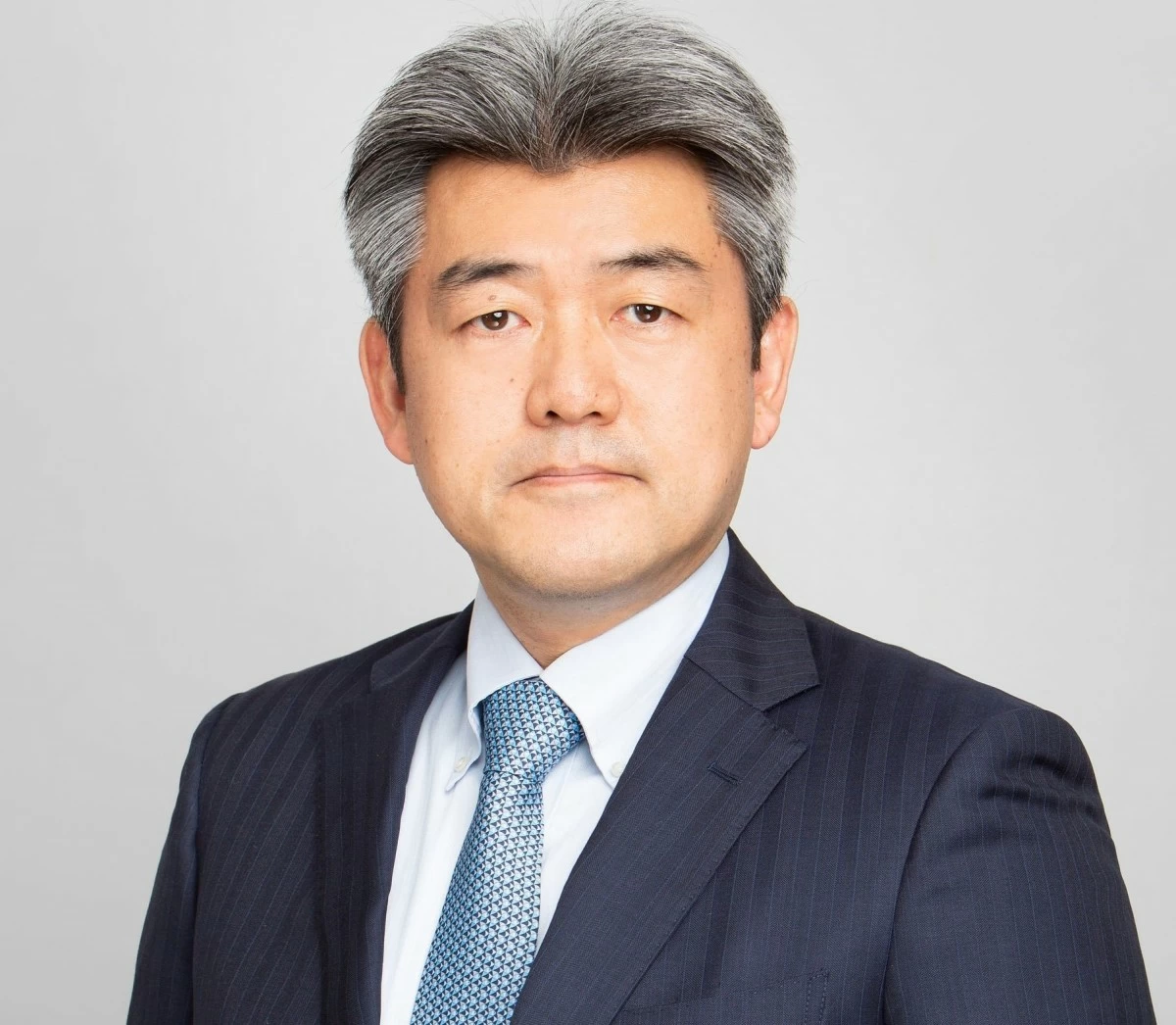
Nagoya/Tokyo, JAPAN — Leveraging its integrated value-chain strength, Japanese energy giant JERA Co. Inc. is targeting to accelerate supply flows of liquefied natural gas (LNG) to the Philippines to help reinforce the country’s energy transition agenda and propel Aboitiz Power Corp.’s (AboitizPower) 50:50 balance in its energy mix goal.
In a briefing with visiting Filipino journalists last week, JERA Asia Pte. Ltd. Chief Executive Officer (CEO) Izumi Kai underscored the company’s investment growth appetite for the Philippines, emphasizing that it is primed to explore broader opportunities for LNG supply or added capital infusion through its equity share in AboitizPower.
He qualified that any fresh capital will not come as a straight-up JERA-funded build, but as an indirect investment channeled through its 27-percent stake in AboitizPower, which in turn holds a significant share in Chromite Gas Holdings Inc., the force behind the integrated Ilijan gas plants and the Linseed LNG terminal in Batangas province—a mammoth partnership between Meralco PowerGen Corp., San Miguel Global Power Holdings Corp. of the San Miguel Group, and AboitizPower.
Kai said the targeted LNG deliveries shall be anchored on JERA’s value-chain play; thus, it is not only investing in companies but also in fuel supply and technological advances that will enable the firm to deploy its demonstrated expertise honed across global markets.
“We try to consider not just investing in the company, but also fuel supply, technological improvement so that we can leverage our experience and know-how in these countries,” he stated.
The JERA chief executive added, “Our focus has been expanding our energy value chain, which is from upstream fuel exporting countries’ investments, production facility, transportation fuel, supply fuel, receiving fuel, combustion or sending out gas to our customers. Our intention is to try to contribute to this greater value chain.”
Like other developing Asian markets, the Philippines is seen as a major growth frontier by JERA—not only for LNG but also for emerging innovations such as hydrogen and ammonia—driven by the country’s expanding population and continuing energy demand growth.
Kai highlighted that LNG demand for the Philippines is expected to surge in the years ahead, driven chiefly by massive renewable energy (RE) investments lined up through 2040 to achieve the nation’s 50-percent RE energy mix target.
Fundamentally, LNG stands out as the ultimate complement to variable renewable energy (VRE), ready to plug supply shortfalls whenever sunlight fades or wind patterns falter.
“While coal is expected to remain the backbone of power supply through 2035 to 2040, medium- to long-term growth is shifting toward LNG and renewables,” the company noted.
Based on the Philippine Energy Plan (PEP) projections, the country’s push for renewables could drive LNG demand to over five million metric ton per annum (mtpa) by 2035, more than twice the country’s current gas usage.
Beyond merely filling supply gaps, JERA likewise brings to the Philippines over 50 years of hands-on expertise in operating gas facilities and navigating the risks of volatile gas markets.
To set a real-world example, JERA’s 5.16-gigawatt (GW) Futtsu thermal power station in Chiba Prefecture showcases how a robust LNG infrastructure network can stabilize Japan’s grid amid heavy renewable integration.
Data shows that, as of end-2024, RE makes up roughly 25 to 27 percent of Japan’s power mix, while fossil fuels—mainly coal and gas—still dominate at over 60 percent, with nuclear and other technologies filling the remainder.
Futtsu Power Station General Manager Hisashi Koseki told the media that the thermal facility’s underground LNG tanks do not just fuel their plant; they also pipe gas to an extensive network of gas-fed fleets including Kawagoe, Higashi-Niigata, Tohoku, Sodegaura, Kawasaki, Shin-Nagoya, Yokohama, and Himeji Daini assets.
He reiterated that LNG power plants are the ultimate partner for intermittent renewables, responding swiftly and flexibly to every swing in power supply and demand.
Futtsu thermal power station records show that start-stop cycles nearly doubled from 1,027 in 2019 to 2,564 in 2024—a sign of renewables straining the grid—but LNG has consistently stepped in to plug those instances of widening supply-demand gaps.
On top of that, JERA also frames LNG not just as a renewable enabler but as a main growth engine for innovative industries while helping reduce carbon footprints—primarily for data centers, electric vehicles (EVs), artificial intelligence (AI) applications, and other cutting-edge innovations.
“LNG plays a key role in energy mix; CO₂ emissions from LNG are roughly half the emissions of coal—so by introducing increased LNG, it will reduce CO₂ emissions in the power mix. So the carbon intensity decreased; and therefore, that is critical for data centers or EVs,” he expounded.
Kai emphasized that widespread EV adoption will not significantly cut carbon emissions if their electricity is still fully coal-powered, adding that sourcing power from LNG delivers far greater CO₂ reductions.
“If you introduce significant size of EVs and that is supported by 100-percent coal, that doesn’t make sense, so therefore, reducing the emissions and also achieving stable supply, LNG will be a critical support,” he stressed.
Diversified procurement strategy
Kai emphasized that securing steady LNG supply hinges on diversifying sources—a strength JERA can guarantee given its decades of experience as one of the world’s largest LNG buyers.
He said, “The important thing is: from a buyer’s perspective, how to diversify procurement sources, commitment timing, different pricing indices... these diversifications are critical to avoid disruption.”
In June this year, JERA announced plans to secure 5.5 mtpa of LNG from United States (US) projects via long-term agreements with Commonwealth LNG and NextDecade, non-binding heads of agreement with Sempra Infrastructure, while a separate deal with Cheniere Marketing was also firmed up in August.
Kai also pointed out that JERA’s gas supply sourcing strategy extends globally—from the Middle East to Australia—and parallel to that, the company is navigating tightening carbon regulations in each market.
For the Australian market in particular, he noted rising challenges, saying stricter carbon obligations are reshaping LNG sourcing and prompting JERA to recalibrate its portfolio in line with government policies.
“Australia sources have been changing—like more strict carbon obligation... therefore, as time goes by—the constraint to governmental initiatives, we have to adjust portfolio accordingly,” the JERA CEO asserted.