






Manila Bulletin
 Environment and Sustainability
Climate investors gather in Manila to chart a more sustainable future
Environment and Sustainability
Climate investors gather in Manila to chart a more sustainable future
Environment and Sustainability
Climate investors gather in Manila to chart a more sustainable future
Climate investors gather in Manila to chart a more sustainable future
Published Dec 2, 2025 05:51 pm


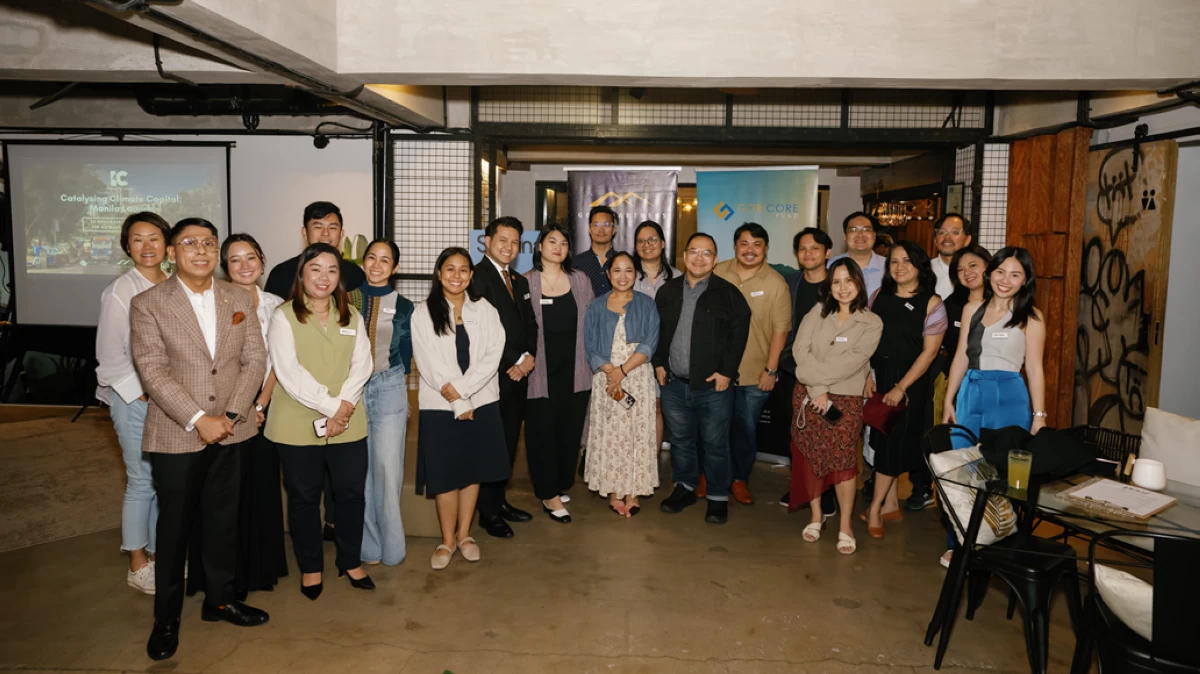
The launch of the Manila chapter of I4C brings together over 20 climate investors, policymakers, and founders in an intimate gathering.
On Nov. 24, a small group of climate investors gathered in Manila for the first time. Co-hosted by venture capital firm Gobi Partners and non-profit Sustina, the launch of the Manila chapter of Investors for Climate (I4C) opened the door to a global community of over 400 climate investors, with a collective track record of over $50 billion invested to date.

Black Eyed Peas member Apl.de.ap, named a coconut ambassador by the Philippine Coconut Authority, launches an initiative through his foundation to plant 100 million coconut trees.
Sometime in between dinner and drinks, Black Eyed Peas member Apl.de.ap walked in with the team that runs his foundation. It was a surprise entrance, but we already had a varied group of fund managers, policymakers, and startup founders. Why not have a well-known artist—or, as he preferred to introduce himself, a coconut ambassador—at the table?
The event felt timely, falling on the heels of COP30 in Belém, Brazil, where innovative financial mechanisms like Brazil’s Tropical Forests Forever Facility (TFFF) provided a bright spot amid an otherwise grim outcome. Against a background of literal fires and the deafening silence where the phrase “fossil fuels” used to be, COP30 attracted over 1,600 fossil fuel lobbyists. The silver lining—if we really try to look for it—is that perhaps a tide is turning and even they cannot avoid coming to the table.
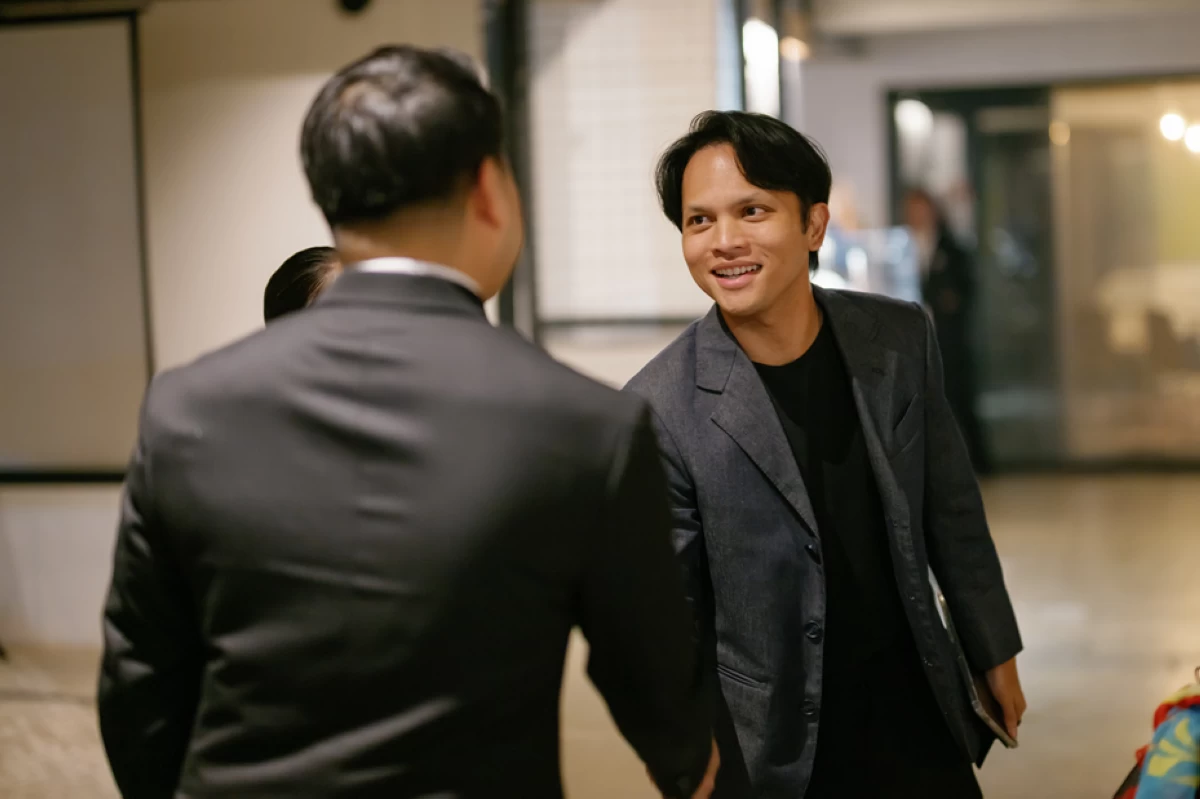
Carlo Chen-Delantar, the only Filipino I4C ambassador, expresses hope that this global community can open more opportunities for the Philippines.
The UN’s position on COP has been that it is seen as “a litmus test” for turning decades of climate pledges into action. Back in Manila, I4C Ambassador and Gobi Partners’ Head of ESG Carlo Chen-Delantar was making the case to this group of stakeholders that the Philippines is a litmus test of its own.
“In the startup and investment space, people actually say that if you succeed in the Philippines, then you can succeed anywhere, because the conditions here are very difficult,” he said.
Some of the difficult conditions he shared are as follows: In the Global Innovation Index, the Philippines ranks 53rd, lagging behind ASEAN competitors in innovation readiness. This forces founders to build in an environment with high friction. Local tax and visa policies are barriers. Philippine startups are succeeding despite the government framework, not because of it.
In short, the Philippines is still the underdog.
Despite all the odds, the data also shows that those who survive are highly investable. Total fundraising for startups in the Philippines grew almost four times from 2023 to 2024, according to Gobi Partners’ data.
“As a community in the Philippines, we will be creating a roadmap,” Carlo said. “The goal here is to have the most authentic data-driven sentiment of where investors are towards climate in the Philippines.”
Climate tech startups are actively emerging across categories such as land use and carbon, energy, transport, and nature. These startups are seen as catalysts in the transition towards a climate-smart economy. As of 2025, there are over 2,000 climate tech startups globally. Plenty of solutions to the climate crisis are being developed, executed, and delivered by startups. This means that, all things considered, the Philippines should be ground zero for investing in and testing climate solutions delivered through startups.
And yet, there is little clarity on whom we need to be pitching this message to. Rep. Brian Poe Llamanzares of the FPJ Panday Bayanihan Partylist, who attended the I4C launch and recently filed a House Resolution urging DENR to develop and implement a national roadmap for the 30×30 global biodiversity target, told me, “I was genuinely surprised to discover how many people still haven’t heard about 30×30, a global commitment that the Philippines has already pledged to pursue.” He added that “strong policy direction gives the private sector confidence to invest.”
The general sentiment in the room was that nature-based solutions are among the smartest investments we can make. But the eternal question remained: Who do we need to call to make more of these investments happen?
The day before the launch of I4C, I attended a session entitled “Invest in Her,” hosted by the Gender Lens and Impact Investment Council (GIIC). Much like climate investment, gender lens investment faces a lack of systematic support. One attendee asked, “What are the challenges you often face in fundraising as a woman?”
“When you're a woman, you tend to be an underdog by nature,” was Addie Quiachon’s answer. “We always [hear people say] it's such a beautiful business, it's a beautiful mission [...] but the challenge has always been actually getting people to champion us.” In her position as Head of External Relations and Market Insights for InvestEd, an inclusive student loan company, Addie has helped InvestEd fundraise $2.2 million from both lenders and angels within three months.
“We stopped hoping that we could get to the person who's actually going to disburse the fund. We started [focusing on] who we need to bombard with phone calls. [...] So, say we know this person or this company is funding, instead of approaching them, because we already knew our batting average would be very low, we mapped out: Who do these people listen to? How can we have these people call them and endorse us?”
In other words, the key to our success may depend less on the pitch and more on who is pitching whom. Let’s hope for all the underdogs that we are making the right calls — and that more of us, across government, business, and civil society, recognize our shared responsibility to invest in solutions that secure a more resilient future. — By Nina Unlay, contributor