






Manila Bulletin
 Philippines
National
'Anti-epal': Lacson seeks ban on political involvement in 2026 ayuda distribution
Philippines
National
'Anti-epal': Lacson seeks ban on political involvement in 2026 ayuda distribution
Philippines
National
'Anti-epal': Lacson seeks ban on political involvement in 2026 ayuda distribution
'Anti-epal': Lacson seeks ban on political involvement in 2026 ayuda distribution
By Dhel Nazario
Published Dec 2, 2025 08:56 pm


Senate President Pro Tempore Panfilo "Ping" Lacson proposed on Tuesday, Dec. 2, a provision in the 2026 budget barring any political involvement in cash aid distribution to prevent politicians from abusing the ayuda (cash aid) distribution.
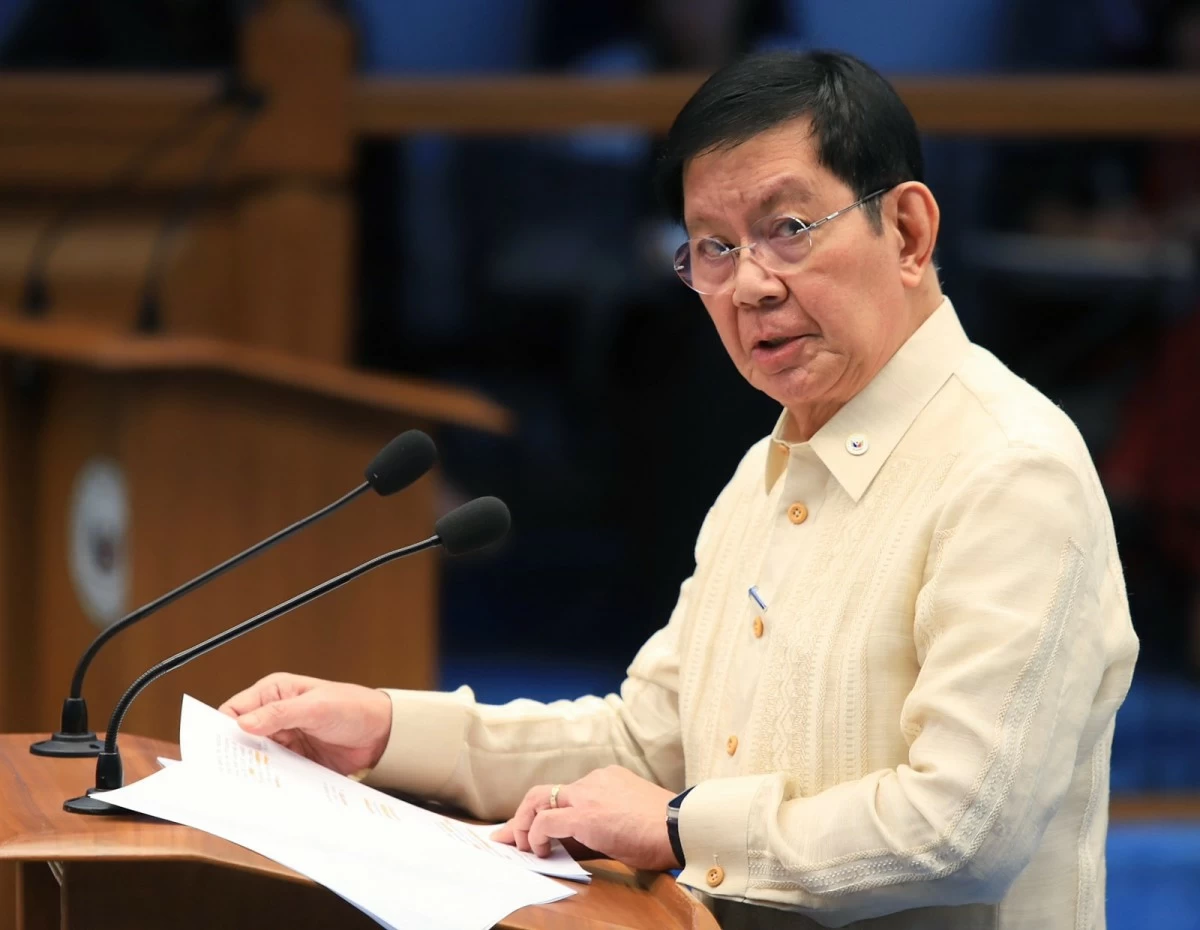
Sen. Panfilo Lacson proposes amendments during the plenary deliberation on the proposed 2026 General Appropriations Bill (GAB) on Tuesday, December 2, 2025. (Senate PRIB photo)
During the period of amendments for the 2026 budget bill, Lacson introduced a provision to insulate government social welfare programs from partisan politics.
"There must be no room for political exploitation and manipulation of the government programs in any shape or form, especially when those at the other end are already suffering. To politicize a social welfare program is not only unjust but also inhumane," he said.
Lacson's new provision states that "no incumbent public official, electoral candidate, politician, or any of their representatives shall be allowed to be present in, participate in, influence, or otherwise take part in the conduct, facilitation, or distribution of any cash assistance, nor shall any political signage, branding, paraphernalia, or activity be displayed or conducted within the distribution area."
Also, the provision states that any DSWD personnel who permit or facilitate such political involvement "shall be subject to administrative sanctions under applicable civil service rules."
Meanwhile, Lacson pushed as well for limiting the use of the P13-billion contingent fund, having the phrase "such as, but not limited to" removed and limiting its implementation to the legal obligation of the National Government arising from final and executory decisions of competent authorities, such as compromise agreements, arbitral awards, mediation settlement agreements, and professional services in connection thereto; requirements of newly created offices; or deficiencies in the appropriations for local and external travels of the President of the Philippines.
"The current language on items eligible for funding under the Contingent Fund effectively grants the Executive branch broad discretion to finance projects without adequate congressional scrutiny. To prevent this fund from becoming prone to abuse and misuse, this proposal clearly restricts its use to the three defined criteria, as mentioned above, he said.
Meanwhile, Lacson sought as well a new special provision on “disaster rehabilitation and reconstruction assistance program,” in light of the extensive damage and persistent reconstruction and rehabilitation funding requirements caused by recent tropical cyclones and earthquakes.
"To ensure that the appropriations are responsive to the needs of the affected local government units, the funding must align with the approved local rehabilitation and recovery plans (LRRPs) and be strictly substantiated by the post-disaster needs assessment (PDNA)," he said.
Also, the Department of Budget and Management (DBM) shall ensure that funds are released in the first quarter of the fiscal year, provided that concerned LGUs have completed all the necessary documentary requirements for project implementation.
The disbursement and utilization by the LGUs shall be subject to the pertinent provisions of R.A. 12009, applicable accounting, budgeting and auditing rules and regulations, and such other guidelines to be issued for the purpose, he added.
Also, Lacson sought support for the Barangay Development Program of the National Task Force to End Local Communist Armed Conflict (NTF-ELCAC) to ensure the inclusion of the timeline on the release of the funds, which is crucial to the success of the implementation of the program.
However, duly accredited civil society organizations are encouraged to take part in the implementation by serving as observer and providing feedback on the implementation of projects.
"The engagement of civil society organizations (CSOs) as part of the social accountability measures is indispensable for transparency and critical in securing the public's trust for the program," he said.
Meanwhile, Lacson pushed as well for a provision in the budget bill for programs for senior citizens and Persons with Disability (PWDs).
All national agencies, government-owned and controlled corporations and local government units are to provide qualified Filipino sign language interpreters and accessible materials for public transactions, services and facilities.
"The amended special provision guarantees that the government will comply with existing laws requiring Filipino Sign Language interpretation and accessibility, as well as international commitments that promote support to Persons with Disabilities to ensure their effective participation in society," he said.