ADVERTISEMENT

US fruits mount offensive to break China's monopoly on Philippine imports

Published Dec 1, 2025 12:02 am  |  Updated Dec 1, 2025 05:53 am
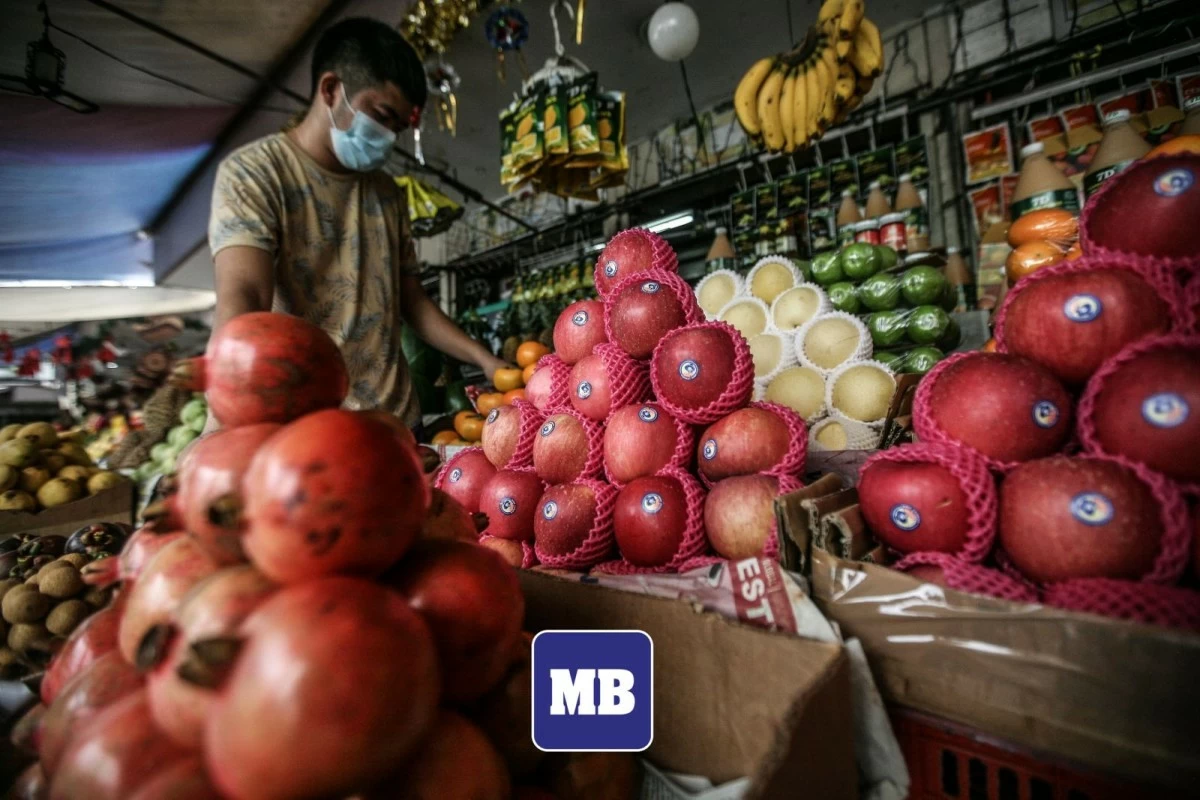
(Manila Bulletin file photo)
The United States (US) aims to introduce new fruit varieties to the Philippines to boost its share of the import market, which has long been dominated by China.
In a market brief published last week by the US Department of Agriculture (USDA), American exporters were urged to introduce innovative fruit varieties to the country to sustain the momentum in apple exports.
The USDA expects exports of fresh fruits to fall by at least seven percent to around $13 million this year from $14 million in 2024.
Despite this, the foreign agency said shipments of apples to the country will grow this year, driven by the popularity of the Ambrosia, Cosmic Crisp, and SugarBee varieties.
These varieties were introduced to the Philippine market last year and have since gained traction among consumers.
“Consumers are eager to try new-to-market fruit varieties and share their experiences on social media,” the report read.
The USDA noted that only bananas and papayas are harvested year-round in the country, creating an opportunity for American exporters to fill market gaps year-round.
“The United States is widely recognized for consistently supplying premium-quality fruit, and US exporters are encouraged to leverage this reputation,” it said.
The USDA, citing Philippine government data, expects fresh fruit imports this year to grow by 25 percent to around $400 million, up from $321 million in 2024.
Last year, the US only accounted for a three percent share in the import market.
Its main shipments were apples, cherries, grapes, oranges, strawberries, cranberries, blueberries, and peaches.
In contrast, China seized 72 percent of the market last year, with its main exports being apples, grapes, mandarins, oranges, and other citrus hybrids.
Also outperforming the US were South Africa and Australia with market shares of nine percent and eight percent, respectively.
With the exception of South Africa, the USDA noted that the dominance of regional suppliers is a result of better prices, largely driven by lower shipping costs and zero-tariff advantages under free trade agreements with the Association of Southeast Asian Nations (ASEAN).
“The Philippines does not have a preferential trade agreement with the United States or South Africa. As a result, MFN (most-favored-nation) tariff rates apply to fresh fruit imports from both countries,” the report read.
Under the MFN tariff rate, exports including apples, cherries, peaches, and blueberries face a seven percent tariff.
Lemons and oranges are levied with a 10 percent tariff, while strawberries are slapped with a higher 15 percent rate.
Despite these higher taxes, which translate into higher consumer costs, the USDA said American fresh fruits are still preferred by many for their consistent premium quality and relatively longer shelf life.
This, according to the agency, requires exports to develop marketing campaigns and other brand-building efforts to effectively engage consumers and boost their market presence in the country.
ADVERTISEMENT
.most-popular .layout-ratio{ padding-bottom: 79.13%; } @media (min-width: 768px) and (max-width: 1024px) { .widget-title { font-size: 15px !important; } }

{{ articles_filter_1561_widget.title }}

.most-popular .layout-ratio{ padding-bottom: 79.13%; } @media (min-width: 768px) and (max-width: 1024px) { .widget-title { font-size: 15px !important; } }

{{ articles_filter_1562_widget.title }}

.most-popular .layout-ratio{ padding-bottom: 79.13%; } @media (min-width: 768px) and (max-width: 1024px) { .widget-title { font-size: 15px !important; } }

{{ articles_filter_1563_widget.title }}

{{ articles_filter_1564_widget.title }}

.mb-article-details { position: relative; } .mb-article-details .article-body-preview, .mb-article-details .article-body-summary{ font-size: 17px; line-height: 30px; font-family: "Libre Caslon Text", serif; color: #000; } .mb-article-details .article-body-preview iframe , .mb-article-details .article-body-summary iframe{ width: 100%; margin: auto; } .read-more-background { background: linear-gradient(180deg, color(display-p3 1.000 1.000 1.000 / 0) 13.75%, color(display-p3 1.000 1.000 1.000 / 0.8) 30.79%, color(display-p3 1.000 1.000 1.000) 72.5%); position: absolute; height: 200px; width: 100%; bottom: 0; display: flex; justify-content: center; align-items: center; padding: 0; } .read-more-background a{ color: #000; } .read-more-btn { padding: 17px 45px; font-family: Inter; font-weight: 700; font-size: 18px; line-height: 16px; text-align: center; vertical-align: middle; border: 1px solid black; background-color: white; } .hidden { display: none; }
function initializeAllSwipers() { // Get all hidden inputs with cms_article_id document.querySelectorAll('[id^="cms_article_id_"]').forEach(function (input) { const cmsArticleId = input.value; const articleSelector = '#article-' + cmsArticleId + ' .body_images'; const swiperElement = document.querySelector(articleSelector); if (swiperElement && !swiperElement.classList.contains('swiper-initialized')) { new Swiper(articleSelector, { loop: true, pagination: false, navigation: { nextEl: '#article-' + cmsArticleId + ' .swiper-button-next', prevEl: '#article-' + cmsArticleId + ' .swiper-button-prev', }, }); } }); } setTimeout(initializeAllSwipers, 3000); const intersectionObserver = new IntersectionObserver( (entries) => { entries.forEach((entry) => { if (entry.isIntersecting) { const newUrl = entry.target.getAttribute("data-url"); if (newUrl) { history.pushState(null, null, newUrl); let article = entry.target; // Extract metadata const author = article.querySelector('.author-section').textContent.replace('By', '').trim(); const section = article.querySelector('.section-info ').textContent.replace(' ', ' '); const title = article.querySelector('.article-title h1').textContent; // Parse URL for Chartbeat path format const parsedUrl = new URL(newUrl, window.location.origin); const cleanUrl = parsedUrl.host + parsedUrl.pathname; // Update Chartbeat configuration if (typeof window._sf_async_config !== 'undefined') { window._sf_async_config.path = cleanUrl; window._sf_async_config.sections = section; window._sf_async_config.authors = author; } // Track virtual page view with Chartbeat if (typeof pSUPERFLY !== 'undefined' && typeof pSUPERFLY.virtualPage === 'function') { try { pSUPERFLY.virtualPage({ path: cleanUrl, title: title, sections: section, authors: author }); } catch (error) { console.error('ping error', error); } } // Optional: Update document title if (title && title !== document.title) { document.title = title; } } } }); }, { threshold: 0.1 } ); function showArticleBody(button) { const article = button.closest("article"); const summary = article.querySelector(".article-body-summary"); const body = article.querySelector(".article-body-preview"); const readMoreSection = article.querySelector(".read-more-background"); // Hide summary and read-more section summary.style.display = "none"; readMoreSection.style.display = "none"; // Show the full article body body.classList.remove("hidden"); } document.addEventListener("DOMContentLoaded", () => { let loadCount = 0; // Track how many times articles are loaded const offset = [1, 2, 3, 4, 5, 6, 7, 8, 9, 10]; // Offset values const currentUrl = window.location.pathname.substring(1); let isLoading = false; // Prevent multiple calls if (!currentUrl) { console.log("Current URL is invalid."); return; } const sentinel = document.getElementById("load-more-sentinel"); if (!sentinel) { console.log("Sentinel element not found."); return; } function isSentinelVisible() { const rect = sentinel.getBoundingClientRect(); return ( rect.top < window.innerHeight && rect.bottom >= 0 ); } function onScroll() { if (isLoading) return; if (isSentinelVisible()) { if (loadCount >= offset.length) { console.log("Maximum load attempts reached."); window.removeEventListener("scroll", onScroll); return; } isLoading = true; const currentOffset = offset[loadCount]; window.loadMoreItems().then(() => { let article = document.querySelector('#widget_1690 > div:nth-last-of-type(2) article'); intersectionObserver.observe(article) loadCount++; }).catch(error => { console.error("Error loading more items:", error); }).finally(() => { isLoading = false; }); } } window.addEventListener("scroll", onScroll); });

Sign up by email to receive news.