ADVERTISEMENT

Rethinking sustainability in air travel

Published Dec 1, 2025 03:43 pm
I’ve always loved traveling — the airports, the early-morning flights, even the small rituals that come with moving from one place to another. But when I became more “green-hearted,” as I like to call it, I began to travel with a different awareness. I became more conscious of my intentions, my habits, and the invisible footprint that follows us wherever we go.
So when I booked my flight to Australia for a sustainability conference, I had to smile at the irony that all environmental journeys — literal and figurative — often begin with the part that emits the most carbon: flying.
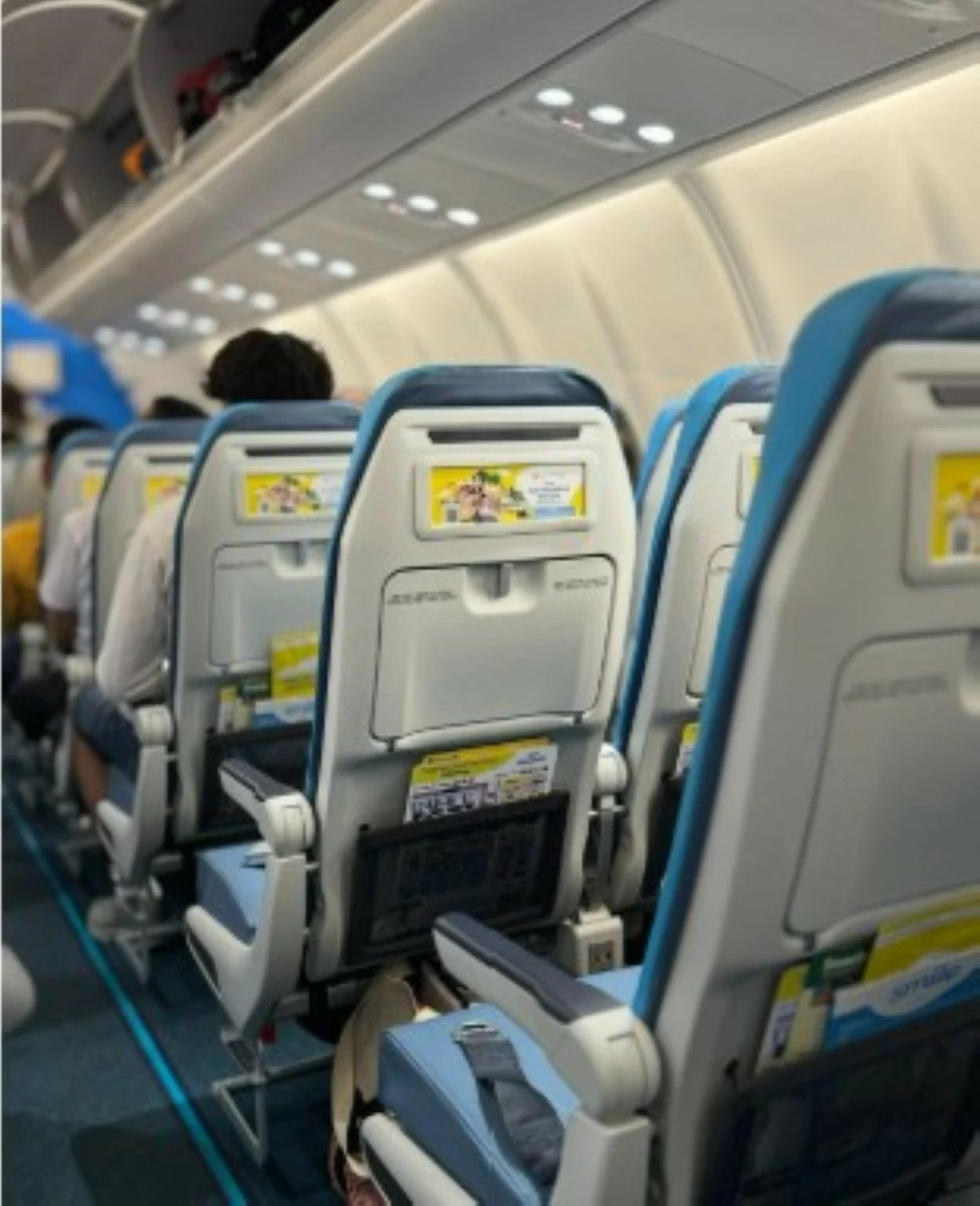
Yet that’s the reality of island life. As Filipinos, traveling by air is woven into how we work, stay connected with family, and discover opportunities. It’s also part of how we navigate a climate-challenged world.
The Philippine sustainability journey — steady but imperfect
Even before boarding the plane, I’d been reflecting on our efforts at home. The Philippines has been quietly pushing for sustainability across several fronts — not perfect, not complete, but moving with intent.
We see LGUs establishing community composting sites; schools and barangays strengthening plastic bans; and livelihood programs transforming tarpaulins, fishing nets, fabric scraps, and even coconut waste into useful goods.
On the national level, renewable energy is gradually expanding, with solar rooftops becoming a familiar sight in cities and rural towns. Even local businesses — from small refill stores to large retail and hospitality groups — are exploring with circularity in response to shifting consumer expectations.
It’s not a revolution; it’s a collection of steady, stubborn steps.
Perhaps that is why the flight felt different. Sustainability was on my mind, and as we recently discussed aircraft innovations, I found myself paying attention to things I once ignored.
I learned that more than half of Cebu Pacific’s fleet now consists of NEO aircraft — lighter, quieter, and about 15 percent more fuel-efficient than older models. It suddenly made sense why the engines sounded gentler. And as someone raised with reminders like “mahal ang kuryente” and “ingat sa tubig,” I’ve always appreciated how Filipinos try to save what they can. Seeing industries apply similar principles — even through incremental operational choices — felt quietly reassuring.
While preparing for this feature, I read about the operational side of flying. Not the glamorous, postcard version of travel, but the technical adjustments pilots make: continuous descent approaches, reduced flaps, optimized routes that cut fuel use while keeping the flight smooth.
In the same way we choose to take the stairs instead of the elevator when possible, or turn off lights before leaving a room, these small optimizations also add up in the sky. On the ground, the shift to electrified employee shuttles and baggage tractors helps reduce overall CO₂ emissions long before passengers board.
That felt aligned with what we are seeing across the country: electric jeepneys on select routes, e-bikes becoming more common, and communities experimenting with solar lamps and rainwater catchment systems.
Again, small steps, but steps nonetheless
What genuinely surprised me was Cebu Pacific’s “Recrafted Purpose” initiative, which turns old aircraft parts into awards, décor, and even training tools. There is something deeply Filipino about giving new life to old materials. It reminded me of women’s cooperatives in provinces repurposing flour sacks into aprons, or fishermen repairing discarded nets from neighboring barangays so nothing goes to waste. There is comfort in seeing large systems reflect the sensibilities of local communities.
The irony I accepted, and the responsibility I carried
Yes — it is ironic to attend a sustainability conference on a fuel-burning aircraft. But becoming more environmentally aware also means learning to sit with nuance. Progress doesn’t always look like perfection. Sometimes it means acknowledging our compromises and still choosing the better option available at the moment.
This flight reminded me that sustainability is not a checklist; it’s a mindset. It means recognizing that our choices have consequences, while understanding that avoiding movement altogether is unrealistic — especially for Filipinos whose lives often demand it.
What the journey taught me
Landing in Australia, I felt clearer about one thing: sustainability has layers. It lives in big policy shifts, but also in the quiet habits — from PET bottle recycling programs that diverted over 36,260 kg of plastic bottles last year, to barangay clean-ups, to office-wide “bring your own tumbler” campaigns.
It’s in lighter aircraft materials just as much as it’s in a sari-sari store starting a refill initiative. It’s in the electrification of ground fleets and in a grandmother in the province who sun-dries leftover rice to avoid waste.
And most importantly, sustainability lives in the stories we keep telling — so more people understand where we are, where we can go, and how much further we need to walk, or fly, together.
ADVERTISEMENT
.most-popular .layout-ratio{ padding-bottom: 79.13%; } @media (min-width: 768px) and (max-width: 1024px) { .widget-title { font-size: 15px !important; } }

{{ articles_filter_1561_widget.title }}

.most-popular .layout-ratio{ padding-bottom: 79.13%; } @media (min-width: 768px) and (max-width: 1024px) { .widget-title { font-size: 15px !important; } }

{{ articles_filter_1562_widget.title }}

.most-popular .layout-ratio{ padding-bottom: 79.13%; } @media (min-width: 768px) and (max-width: 1024px) { .widget-title { font-size: 15px !important; } }

{{ articles_filter_1563_widget.title }}

{{ articles_filter_1564_widget.title }}

.mb-article-details { position: relative; } .mb-article-details .article-body-preview, .mb-article-details .article-body-summary{ font-size: 17px; line-height: 30px; font-family: "Libre Caslon Text", serif; color: #000; } .mb-article-details .article-body-preview iframe , .mb-article-details .article-body-summary iframe{ width: 100%; margin: auto; } .read-more-background { background: linear-gradient(180deg, color(display-p3 1.000 1.000 1.000 / 0) 13.75%, color(display-p3 1.000 1.000 1.000 / 0.8) 30.79%, color(display-p3 1.000 1.000 1.000) 72.5%); position: absolute; height: 200px; width: 100%; bottom: 0; display: flex; justify-content: center; align-items: center; padding: 0; } .read-more-background a{ color: #000; } .read-more-btn { padding: 17px 45px; font-family: Inter; font-weight: 700; font-size: 18px; line-height: 16px; text-align: center; vertical-align: middle; border: 1px solid black; background-color: white; } .hidden { display: none; }
function initializeAllSwipers() { // Get all hidden inputs with cms_article_id document.querySelectorAll('[id^="cms_article_id_"]').forEach(function (input) { const cmsArticleId = input.value; const articleSelector = '#article-' + cmsArticleId + ' .body_images'; const swiperElement = document.querySelector(articleSelector); if (swiperElement && !swiperElement.classList.contains('swiper-initialized')) { new Swiper(articleSelector, { loop: true, pagination: false, navigation: { nextEl: '#article-' + cmsArticleId + ' .swiper-button-next', prevEl: '#article-' + cmsArticleId + ' .swiper-button-prev', }, }); } }); } setTimeout(initializeAllSwipers, 3000); const intersectionObserver = new IntersectionObserver( (entries) => { entries.forEach((entry) => { if (entry.isIntersecting) { const newUrl = entry.target.getAttribute("data-url"); if (newUrl) { history.pushState(null, null, newUrl); let article = entry.target; // Extract metadata const author = article.querySelector('.author-section').textContent.replace('By', '').trim(); const section = article.querySelector('.section-info ').textContent.replace(' ', ' '); const title = article.querySelector('.article-title h1').textContent; // Parse URL for Chartbeat path format const parsedUrl = new URL(newUrl, window.location.origin); const cleanUrl = parsedUrl.host + parsedUrl.pathname; // Update Chartbeat configuration if (typeof window._sf_async_config !== 'undefined') { window._sf_async_config.path = cleanUrl; window._sf_async_config.sections = section; window._sf_async_config.authors = author; } // Track virtual page view with Chartbeat if (typeof pSUPERFLY !== 'undefined' && typeof pSUPERFLY.virtualPage === 'function') { try { pSUPERFLY.virtualPage({ path: cleanUrl, title: title, sections: section, authors: author }); } catch (error) { console.error('ping error', error); } } // Optional: Update document title if (title && title !== document.title) { document.title = title; } } } }); }, { threshold: 0.1 } ); function showArticleBody(button) { const article = button.closest("article"); const summary = article.querySelector(".article-body-summary"); const body = article.querySelector(".article-body-preview"); const readMoreSection = article.querySelector(".read-more-background"); // Hide summary and read-more section summary.style.display = "none"; readMoreSection.style.display = "none"; // Show the full article body body.classList.remove("hidden"); } document.addEventListener("DOMContentLoaded", () => { let loadCount = 0; // Track how many times articles are loaded const offset = [1, 2, 3, 4, 5, 6, 7, 8, 9, 10]; // Offset values const currentUrl = window.location.pathname.substring(1); let isLoading = false; // Prevent multiple calls if (!currentUrl) { console.log("Current URL is invalid."); return; } const sentinel = document.getElementById("load-more-sentinel"); if (!sentinel) { console.log("Sentinel element not found."); return; } function isSentinelVisible() { const rect = sentinel.getBoundingClientRect(); return ( rect.top < window.innerHeight && rect.bottom >= 0 ); } function onScroll() { if (isLoading) return; if (isSentinelVisible()) { if (loadCount >= offset.length) { console.log("Maximum load attempts reached."); window.removeEventListener("scroll", onScroll); return; } isLoading = true; const currentOffset = offset[loadCount]; window.loadMoreItems().then(() => { let article = document.querySelector('#widget_1690 > div:nth-last-of-type(2) article'); intersectionObserver.observe(article) loadCount++; }).catch(error => { console.error("Error loading more items:", error); }).finally(() => { isLoading = false; }); } } window.addEventListener("scroll", onScroll); });

Sign up by email to receive news.