






Manila Bulletin
 Business
The Economy
Philippines urged to boost recycling systems to curb plastic waste
Business
The Economy
Philippines urged to boost recycling systems to curb plastic waste
Business
The Economy
Philippines urged to boost recycling systems to curb plastic waste
Philippines urged to boost recycling systems to curb plastic waste
Six ASEAN countries among top contributors to global plastic waste, says World Bank report
Published Dec 1, 2025 12:00 am


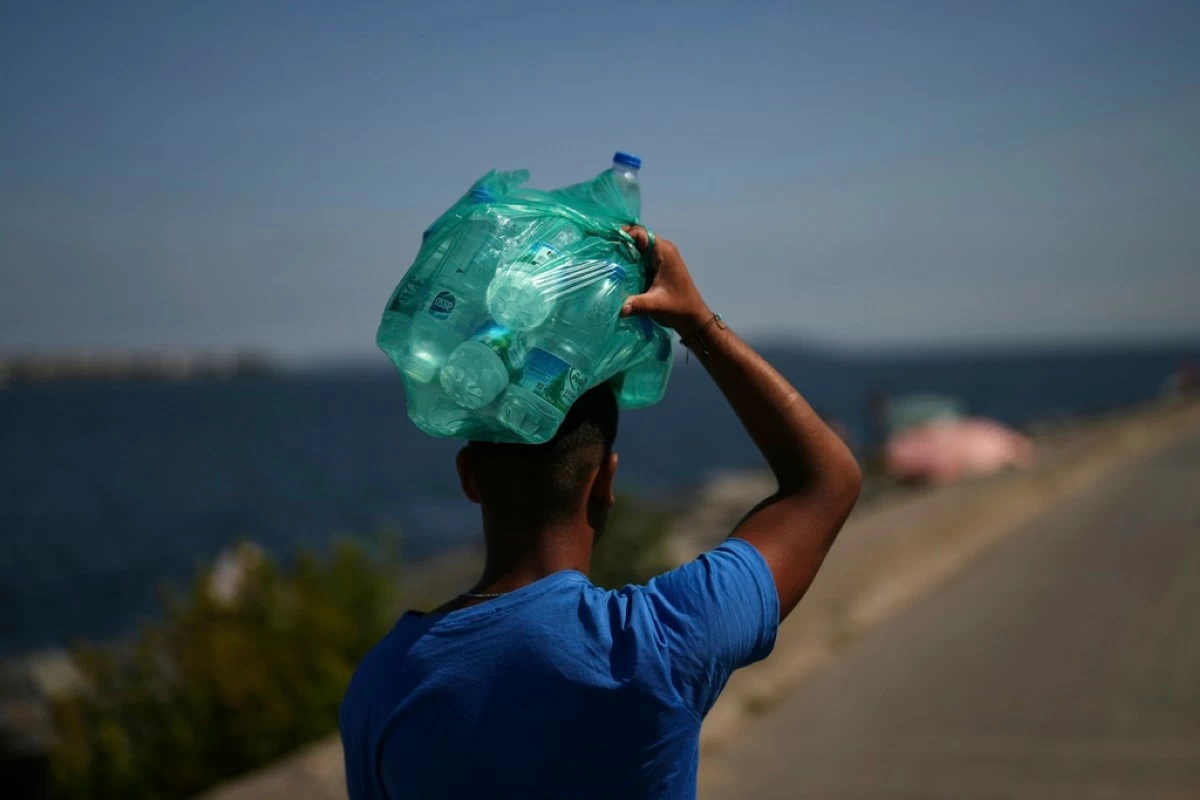
A street vendor carries plastic bottles of water on his head during a summer day in Istanbul, Thursday, July 10, 2025. (AP Photo/Francisco Seco, File)
Waste generation in the Association of Southeast Asian Nations (ASEAN) has surged due to rapid population and economic growth, industrial expansion, and gaps in waste management systems, resulting in severe plastic pollution—with the Philippines among six ASEAN countries ranked among the world’s top ocean plastic emitters.
According to the World Bank report titled “Extended Producer Responsibility for Plastic Packaging in Selected ASEAN Member States,” published on Nov. 26, the ocean plastic pollution problem in the region—in which the Philippines, Malaysia, Indonesia, Myanmar, Vietnam, and Thailand also contribute the most globally—is exacerbated by policy gaps and inadequate recycling infrastructure.
“Plastic pollution in the ASEAN region is a major concern, yet there are significant gaps in policy, funding, and waste infrastructure to deal with it,” the report said.
“The issue of waste management is not just a regional concern,” the report added, noting that in 2018 about 1.3 billion people worldwide had no access to waste collection, while another three billion disposed of their trash in unsafe conditions. These practices—open dumping, burning waste in open pits or on the streets, and throwing waste into rivers, lakes, or oceans—carry serious risks to human health and the environment, the report warned.
“Although EPR [extended producer responsibility] in practice is limited, the approach is recognized by ASEAN member states as one of the key solutions to the plastic waste challenge,” the report added.
The report noted that the Philippines, alongside Vietnam, has already adopted EPR. The Philippines introduced Republic Act (RA) No. 11898, or the Extended Producer Responsibility Act (EPRA), in 2022, followed by its implementing rules and regulations (IRR) in January 2023—making 2023 the first year during which the EPR obligation for plastic packaging was imposed on producers in the ASEAN region.
As such, “the Philippines had high level of readiness” for the implementing readiness assessment tool (IRAT), the report said, noting that the passage of EPRA and issuance of its IRR introduced mandatory EPR for plastic packaging beginning in 2023.
The report noted that although the country clearly specifies the informal sector in its EPR regulations, there are still several “gaps” that could negatively affect its overall readiness for implementation.
Among these gaps, the report pointed out, is that current legislation does not set any targets for recycling or recycled content, and that collection targets—40 percent as early as 2024 and 80 percent by 2028—may be difficult to achieve within such short timeframes. The report warned that “this is likely to result in low enforcement or unjust penalties while infrastructure is not ready to accept the required waste amounts.”
It further noted that regulatory provisions related to producer responsibility organizations (PROs) remain unclear. The report said there is no defined framework for establishing and operating PROs, nor is there any described approval process.
“Collective EPR is allowed through a PRO or without and with no description of the difference. Nor is there clear guidance on the roles and responsibilities of a PRO,” it said, adding that these gaps are likely to impair the efficiency of the regulatory framework in the country.
The report highlighted that the Philippines reached an intermediate level of readiness in IRAT’s waste-management operations category, pointing out that while the country’s waste collection rates are relatively high, waste separation remains low, particularly in rural areas. Collection coverage exceeds 85 percent in urban areas and ranges from 40 to 85 percent in rural areas.
The report noted that the country’s waste collection and sorting infrastructure remain underdeveloped, with only five to 20 percent of urban households and under five percent of rural households separating waste. Enforcement is weak, and collection practices can be inconsistent, it added, though the informal sector plays a key role and is gradually being included through other programs.
It also said that recycling facilities in the Philippines for polyethylene terephthalate (PET), high-density polyethylene (HDPE), low-density polyethylene (LDPE), and multilayered plastic (MLP) plastics are underdeveloped, noting that current formal PET recycling can handle only 39 percent of consumed PET packaging, while just 10 percent of HDPE and polypropylene (PP) plastics are being recycled.
The report said the existing waste-to-energy (WTE) facilities in the country handle less than five percent of total waste, with gate fees of ₱800 per ton for residential waste and ₱1,700 per ton for commercial waste.
With all the gaps mentioned, the report recommended that the Philippines clarify and simplify producers’ reporting obligations, specify which EPR program activities count toward recovery targets, and define the roles and responsibilities of formal waste actors under the EPR system.
The report also urged the country to require waste operators to register and report, establish clear standards and rules for PRO operations, and encourage the use of PROs over other compliance methods, such as individual or collective fulfillment.
The report also recommended that the Philippine government introduce recycling and recycled-content targets, tailor goals by type of plastic packaging, regularly review their feasibility, and clarify definitions for producers.
It also suggested implementing a penalty system for waste operators, reassessing which companies are exempt from EPR, and requiring small- and medium-sized enterprises to register and report their put-on-market data.
The report further recommended strengthening enforcement of waste segregation at source, encouraging mandated companies, PROs, and collectives to run awareness programs, and clarifying the role and use of the EPR special fund.
It also called for a clearer definition of the informal sector’s role in the EPR system and more guidance on how mandated enterprises, collectives, or PROs should collaborate with informal waste actors.
Finally, the report urged the Philippines to improve waste collection infrastructure nationwide, with a focus on rural areas that have low coverage. It recommended expanding the capacity of circular treatment methods, publishing standards for the use of recycled plastics to boost recyclate utilization, and introducing digital systems to enhance waste tracking.
(Ricardo M. Austria)