






Manila Bulletin
 Business
Trade & Industry
Pacific countries race to secure new tuna policy to avert future losses
Business
Trade & Industry
Pacific countries race to secure new tuna policy to avert future losses
Business
Trade & Industry
Pacific countries race to secure new tuna policy to avert future losses
Pacific countries race to secure new tuna policy to avert future losses
Published Dec 1, 2025 02:18 pm


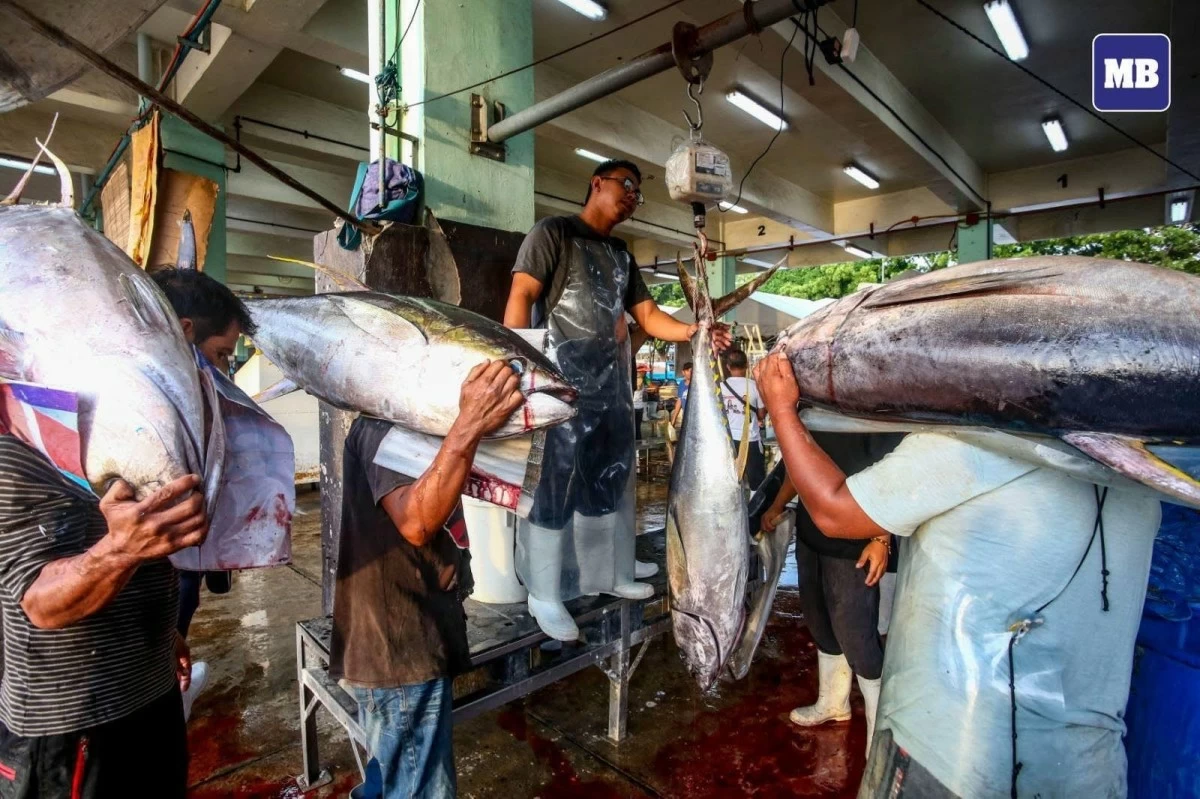
(Manila Bulletin file photo)
The Philippines and other countries in the Pacific have convened for a highly consequential series of negotiations in Manila to adopt a harvest strategy for South Pacific albacore tuna, in a bid to avert disruptions that would spell disaster for many island developing states.
The harvest strategy, otherwise known as a management procedure, for albacore tuna is the top agenda of the 22nd regular session of Western and Central Pacific Fisheries Commission (WCPFC) scheduled for the first week of December.
WCPFC Executive Director Rhea Moss-Christian said this is the second straight year that the allowable catch for the tuna stock will be the main focus for the 26-member body, after it failed to approve the policy in last year’s meeting in Fiji.
Moss-Christian is optimistic that WCPFC will adopt the management procedure this year, given that many of its member economies have been working with each other over the past year to find a compromise.
“I don’t think that members can leave this meeting without having adopted a management procedure,” the official said in a press briefing on Monday, Dec. 1.
“I believe that members recognize how high the stakes are, how much higher they are this year than last year,” she added.
Moss-Christian said another year of delay would be “too costly,” especially for island developing states that depend on South Pacific albacore tuna.
She warned that significant economic losses await these economies if WCPFC fails to approve the management procedure.
Inaction from the fishing body could put in jeopardy the sustainability certifications of fishing vessels that primarily catch albacore tuna, many of which are flagged by or in partnership with island countries in the Pacific.
A certification is dependent on a management procedure, and so without it, vessels lose their authority to fish the tuna stock—essentially wiping out millions of United States (US) dollars in revenue.
Washington, DC-based think tank Pew Research Center estimates that the albacore tuna market is worth more than $1 billion.
Based on the draft proposal of Pacific Islands Forum Fisheries Agency (FFA), the management procedure would keep the spawning potential depletion ratio of albacore tuna above critical thresholds.
FFA recommends a fixed annual catch of 9,000 metric tons (MT) for the fish in waters south of the equator, without overlapping the eastern Pacific Ocean.
It also recommends an additional 667 MT for small portions of the exclusive economic zones (EEZ) of Tuvalu and Tokelau.
The total allowable catch of 9,667 MT will be up for review every three years depending on stock conditions, with a maximum 10-percent increase or a decrease of five percent.
The management procedure is intended to be “interim in nature” in order to safeguard island developing states from economic losses if the policy fails to work as anticipated.
If adopted, the policy would take effect in February 2026, which would then first apply to the 2027-to-2029 period.
Moss-Christian noted that details of this draft measure, such as the total allowable catch, will still depend on negotiations among members.
“So once there are decisions taken around how much catch of albacore can be taken, then the next step will be to distribute that amount among the interested members,” she added.
Department of Agriculture (DA) Undersecretary for fisheries Drusila Esther Bayate said the Philippines, as host of this year’s WCPFC meeting, is upbeat that the harvest strategy will be finalized this year.
“We are confident that the objectives of this meeting will be carried out in Manila, and we will be very proud if that will happen here,” said Bayate.
Based on data provided by the Bureau of Fisheries and Aquatic Resources (BFAR), the country’s total catch of WCPFC-managed tuna species rose to over 201,000 MT last year.
Albacore tuna, however, only accounted for 833 MT or less than one percent of total.
The country’s primary tuna stock is skipjack at 115,355 MT, followed by yellowfin at 79,865 MT.
WCPFC adopted a management procedure for skipjack in 2022, while the policy for yellowfin is slated to begin negotiations in the fishing body’s general meeting next year.