ADVERTISEMENT

Marcos admin borrowing costs fall as S&P rating affirmed

Published Dec 1, 2025 01:41 pm
The Marcos administration borrowed ₱25 billion through the sale of short-dated Treasury bills, exceeding its planned amount of ₱22 billion, as lower borrowing costs and a recent affirmation from debt watcher S&P Global Ratings boosted investor appetite.
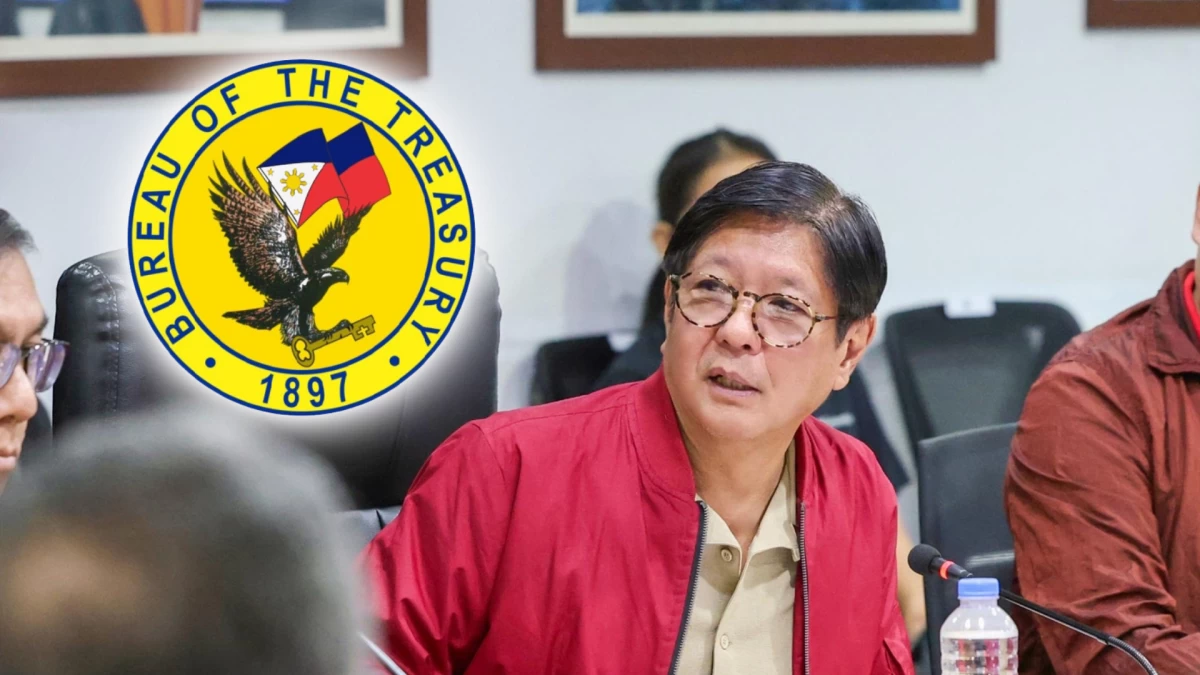
The Bureau of the Treasury (BTr) exceeded its fundraising target during the T-bill auction on Monday, Dec. 1, drawing total bids of ₱85.3 billion—nearly four times the amount of debt papers offered.
The total tenders were slightly higher than the ₱84.9 billion recorded at the previous T-bill auction on Nov. 24.
The government fully awarded the ₱7-billion offering for 91-day T-bills, with total tenders reaching ₱29.8 billion. The average rate settled at 4.812 percent, lower by 3.7 basis points (bps) from the 4.849 percent recorded the previous week.
For 182-day debt papers, the BTr raised ₱10.5 billion, surpassing the ₱7.5 billion offered. Bids hit ₱29.8 billion, fetching an average rate of 4.93 percent, a decrease of 7.3 bps from last week’s 5.003 percent.
The BTr also borrowed the full offered amount of ₱7.5 billion through a 364-day IOU. Demand reached ₱25.7 billion, with the average rate ticking up to 5.011 percent from 5.003 percent in the prior auction.
Prior to Monday’s auction, PHP Bloomberg Valuation (PHP BVAL) Reference Rates quoted the 91-, 182-, and 364-day T-bills at 4.882 percent, five percent, and 5.071 percent, respectively. Across the board, average rates remained higher than the 4.75 percent key borrowing cost set by the Bangko Sentral ng Pilipinas (BSP).
Rizal Commercial Banking Corp. Chief Economist Michael Ricafort attributed the general drop in borrowing costs to expectations of cooling inflation in November and the Bangko Sentral ng Pilipinas’ (BSP) recent dovish monetary policy stance.
Ricafort added that the lower yields reflect domestic lenders’ support for S&P Global Ratings’ latest affirmation of the Philippines’ BBB+ investment-grade credit rating—two notches above the minimum, with a positive outlook.
The credit rating nod signals that the country’s economic and credit fundamentals “remain intact despite geopolitical risks,” the influence of United States President Donald Trump, and the ongoing political issues surrounding the flood control project, he said.
“Before foreign investors put money in and creditors lend to the Philippines, they look at the country’s credit ratings as justification for the decision to lend. This could support relatively lower borrowing costs for the country,” Ricafort said.
For the current quarter, the government plans to borrow ₱262 billion in T-bills, which will comprise 60 percent of the total fourth-quarter debt offerings. Treasury bonds (T-bonds) will account for the remaining 40 percent, with planned borrowings of ₱175 billion. This is 52.1 percent lower than the third quarter’s ₱365 billion, continuing the decline seen in the previous quarter.
Planned domestic borrowings for the last quarter represent 17.1 percent of the government’s total planned borrowing of ₱2.55 trillion for 2025.
The Philippines favors borrowing more locally through T-bills and T-bonds to leverage domestic banks and creditors who are flush with cash, while mitigating exposure to foreign exchange (forex) risks and volatility.
ADVERTISEMENT
.most-popular .layout-ratio{ padding-bottom: 79.13%; } @media (min-width: 768px) and (max-width: 1024px) { .widget-title { font-size: 15px !important; } }

{{ articles_filter_1561_widget.title }}

.most-popular .layout-ratio{ padding-bottom: 79.13%; } @media (min-width: 768px) and (max-width: 1024px) { .widget-title { font-size: 15px !important; } }

{{ articles_filter_1562_widget.title }}

.most-popular .layout-ratio{ padding-bottom: 79.13%; } @media (min-width: 768px) and (max-width: 1024px) { .widget-title { font-size: 15px !important; } }

{{ articles_filter_1563_widget.title }}

{{ articles_filter_1564_widget.title }}

.mb-article-details { position: relative; } .mb-article-details .article-body-preview, .mb-article-details .article-body-summary{ font-size: 17px; line-height: 30px; font-family: "Libre Caslon Text", serif; color: #000; } .mb-article-details .article-body-preview iframe , .mb-article-details .article-body-summary iframe{ width: 100%; margin: auto; } .read-more-background { background: linear-gradient(180deg, color(display-p3 1.000 1.000 1.000 / 0) 13.75%, color(display-p3 1.000 1.000 1.000 / 0.8) 30.79%, color(display-p3 1.000 1.000 1.000) 72.5%); position: absolute; height: 200px; width: 100%; bottom: 0; display: flex; justify-content: center; align-items: center; padding: 0; } .read-more-background a{ color: #000; } .read-more-btn { padding: 17px 45px; font-family: Inter; font-weight: 700; font-size: 18px; line-height: 16px; text-align: center; vertical-align: middle; border: 1px solid black; background-color: white; } .hidden { display: none; }
function initializeAllSwipers() { // Get all hidden inputs with cms_article_id document.querySelectorAll('[id^="cms_article_id_"]').forEach(function (input) { const cmsArticleId = input.value; const articleSelector = '#article-' + cmsArticleId + ' .body_images'; const swiperElement = document.querySelector(articleSelector); if (swiperElement && !swiperElement.classList.contains('swiper-initialized')) { new Swiper(articleSelector, { loop: true, pagination: false, navigation: { nextEl: '#article-' + cmsArticleId + ' .swiper-button-next', prevEl: '#article-' + cmsArticleId + ' .swiper-button-prev', }, }); } }); } setTimeout(initializeAllSwipers, 3000); const intersectionObserver = new IntersectionObserver( (entries) => { entries.forEach((entry) => { if (entry.isIntersecting) { const newUrl = entry.target.getAttribute("data-url"); if (newUrl) { history.pushState(null, null, newUrl); let article = entry.target; // Extract metadata const author = article.querySelector('.author-section').textContent.replace('By', '').trim(); const section = article.querySelector('.section-info ').textContent.replace(' ', ' '); const title = article.querySelector('.article-title h1').textContent; // Parse URL for Chartbeat path format const parsedUrl = new URL(newUrl, window.location.origin); const cleanUrl = parsedUrl.host + parsedUrl.pathname; // Update Chartbeat configuration if (typeof window._sf_async_config !== 'undefined') { window._sf_async_config.path = cleanUrl; window._sf_async_config.sections = section; window._sf_async_config.authors = author; } // Track virtual page view with Chartbeat if (typeof pSUPERFLY !== 'undefined' && typeof pSUPERFLY.virtualPage === 'function') { try { pSUPERFLY.virtualPage({ path: cleanUrl, title: title, sections: section, authors: author }); } catch (error) { console.error('ping error', error); } } // Optional: Update document title if (title && title !== document.title) { document.title = title; } } } }); }, { threshold: 0.1 } ); function showArticleBody(button) { const article = button.closest("article"); const summary = article.querySelector(".article-body-summary"); const body = article.querySelector(".article-body-preview"); const readMoreSection = article.querySelector(".read-more-background"); // Hide summary and read-more section summary.style.display = "none"; readMoreSection.style.display = "none"; // Show the full article body body.classList.remove("hidden"); } document.addEventListener("DOMContentLoaded", () => { let loadCount = 0; // Track how many times articles are loaded const offset = [1, 2, 3, 4, 5, 6, 7, 8, 9, 10]; // Offset values const currentUrl = window.location.pathname.substring(1); let isLoading = false; // Prevent multiple calls if (!currentUrl) { console.log("Current URL is invalid."); return; } const sentinel = document.getElementById("load-more-sentinel"); if (!sentinel) { console.log("Sentinel element not found."); return; } function isSentinelVisible() { const rect = sentinel.getBoundingClientRect(); return ( rect.top < window.innerHeight && rect.bottom >= 0 ); } function onScroll() { if (isLoading) return; if (isSentinelVisible()) { if (loadCount >= offset.length) { console.log("Maximum load attempts reached."); window.removeEventListener("scroll", onScroll); return; } isLoading = true; const currentOffset = offset[loadCount]; window.loadMoreItems().then(() => { let article = document.querySelector('#widget_1690 > div:nth-last-of-type(2) article'); intersectionObserver.observe(article) loadCount++; }).catch(error => { console.error("Error loading more items:", error); }).finally(() => { isLoading = false; }); } } window.addEventListener("scroll", onScroll); });

Sign up by email to receive news.