






Manila Bulletin
 Business
Trade & Industry
Japanese deep planting rech to raise sugarcane income, drought defense
Business
Trade & Industry
Japanese deep planting rech to raise sugarcane income, drought defense
Business
Trade & Industry
Japanese deep planting rech to raise sugarcane income, drought defense
Japanese deep planting rech to raise sugarcane income, drought defense
Published Dec 1, 2025 05:54 pm


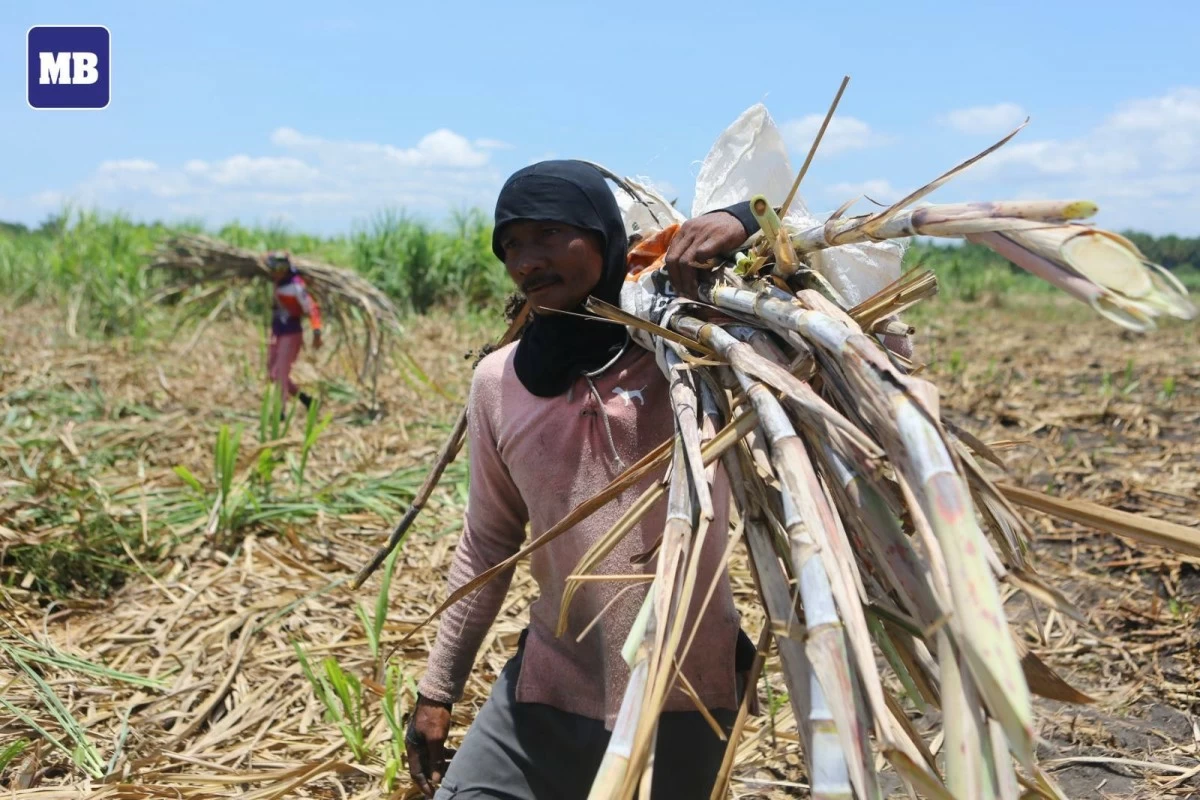
(Manila Bulletin file photo)
A deep-planting cultivation technique developed by the Japan International Research Center for Agricultural Sciences (JIRCAS) is poised to make sugarcane farming in the Philippines more resilient to typhoons and drought.
JIRCAS, the agricultural research arm of the Japanese government, recently partnered with the Sugar Regulatory Administration (SRA) to conduct a study affirming the procedure's adoptability in the country. The mechanism was initially developed with JIRCAS's private-sector partners to improve both yield and the number of sugarcane harvests in Thailand, where initial studies saw positive results in the drought-prone northeast region.
To specifically assess its adaptability to both typhoon and drought conditions in the Philippines, JIRCAS and the SRA held joint field trials. The trials were designed to confirm that the new approach could maintain stable sugarcane production even under extreme weather.
In traditional sugarcane cultivation, sugarcane setts are planted at a shallow depth of 10 to 20 centimeters (cm), which often results in smaller root systems and lower resilience during adverse weather. Deep planting, by contrast, places the setts at approximately 30 cm deep.
This technique improves resistance to lodging from strong winds and drought, while offering higher yields in both initial and ratoon crops. It also reduces the risk of missing plants during mechanical harvesting due to stronger anchoring of the stalks.
SRA Administrator Pablo Luis Azcona said the study showed deep-planting cultivation increased the yield to 77.23 tons per hectare (t/ha) compared to 63.92 t/ha for manual planting. This translates to an additional 28.2 bags of sugar for farmers, boosting their income by ₱68,215 per hectare.
"It has been a great honor for SRA to work with the Japanese towards the improvement and sustainability of our industry," Azcona said in a statement.
The introduction of the deep-planting cultivation technique comes as the domestic sugar industry recovers from a devastating storm. Last month, the SRA recorded ₱1.2 billion in damage to the Visayas sugar industry from Typhoon Tino (international name: Kalmaegi).
The storm affected more than 16,000 sugar farmers, covering 53,000 hectares in the mill districts of Negros Island, Capiz, Iloilo, Leyte, and Cebu.
JIRCAS plans to deploy deep tillage and deep-planting machines in the country to promote widespread adoption of the new cultivation method, according to its website.