






Manila Bulletin
 Business
Trade & Industry
Philippine goods exports sustain double-digit growth in October despite US tariffs
Business
Trade & Industry
Philippine goods exports sustain double-digit growth in October despite US tariffs
Business
Trade & Industry
Philippine goods exports sustain double-digit growth in October despite US tariffs
Philippine goods exports sustain double-digit growth in October despite US tariffs
10-month overseas sales reach new record high
Published Nov 28, 2025 01:05 pm


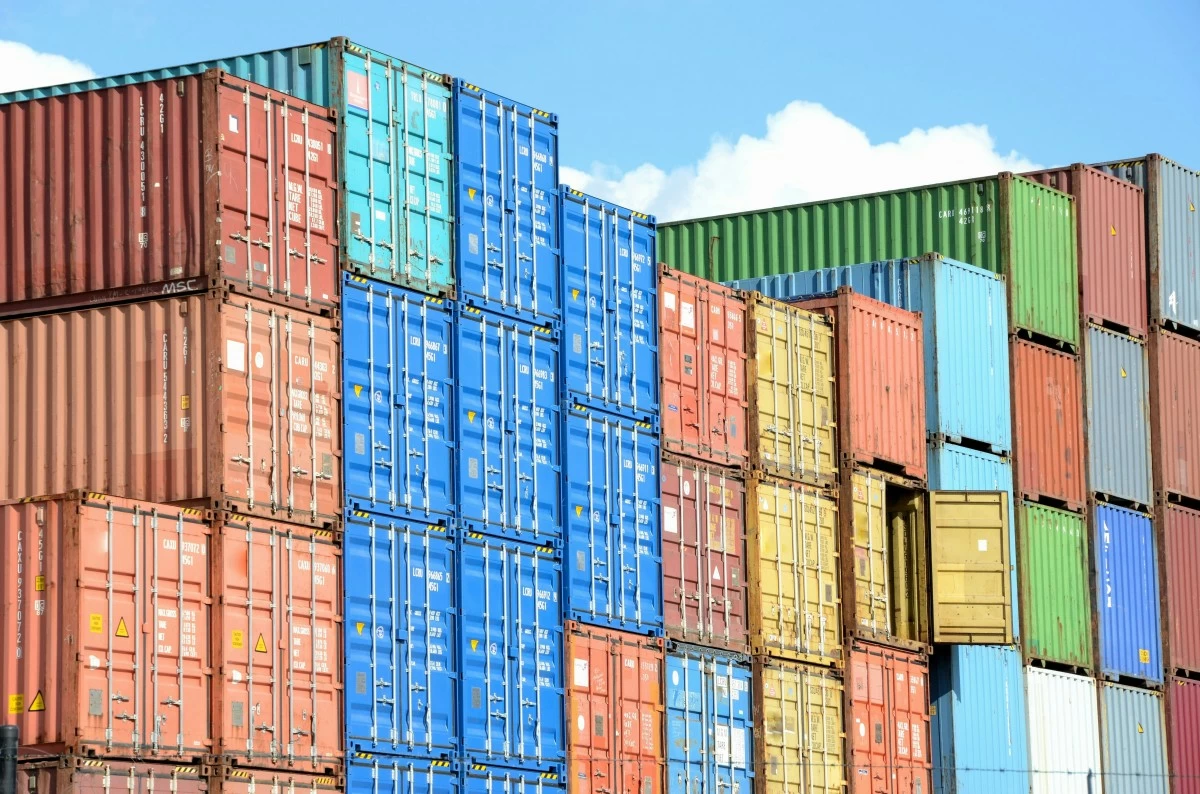
(Unsplash)
Despite lingering United States (US) tariff headwinds, the Philippines’ goods exports during the first 10 months of 2025 reached a new record high, while imports recorded the second-highest level on record, the Philippine Statistics Authority (PSA) reported.
The latest preliminary PSA data on Friday, Nov. 28, showed that the country’s merchandise exports at end-October totaled $70.43 billion, while imports reached $111.75 billion.
National Statistician Claire Dennis S. Mapa told Manila Bulletin that total goods exports in the first 10 months of the year hit the highest end-October level on record since 1991.
Mapa added that cumulative imports from January to October 2025 were the second highest to date, with the all-time peak still held by 2022, when the 10-month import value totaled $116.08 billion.
PSA data showed that merchandise exports reached $7.39 billion in October, rising 19.4 percent from the $6.19 billion recorded in the same month last year. This followed a 16.2-percent annual increase in September and was a sharp turnaround from the five-percent year-on-year decline seen in October 2024.
The PSA report showed that the United States (US) remained the Philippines’ top export market in October, accounting for $1.16 billion or 15.7 percent of total outbound shipments that month.
Japan followed with $1.04 billion (14.1 percent of total), ahead of Hong Kong with $964.5 million (13 percent), China with $868.44 million (11.7 percent), and Germany with $347.26 million (4.7 percent).
PSA data revealed that electronic products remained the leading export commodity in October, generating $4.18 billion and accounting for 56.6 percent of the month’s shipments. Machinery and transport equipment ranked second with $426.07 million (5.8 percent of total), followed by other manufactured goods valued at $394.76 million.
By type of goods, data showed that manufactured goods accounted for the largest share of October exports totaling $6.02 billion or 81.5 percent of the month’s export value.
On the sidelines of the Philippine Economic Society’s (PES) 63rd annual meeting and conference last Nov. 7, Department of Economy, Planning, and Development (DEPDev) Secretary Arsenio M. Balisacan told Manila Bulletin that he is hopeful that the positive merchandise exports performance so far this year would be sustained until year-end.
Balisacan explained that the jump in goods exports was partly due to front-loading effects ahead of US tariffs imposed since August. As such, he said merchandise exports growth could moderate for the rest of the year.
Back in June, the Cabinet-level Development Budget Coordinating Committee (DBCC) projected that goods exports would likely decline by two percent in 2025, “largely due to slower global demand and heightened trade policy uncertainties”—reversing the government’s six-percent growth expectations prior to the world trade tensions started by US President Donald Trump’s tariff spree.
But due to also surging imports, Balisacan said the year-to-date negative net exports performance may still be a drag to full-year gross domestic product (GDP) growth.
On the import side, PSA data showed that the Philippines brought in $11.22-billion worth of goods in October, down 6.5 percent from the $12.01 billion recorded in the same month last year. This marked a reversal from the 5.1-percent annual growth posted in September and the 11.6-percent increase seen in October 2024.
According to the PSA, China remained the biggest source of imports last October, supplying $3.41-billion worth of goods, or 30.4 percent of the month’s total.
Japan came in second with $915.13 million (8.2 percent of total), followed by Indonesia with $795.77 million (7.1 percent), South Korea with $775.28 million (6.9 percent), and Thailand with $703.56 million (6.3 percent).
PSA data revealed that electronic products led October imports, valued at $2.97 billion and representing 26.5 percent of total. It was followed by mineral fuels, lubricants, and related materials at $1.36 billion (12.1 percent of total), and transport equipment at $908.68 million (8.1 percent).
By type of goods, raw materials and intermediate goods made up the largest portion of Philippine imports in October, totaling $4.18 billion, PSA data showed.
The DBCC expects goods imports to grow by 3.5 percent this year “due to resilient domestic economic activity,” although less optimistic than the five-percent increase expected previously.
In a Nov. 27 report, Oxford Economics senior economist Sheana Yue said that across Asia, “we expect export momentum to moderate as payback effects from earlier front-loading sets in.”
“Near-term growth is likely to soften, though recent US tariff rollbacks and implementation lags mean the drag may be milder than initially feared,” Oxford Economics said.
“Medium-term prospects are subdued, with artificial intelligence (AI)-related demand and regional supply-chain shifts providing only partial offsets to a broader slowdown. The region’s export cycle is likely to soften from 2025 levels despite some stabilizing factors,” the think tank added.
(Ricardo M. Austria with a report from Ben Arnold de Vera)