ADVERTISEMENT

Manila recognized by CPTPP top brass, closer to joining mega trade bloc

Published Nov 28, 2025 01:53 pm
The formal process to join the Comprehensive and Progressive Agreement for Trans-Pacific Partnership (CPTPP) could begin next year for the Philippines after its membership bid was recognized by the bloc’s top brass, the Department of Trade and Industry (DTI) said.
Trade Secretary Cristina Roque said the country was one of the aspirant economies recognized by the CPTPP in a ministerial statement published last week.
At a Nov. 21 meeting in Australia, CPTPP Ministers acknowledged the Philippines as one of the four aspirants that adhere to the Auckland Principles.
The Auckland Principles refer to the three requirements that economies must meet to be accepted into the accession process.
This covers preparedness to meet the CPTPP’s high standards and market access commitments, a demonstrated pattern of compliance with trade obligations, and recognition that decisions depend on the consensus of the member parties.
Roque said this endorsement reflects the country’s commitment to a free, open, and rules-based international trading system.
“The Philippines shares the CPTPP parties’ objectives to deepen economic integration, strengthen the implementation of high-standard trade disciplines, and advance inclusive and sustainable growth,” she said.
The Philippines officially applied to join the CPTPP in August.
Gepty earlier said the country had officially applied to join the CPTPP back in August.
Aside from the Philippines, the ministerial statement also cited Uruguay, Indonesia, and the United Arab Emirates as compliant with the Auckland Principles.
The CPTPP said it will commence an accession process with Uruguay this year, and will commence with the other countries the following year “if appropriate.”
On the part of the Philippines, Roque said she is confident the country's accession request will be approved by next year.
Trade Undersecretary Allan Gepty earlier told reporters that he had received positive feedback from CPTPP members on the country’s potential inclusion in the 12-member bloc.
“Our accession to CPTPP is an important agenda that we have to push,” said Gepty.
CPTPP is one of the largest free trade areas in the world, representing a combined population of more than 500 million and gross domestic product (GDP) of $13.5 trillion.
Established in 2018, the CPTPP offers a more liberalized trade to its member parties, including zero tariffs on a wide range of goods, consistent standards, and improved investment facilitation.
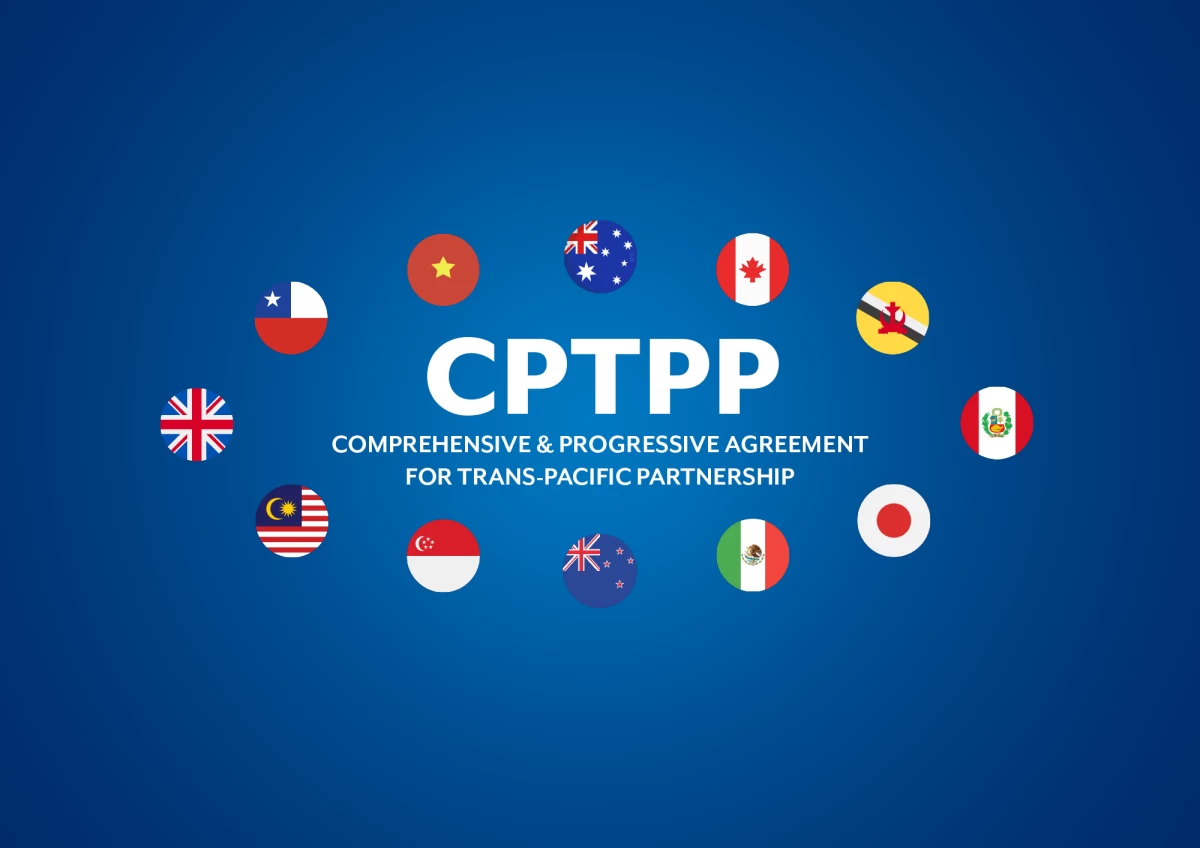
CPTPP is composed of Australia, Brunei, Canada, Chile, Japan, Malaysia, Mexico, New Zealand, Peru, Singapore, Vietnam, and the United Kingdom (UK).
Based on its membership policy, the CPTPP will form an accession working group composed of representatives from each party to negotiate terms with the applicant.
Once the terms and conditions are approved, the aspirant economy will have six months to complete the reforms necessary for compliance with the trade agreement, enabling it to formally sign the CPTPP.
Each member state must then undergo its respective ratification processes before the accession enters into effect.
In the case of the UK, CPTPP’s newest member, the accession process for the agreement lasted for around two years.
Roque said participation in this free trade bloc would complement the country’s efforts to expand market access, boost competitiveness, and integrate more fully into regional and global value chains.
“It is expected to provide Philippine enterprises, including MSMEs (micro, small, and medium enterprises), with greater opportunities to participate in international trade, attract foreign investment, and benefit from the transfer of best practices,” Roque said.
“This step will further strengthen the Philippines’ position as a dynamic and resilient participant in the global economy,” she added.
ADVERTISEMENT
.most-popular .layout-ratio{ padding-bottom: 79.13%; } @media (min-width: 768px) and (max-width: 1024px) { .widget-title { font-size: 15px !important; } }

{{ articles_filter_1561_widget.title }}

.most-popular .layout-ratio{ padding-bottom: 79.13%; } @media (min-width: 768px) and (max-width: 1024px) { .widget-title { font-size: 15px !important; } }

{{ articles_filter_1562_widget.title }}

.most-popular .layout-ratio{ padding-bottom: 79.13%; } @media (min-width: 768px) and (max-width: 1024px) { .widget-title { font-size: 15px !important; } }

{{ articles_filter_1563_widget.title }}

{{ articles_filter_1564_widget.title }}

.mb-article-details { position: relative; } .mb-article-details .article-body-preview, .mb-article-details .article-body-summary{ font-size: 17px; line-height: 30px; font-family: "Libre Caslon Text", serif; color: #000; } .mb-article-details .article-body-preview iframe , .mb-article-details .article-body-summary iframe{ width: 100%; margin: auto; } .read-more-background { background: linear-gradient(180deg, color(display-p3 1.000 1.000 1.000 / 0) 13.75%, color(display-p3 1.000 1.000 1.000 / 0.8) 30.79%, color(display-p3 1.000 1.000 1.000) 72.5%); position: absolute; height: 200px; width: 100%; bottom: 0; display: flex; justify-content: center; align-items: center; padding: 0; } .read-more-background a{ color: #000; } .read-more-btn { padding: 17px 45px; font-family: Inter; font-weight: 700; font-size: 18px; line-height: 16px; text-align: center; vertical-align: middle; border: 1px solid black; background-color: white; } .hidden { display: none; }
function initializeAllSwipers() { // Get all hidden inputs with cms_article_id document.querySelectorAll('[id^="cms_article_id_"]').forEach(function (input) { const cmsArticleId = input.value; const articleSelector = '#article-' + cmsArticleId + ' .body_images'; const swiperElement = document.querySelector(articleSelector); if (swiperElement && !swiperElement.classList.contains('swiper-initialized')) { new Swiper(articleSelector, { loop: true, pagination: false, navigation: { nextEl: '#article-' + cmsArticleId + ' .swiper-button-next', prevEl: '#article-' + cmsArticleId + ' .swiper-button-prev', }, }); } }); } setTimeout(initializeAllSwipers, 3000); const intersectionObserver = new IntersectionObserver( (entries) => { entries.forEach((entry) => { if (entry.isIntersecting) { const newUrl = entry.target.getAttribute("data-url"); if (newUrl) { history.pushState(null, null, newUrl); let article = entry.target; // Extract metadata const author = article.querySelector('.author-section').textContent.replace('By', '').trim(); const section = article.querySelector('.section-info ').textContent.replace(' ', ' '); const title = article.querySelector('.article-title h1').textContent; // Parse URL for Chartbeat path format const parsedUrl = new URL(newUrl, window.location.origin); const cleanUrl = parsedUrl.host + parsedUrl.pathname; // Update Chartbeat configuration if (typeof window._sf_async_config !== 'undefined') { window._sf_async_config.path = cleanUrl; window._sf_async_config.sections = section; window._sf_async_config.authors = author; } // Track virtual page view with Chartbeat if (typeof pSUPERFLY !== 'undefined' && typeof pSUPERFLY.virtualPage === 'function') { try { pSUPERFLY.virtualPage({ path: cleanUrl, title: title, sections: section, authors: author }); } catch (error) { console.error('ping error', error); } } // Optional: Update document title if (title && title !== document.title) { document.title = title; } } } }); }, { threshold: 0.1 } ); function showArticleBody(button) { const article = button.closest("article"); const summary = article.querySelector(".article-body-summary"); const body = article.querySelector(".article-body-preview"); const readMoreSection = article.querySelector(".read-more-background"); // Hide summary and read-more section summary.style.display = "none"; readMoreSection.style.display = "none"; // Show the full article body body.classList.remove("hidden"); } document.addEventListener("DOMContentLoaded", () => { let loadCount = 0; // Track how many times articles are loaded const offset = [1, 2, 3, 4, 5, 6, 7, 8, 9, 10]; // Offset values const currentUrl = window.location.pathname.substring(1); let isLoading = false; // Prevent multiple calls if (!currentUrl) { console.log("Current URL is invalid."); return; } const sentinel = document.getElementById("load-more-sentinel"); if (!sentinel) { console.log("Sentinel element not found."); return; } function isSentinelVisible() { const rect = sentinel.getBoundingClientRect(); return ( rect.top < window.innerHeight && rect.bottom >= 0 ); } function onScroll() { if (isLoading) return; if (isSentinelVisible()) { if (loadCount >= offset.length) { console.log("Maximum load attempts reached."); window.removeEventListener("scroll", onScroll); return; } isLoading = true; const currentOffset = offset[loadCount]; window.loadMoreItems().then(() => { let article = document.querySelector('#widget_1690 > div:nth-last-of-type(2) article'); intersectionObserver.observe(article) loadCount++; }).catch(error => { console.error("Error loading more items:", error); }).finally(() => { isLoading = false; }); } } window.addEventListener("scroll", onScroll); });

Sign up by email to receive news.