

ADVERTISEMENT

Creative spaces modeling a greener future

Published Nov 28, 2025 02:18 pm
Indeed, “art is medicine for the soul.” In today’s hyperpolarized and anxious world, art gives us a place to sit with uncertainty — to breathe, reflect, and confront the vastness of human experience. And just as art heals, art spaces, too, can model the kind of sustainable future we long for.
This realization came to me while wandering through the maze of creative shops at Chiang Mai’s Baan Kang Wat, a beloved artist village tucked away in one of the city’s calmer corners. The experience was delightfully dizzying: a feast of colors and textures, the smell of fresh paint and coffee, the gentle chatter of artists at work. Traditional Lanna-style wooden houses, along with sensitively repurposed structures, serve as studios and storefronts. Nothing is air-conditioned — only the mountain breeze flows freely through the open spaces. For introverts like me, it is easy to settle quietly into a charming café and simply absorb the quirky atmosphere.
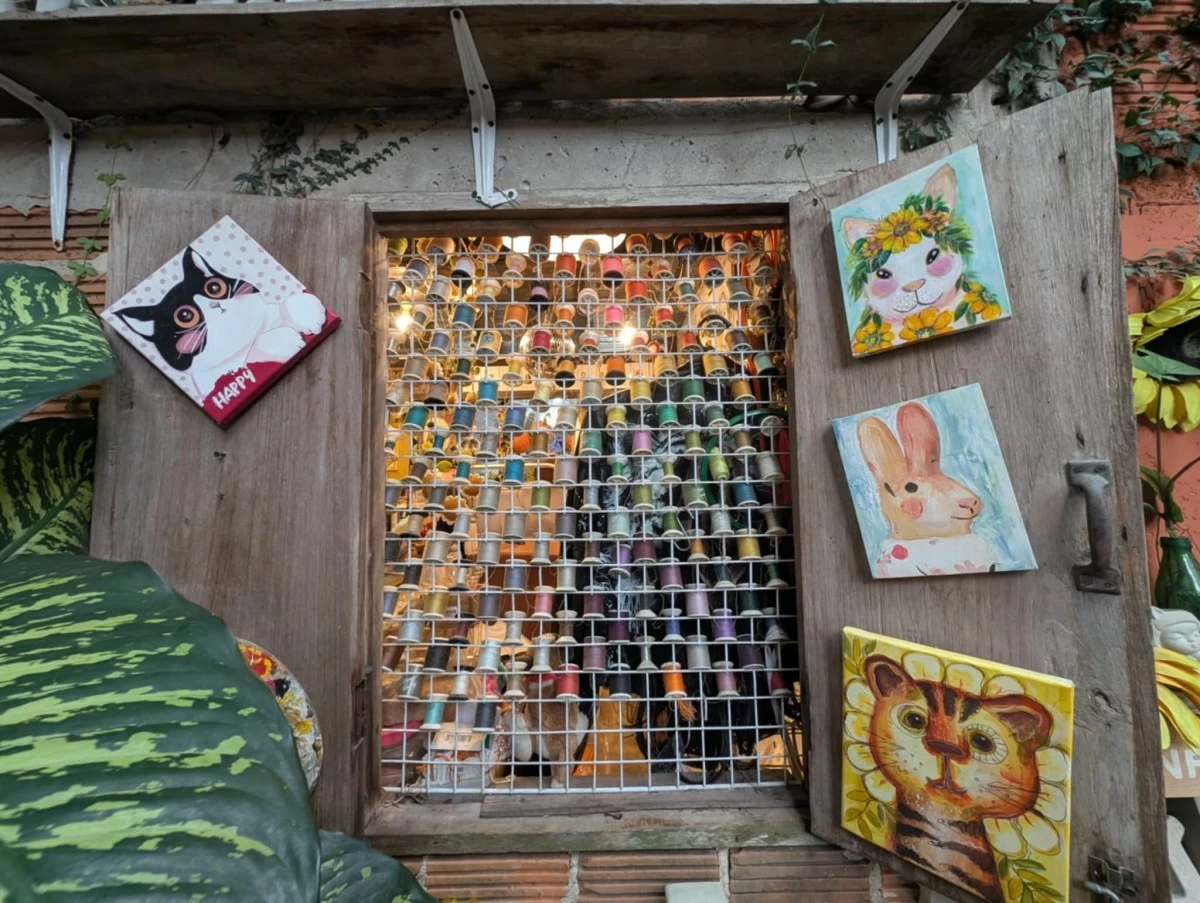
Colors, textures, and sustainability in Chiang Mai's art scene.
But beyond the aesthetics, what struck me most was the market’s sincere commitment to sustainability.
At the entrance stands a simple but powerful sign: “No plastics.” It is a declaration that this space chooses to respect the earth — and invites you to do the same. Inside, waste segregation baskets are clearly labeled for drinking cups, bottles, cans, and even leftover ice. Bottle caps and scrap metals have been transformed into sculptures shaped like squids and whales, hanging playfully from the trellis.
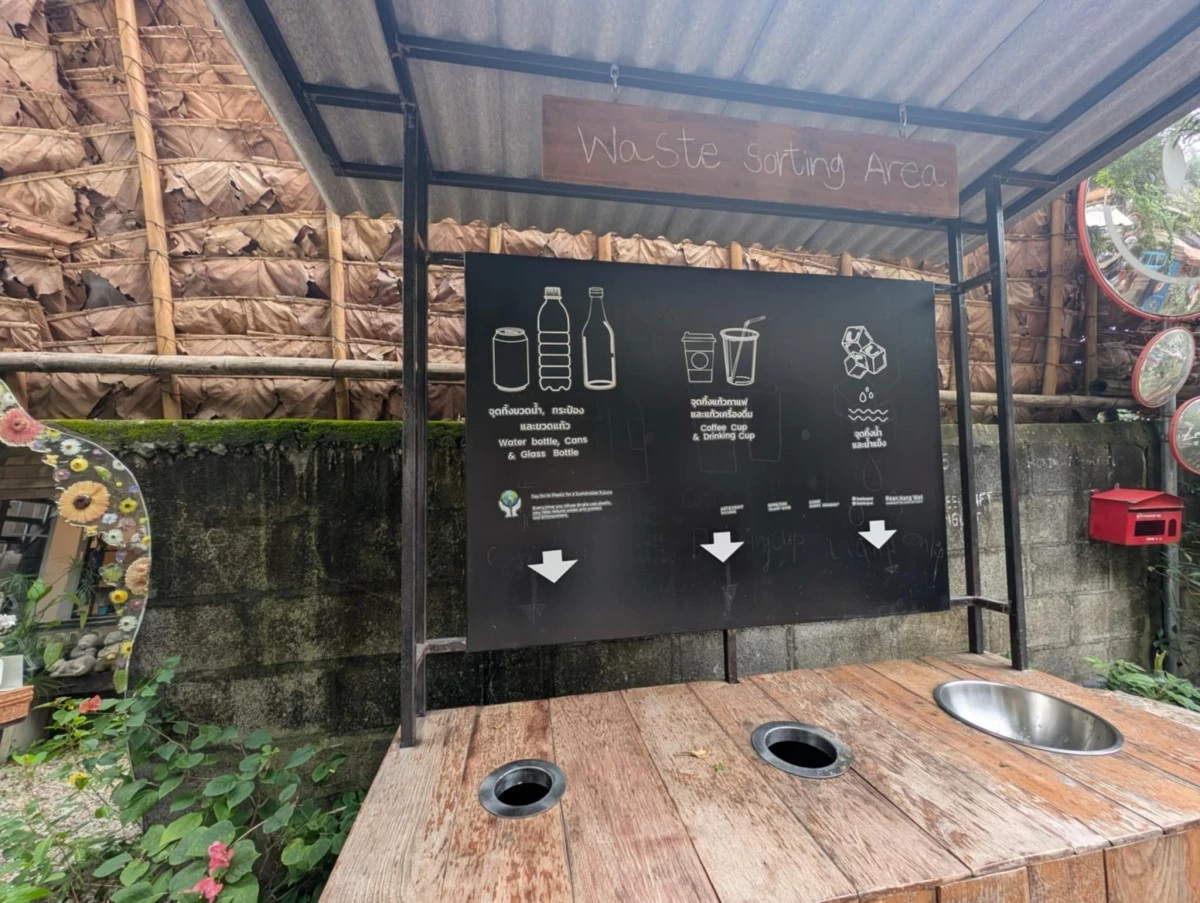
Waste sorting carts at Baan Kang Wat Art Village in Chiang Mai.
Chiang Mai’s love for gardening is also alive here. Vines spill over roofs, pocket gardens soften pathways, and studios are filled with artisan-made pottery, crafts, and paintings, many of them created right on-site. Vegan options are readily available across the cafés. Everything, from the menu to the materials, feels intentionally gentle on the planet.
Baan Kang Wat is a testament to what revitalized spaces can achieve when a community comes together with shared values. Managed by local artisan-entrepreneurs, the village emphasizes collaboration and sustainability rather than mass tourism. And yet, the steady crowd of both locals and tourists shows that there is genuine demand for creative, mindful spaces like this.
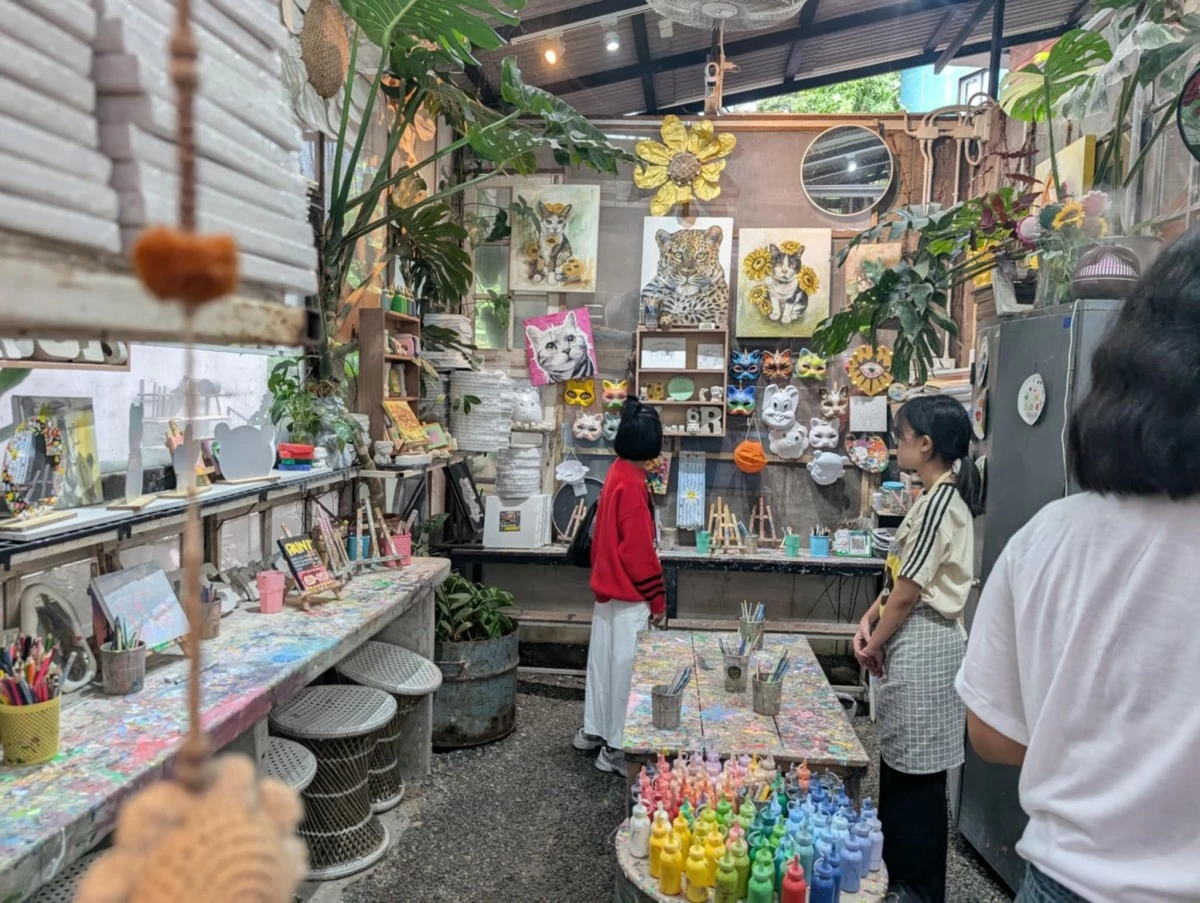
Locals and tourists alike flock to the city's quaint art markets.
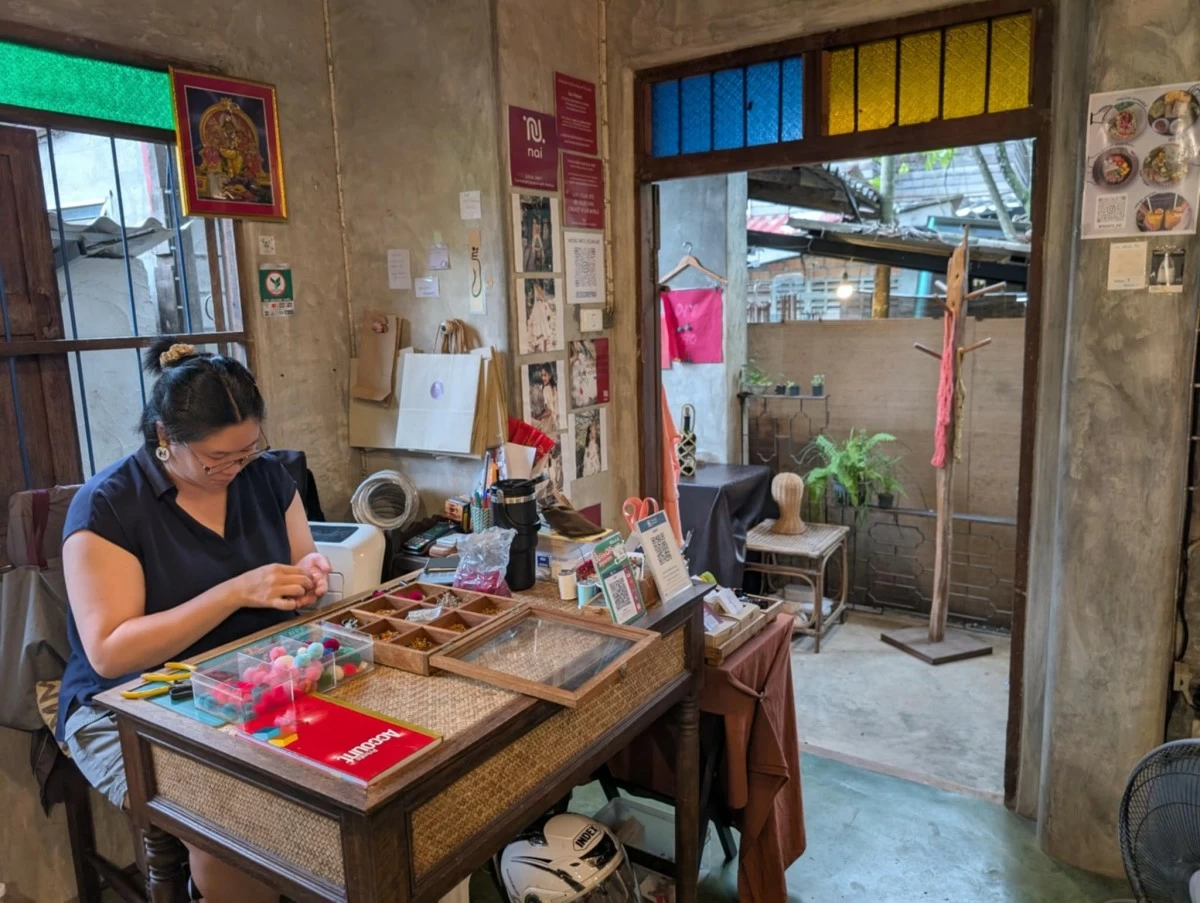
A local crafter in one of the market's studios.
A few days before visiting Baan Kang Wat, I attended the opening of Galerie Y’s exhibit "Tanikala ng Kalikasan" at SM Megamall. Meaning “Chains of Nature,” the exhibition asks:
What binds us to the land that sustains us? Are these ties rooted in care and kinship — or in exploitation and neglect?
Curator Eghai Roxas envisions art as both witness and catalyst for change. Fourteen artists were challenged to confront the duality of human choice — our power to heal or to destroy. This tension mirrors the lived experience of the Masungi Georeserve, which has had to defend itself against unsustainable projects and irresponsible land-use decisions.
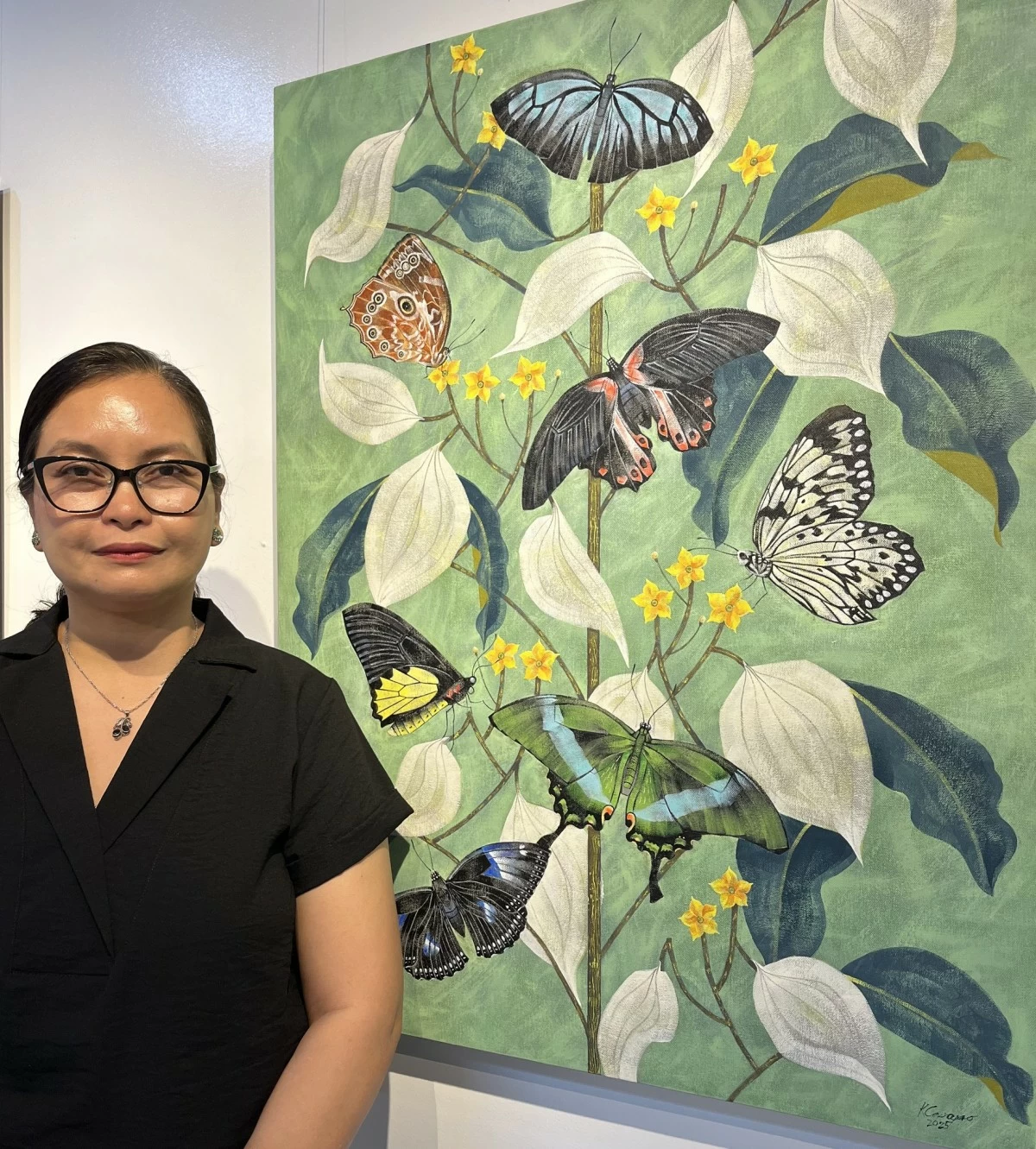
Kat Casapao's Kaleydoscopo in acrylic features seven butterfly species
Among the striking works is Kat Casapao’s Kaleydoscopo (Butterflies of Masungi), an acrylic painting featuring seven native butterfly species perched on a Kahoy-dalaga tree — a quiet reminder of the fragility we are called to protect.
Another showstopper is Flower Fairies, a sculptural wearable art installation by Eric David and Cheryl Caedo. It reimagines the unseen guardians of Masungi: Cheryl used an unfinished garment she had saved for years, while Eric illustrated whimsical elements on the mannequin — ballpoint ink on the figure, acrylic markers on the wings, and decoupaged floral patterns cut from thrifted fabric. The base is a neighbor’s discarded planter weighted with a repurposed soda bottle filled with cement, the mannequin’s post an old curtain rod rescued from a Pasig sidewalk.
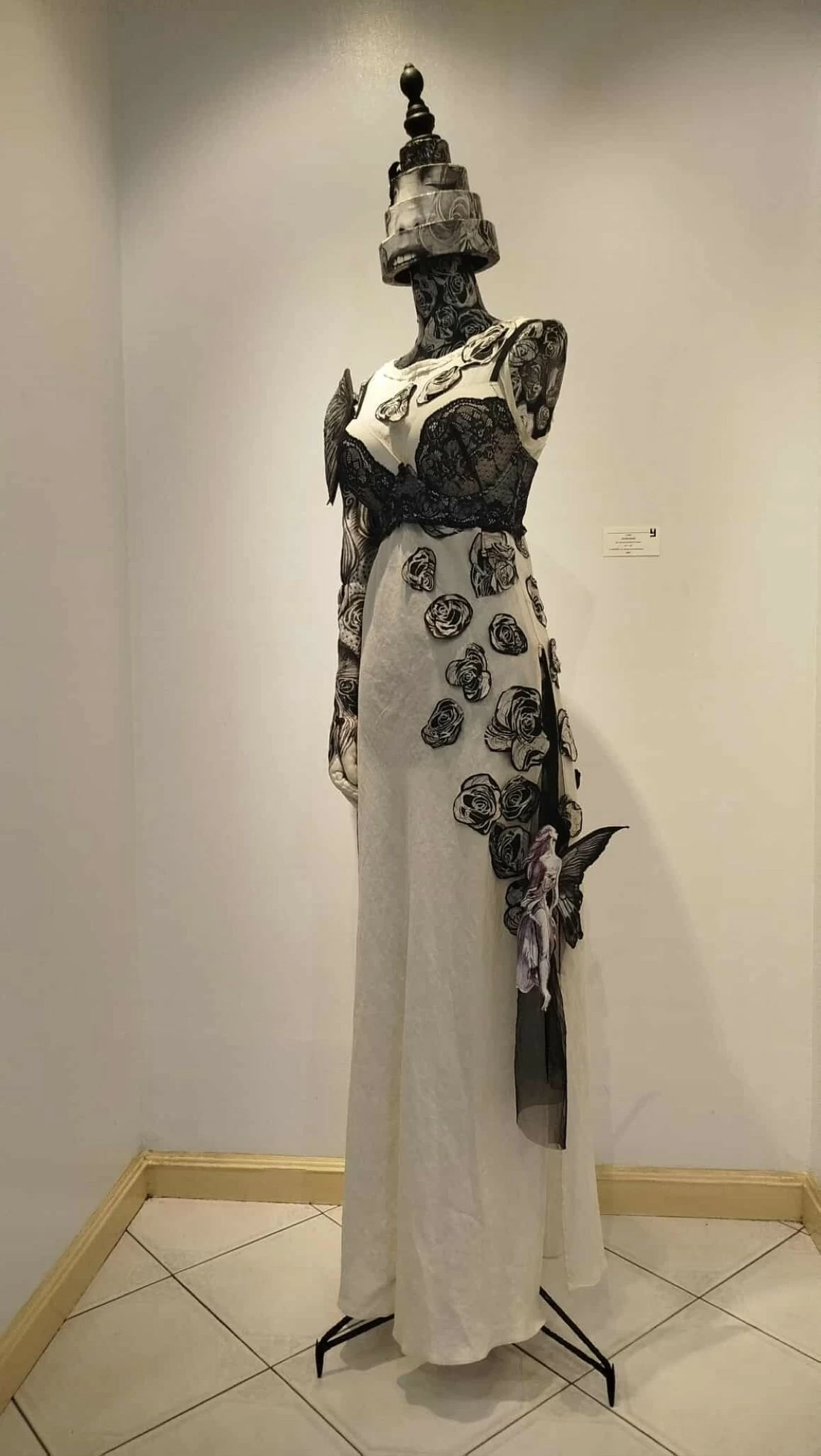
Every element carries a story of renewal in
Every element carries a story of renewal in "Flower Fairies".
There is also Benedicto Modesto’s Mutation of Negligence, a powerful meditation on our collective failure to recognize the value of mountains, forests, and the diverse life they sustain — a negligence that mutates our perception of what truly matters for future generations.
Meanwhile, Jonet Caprio’s The Last Embrace for Little Forest confronts viewers with the urgent choice we face for our landscapes: stewardship or surrender? This dilemma resonates not only with Masungi’s battles against quarries, misplaced wind farms, and land grabs, but also with the plight of ecosystems across the country.
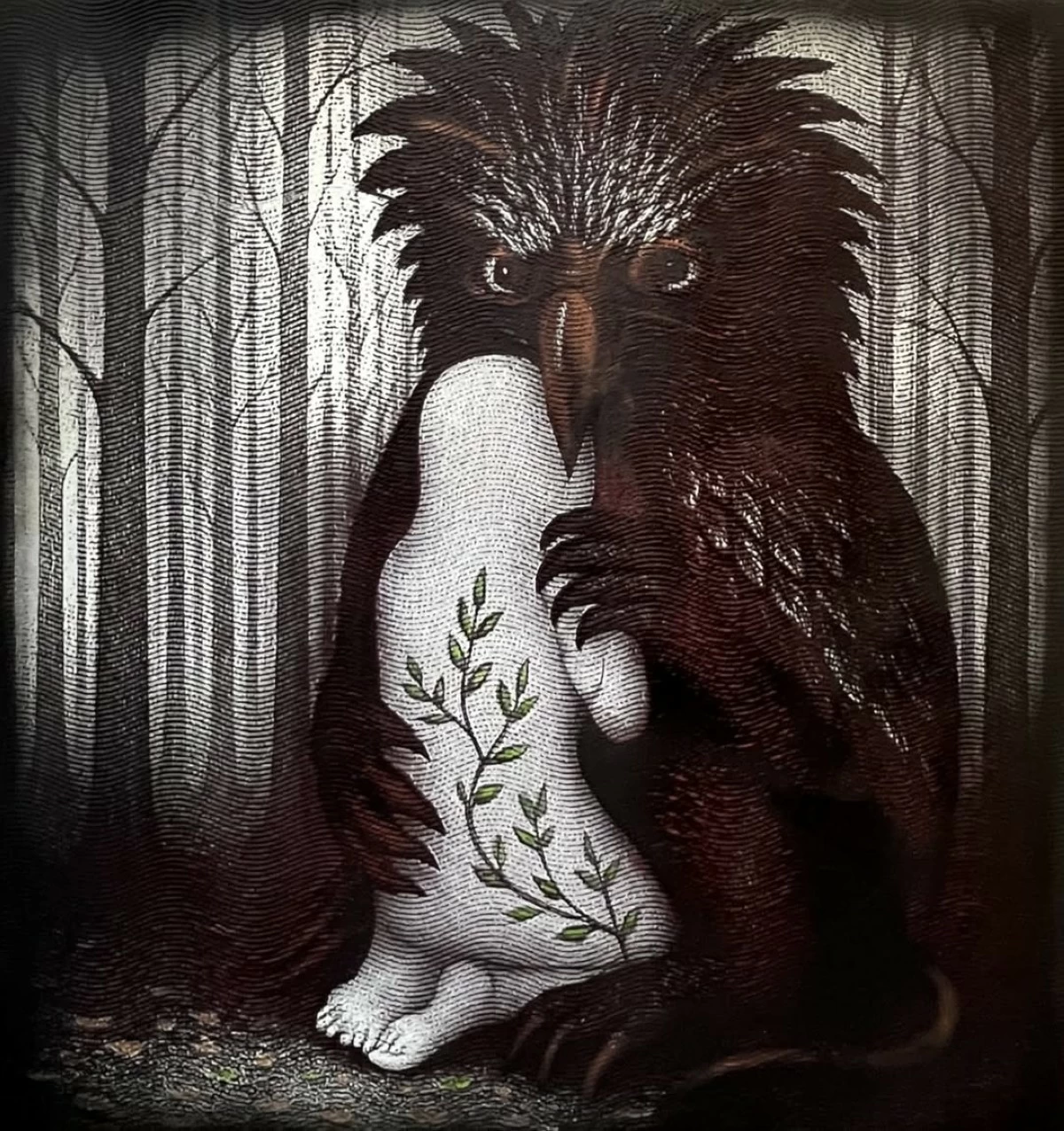
"The Last Embrace for Little Forest" echoes the forest's muted plea: "remember me, protect me, choose me"
These are only a few of the many works that overwhelmed me at the opening. We invite everyone to visit the exhibit at Galerie Y, 4F SM Megamall until November 30, 2025.
Across these two art encounters — in Chiang Mai and in Manila — one truth stands out:
Art is not a passive witness to the future. It is an active mover toward a safer, more beautiful world.
If we are to understand and save nature, we need more art — and more spaces that dare to imagine sustainability as part of daily life.
ADVERTISEMENT
.most-popular .layout-ratio{ padding-bottom: 79.13%; } @media (min-width: 768px) and (max-width: 1024px) { .widget-title { font-size: 15px !important; } }

{{ articles_filter_1561_widget.title }}

.most-popular .layout-ratio{ padding-bottom: 79.13%; } @media (min-width: 768px) and (max-width: 1024px) { .widget-title { font-size: 15px !important; } }

{{ articles_filter_1562_widget.title }}

.most-popular .layout-ratio{ padding-bottom: 79.13%; } @media (min-width: 768px) and (max-width: 1024px) { .widget-title { font-size: 15px !important; } }

{{ articles_filter_1563_widget.title }}

{{ articles_filter_1564_widget.title }}

.mb-article-details { position: relative; } .mb-article-details .article-body-preview, .mb-article-details .article-body-summary{ font-size: 17px; line-height: 30px; font-family: "Libre Caslon Text", serif; color: #000; } .mb-article-details .article-body-preview iframe , .mb-article-details .article-body-summary iframe{ width: 100%; margin: auto; } .read-more-background { background: linear-gradient(180deg, color(display-p3 1.000 1.000 1.000 / 0) 13.75%, color(display-p3 1.000 1.000 1.000 / 0.8) 30.79%, color(display-p3 1.000 1.000 1.000) 72.5%); position: absolute; height: 200px; width: 100%; bottom: 0; display: flex; justify-content: center; align-items: center; padding: 0; } .read-more-background a{ color: #000; } .read-more-btn { padding: 17px 45px; font-family: Inter; font-weight: 700; font-size: 18px; line-height: 16px; text-align: center; vertical-align: middle; border: 1px solid black; background-color: white; } .hidden { display: none; }
function initializeAllSwipers() { // Get all hidden inputs with cms_article_id document.querySelectorAll('[id^="cms_article_id_"]').forEach(function (input) { const cmsArticleId = input.value; const articleSelector = '#article-' + cmsArticleId + ' .body_images'; const swiperElement = document.querySelector(articleSelector); if (swiperElement && !swiperElement.classList.contains('swiper-initialized')) { new Swiper(articleSelector, { loop: true, pagination: false, navigation: { nextEl: '#article-' + cmsArticleId + ' .swiper-button-next', prevEl: '#article-' + cmsArticleId + ' .swiper-button-prev', }, }); } }); } setTimeout(initializeAllSwipers, 3000); const intersectionObserver = new IntersectionObserver( (entries) => { entries.forEach((entry) => { if (entry.isIntersecting) { const newUrl = entry.target.getAttribute("data-url"); if (newUrl) { history.pushState(null, null, newUrl); let article = entry.target; // Extract metadata const author = article.querySelector('.author-section').textContent.replace('By', '').trim(); const section = article.querySelector('.section-info ').textContent.replace(' ', ' '); const title = article.querySelector('.article-title h1').textContent; // Parse URL for Chartbeat path format const parsedUrl = new URL(newUrl, window.location.origin); const cleanUrl = parsedUrl.host + parsedUrl.pathname; // Update Chartbeat configuration if (typeof window._sf_async_config !== 'undefined') { window._sf_async_config.path = cleanUrl; window._sf_async_config.sections = section; window._sf_async_config.authors = author; } // Track virtual page view with Chartbeat if (typeof pSUPERFLY !== 'undefined' && typeof pSUPERFLY.virtualPage === 'function') { try { pSUPERFLY.virtualPage({ path: cleanUrl, title: title, sections: section, authors: author }); } catch (error) { console.error('ping error', error); } } // Optional: Update document title if (title && title !== document.title) { document.title = title; } } } }); }, { threshold: 0.1 } ); function showArticleBody(button) { const article = button.closest("article"); const summary = article.querySelector(".article-body-summary"); const body = article.querySelector(".article-body-preview"); const readMoreSection = article.querySelector(".read-more-background"); // Hide summary and read-more section summary.style.display = "none"; readMoreSection.style.display = "none"; // Show the full article body body.classList.remove("hidden"); } document.addEventListener("DOMContentLoaded", () => { let loadCount = 0; // Track how many times articles are loaded const offset = [1, 2, 3, 4, 5, 6, 7, 8, 9, 10]; // Offset values const currentUrl = window.location.pathname.substring(1); let isLoading = false; // Prevent multiple calls if (!currentUrl) { console.log("Current URL is invalid."); return; } const sentinel = document.getElementById("load-more-sentinel"); if (!sentinel) { console.log("Sentinel element not found."); return; } function isSentinelVisible() { const rect = sentinel.getBoundingClientRect(); return ( rect.top < window.innerHeight && rect.bottom >= 0 ); } function onScroll() { if (isLoading) return; if (isSentinelVisible()) { if (loadCount >= offset.length) { console.log("Maximum load attempts reached."); window.removeEventListener("scroll", onScroll); return; } isLoading = true; const currentOffset = offset[loadCount]; window.loadMoreItems().then(() => { let article = document.querySelector('#widget_1690 > div:nth-last-of-type(2) article'); intersectionObserver.observe(article) loadCount++; }).catch(error => { console.error("Error loading more items:", error); }).finally(() => { isLoading = false; }); } } window.addEventListener("scroll", onScroll); });

Sign up by email to receive news.