






Manila Bulletin
 Philippines
National
Acidre: ₱1.38-T education budget for 2026 shows Marcos admin is bent on fixing sector
Philippines
National
Acidre: ₱1.38-T education budget for 2026 shows Marcos admin is bent on fixing sector
Philippines
National
Acidre: ₱1.38-T education budget for 2026 shows Marcos admin is bent on fixing sector
Acidre: ₱1.38-T education budget for 2026 shows Marcos admin is bent on fixing sector
Published Nov 28, 2025 03:23 pm


At A Glance
- The proposed ₱1.38-trillion allocation for the education sector in 2026 shows the Marcos administration is serious when it comes to addressing the problems of the local education system.
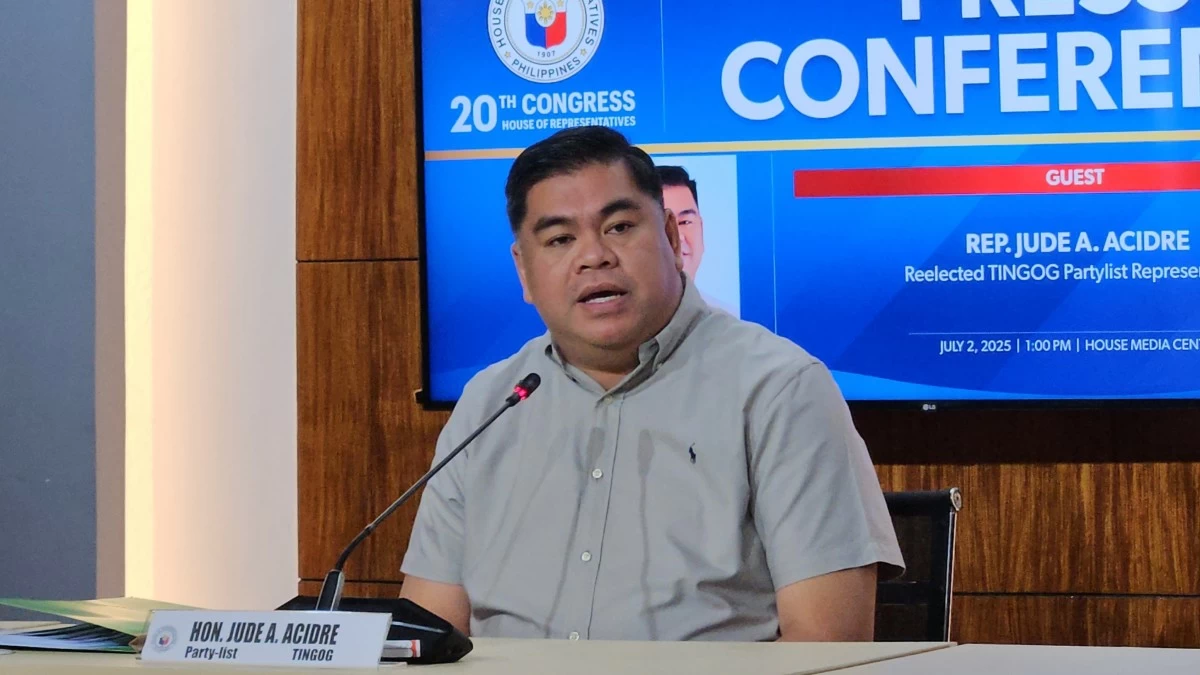
Tingog Party-list Rep. Jude Acidre (Ellson Quismorio/ MANILA BULLETIN)
The proposed ₱1.38-trillion allocation for the education sector in 2026 shows the Marcos administration is serious when it comes to addressing the problems of the local education system.
Thus, said House Committee on Higher and Technical Education Chairman Tingog Party-list Rep. Jude Acidre, who welcomed the development in a statement Friday, Nov. 28.
"I welcome the proposed ₱1.38-trillion allocation for the education sector in 2026, equivalent to about 4.5 percent of our country’s GDP (gross domestic product)," said Acidre, also co-chairman of Second Congressional Commission on Education (EDCOM II).
"This unprecedented level of support reflects the government's firm commitment to placing education at the center of our national development agenda," he noted.
"This historic level of investment reflects the seriousness with which the government is confronting the challenges facing our education system," the Tingog solon further said.
Acidre said that through EDCOM II, authorities "have consistently underscored the urgency of addressing learning recovery, improving sector governance, upgrading facilities, and strengthening support for teachers and school leaders".
"The size of the proposed budget signals that these priorities are now being met with the resources they require," the House leader underscored.
"We also recognize the important role of the Department of Education (DepEd), led by Secretary Sonny Angara, which carries the largest share of this allocation," Acidre said.
The proposed ₱1.38-trillion funding will help sustain crucial programs such as ARAL, classroom construction and rehabilitation, school-based feeding, teacher hiring, and the continuing modernization of basic education.
Acidre said such reforms are fully aligned with the recommendations of EDCOM II and with the long-term direction set by Congress.
"A budget of this scale calls for careful stewardship. Our shared responsibility is to ensure that these resources are used efficiently, that coordination among agencies remains strong, and that every investment contributes to real improvements in learning outcomes," he said.
"Effective implementation is crucial if we are to translate this historic allocation into lasting progress for our students and schools," he noted.
Acidre said that for higher education and technical-vocational training, the proposed allocations also strengthen the momentum behind the committee’s core higher education Legislative Agenda: from modernizing CHEd's (Commission on Higher Education) governance and expanding student access and retention, to advancing digital transformation, institutionalizing micro-credentials and lifelong learning pathways, strengthening the quality assurance and qualifications framework, and deepening higher education-industry partnerships.
He reckoned that these reforms form the backbone of a more responsive and future-ready higher education system.
"This ₱1.38-trillion budget is more than a figure in the General Appropriations Bill (GAB). It is a statement of national resolve. It affirms our shared belief that education is the strongest foundation for inclusive growth and the most important investment we can make in our people," Acidre said.