

ADVERTISEMENT

Proposed Bagong Balikbayan Act hurdles appropriations panel

Published Nov 27, 2025 05:06 pm

At A Glance

  • The House Committee on Appropriations has approved the funding provisions of the proposed Bagong Balikbayan Act, a pet measure of AGIMAT Party-list Rep. Bryan Revilla.
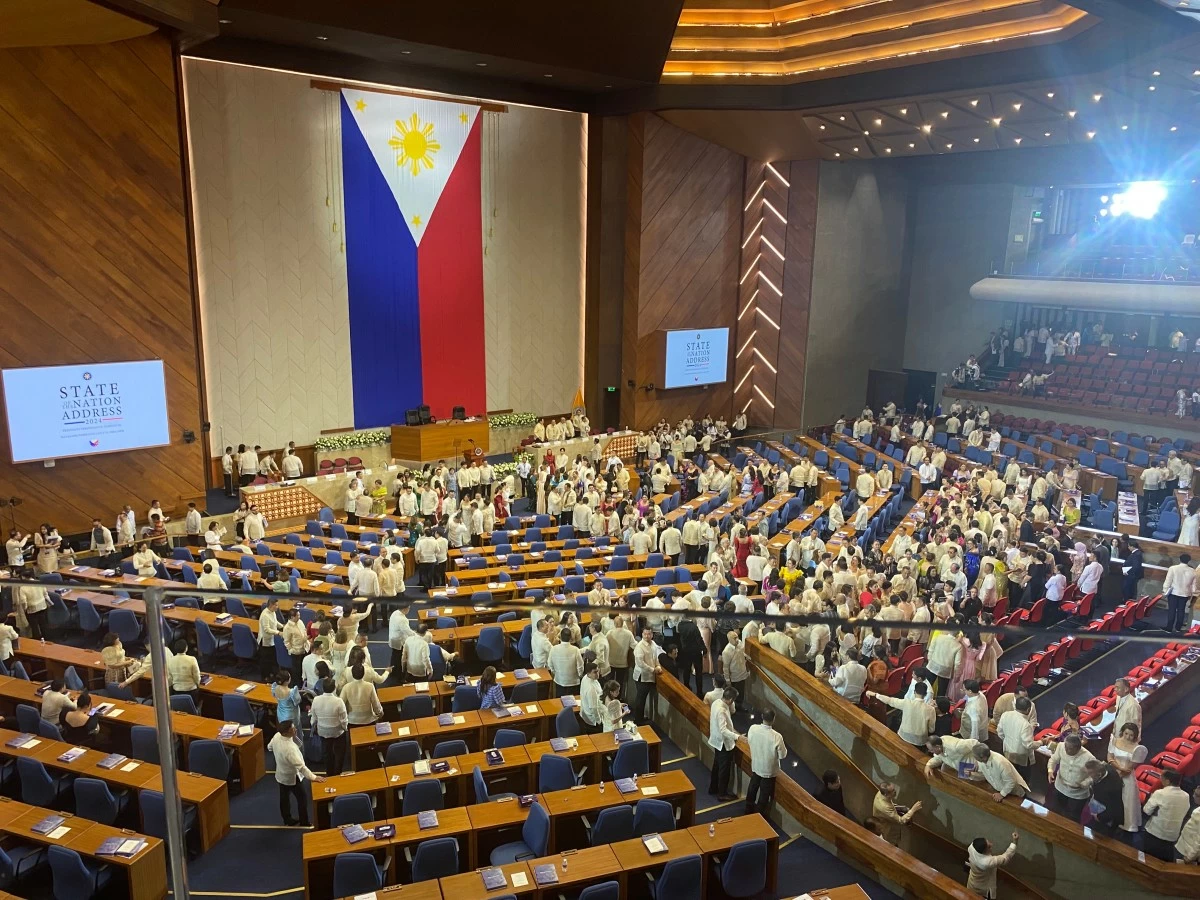
The House plenary (Contributed photo)


The House Committee on Appropriations has approved the funding provisions of the proposed Bagong Balikbayan Act, a pet measure of AGIMAT Party-list Rep. Bryan Revilla.
With the green light from the appropriations panel, the pro-overseas Filipino workers (OFW) measure is expected to get third and final reading approval in plenary before the Christmas break.
Revilla, chaiman of the House Committee on Overseas Workers Affairs, said the Bagong Balikbayan Act aims to make the Philippines a viable, reliable, and dignified option for returning OFWs, where they are welcomed not only with gratitude but with real opportunities, clear pathways, and strong government support toward their reintegration.
As the principal author of the measure, the Cavite solon reaffirmed his full commitment to see to the measures's passage during the appropriations panel meeting on Nov. 26.
He emphasized that the bill was both a legislative and personal priority designed to ensure that returning OFWs receive comprehensive, integrated, and sustainable support throughout their reintegration journey.
“I am here not just to present a funding request, but to present an investment in the most resilient backbone of our economy—our Overseas Filipino Workers. These are our modern-day heroes who have sacrificed greatly,” Revilla said.
“Sa loob ng mahabang panahon, ang reintegration program ng gobyerno ay tagpi-tagpi at walang malinaw na direksyon. Ang pinaka-apektado ay ang ating mga OFW. Kaya kahit gusto na nilang umuwi, napipilitan silang makipagsapalaran muli sa abroad para maitaguyod ang pamilya,” he added.
(For a long time, the government’s reintegration program has been patchwork and lacking clear direction. The most affected are our OFWs. So even if they already want to come home, they are forced to take their chances abroad once again in order to support their families.)
The last House plenary session date before the Christmas break is Dec. 17.
The proposed measure establishes a coordinated framework for all returning OFWs, including land-based, sea-based, documented, and undocumented workers. It promotes economic self-sufficiency, social stability, and psychosocial well-being by shifting from reactive aid to proactive support that covers the entire lifecycle of return migration.
Revilla highlighted that family considerations remain the top reason for returning.
“Family is often the primary reason for coming home, but that should not overshadow the importance of job availability and economic conditions here. Our goal is to make the Philippines a truly viable home, a place where opportunities exist so they do not feel forced to leave again.”
During the hearing, Revilla asked the Department of Budget and Management (DBM) to increase its plantilla positions for the Reintegration Bureau of the Department or Migrant Workers (DMW).
Revilla noted that the DMW’s Reintegration Bureau is too small with only 18 personnel serving an estimated 500,000-600,000 people.
“I would like to request the DBM if this would be possible. And I know, this is a small ask. I hope the DBM would grant this request for DMW for this reintegration program to be a successful launch,“ he said.
The House leader stressed that reintegration wasn't a one-size-fits-all process. While some returning OFWs thrive as entrepreneurs, others require retraining or direct employment.
“Hindi lahat gusto mag-negosyo pag-uwi. Marami rin ang gustong magtrabaho ulit. That is why re-skilling and re-tooling require additional budget (Not everyone wants to go into business upon returning home. Many also want to work again. That is why re-skilling and re-tooling require additional budget)."
Revilla also cited practical challenges faced by many returnees such as low savings, non-transferable skills, and stagnant local economies. He underscored that reintegration is as much a social transition as it is an economic one.
“Hindi natin pwedeng iwanan ang OFW pagkatapos nilang umuwi. Ang pagbabalik ay bahagi ng migration journey. Kung pababayaan natin ito, paulit-ulit lang ang pagpasok at pag-alis ng bansa,” he said.
(We cannot abandon OFWs after they come back. Returning is part of the migration journey. If we neglect this, the cycle of leaving and re-entering the country will only continue.)
ADVERTISEMENT
.most-popular .layout-ratio{ padding-bottom: 79.13%; } @media (min-width: 768px) and (max-width: 1024px) { .widget-title { font-size: 15px !important; } }

{{ articles_filter_1561_widget.title }}

.most-popular .layout-ratio{ padding-bottom: 79.13%; } @media (min-width: 768px) and (max-width: 1024px) { .widget-title { font-size: 15px !important; } }

{{ articles_filter_1562_widget.title }}

.most-popular .layout-ratio{ padding-bottom: 79.13%; } @media (min-width: 768px) and (max-width: 1024px) { .widget-title { font-size: 15px !important; } }

{{ articles_filter_1563_widget.title }}

{{ articles_filter_1564_widget.title }}

.mb-article-details { position: relative; } .mb-article-details .article-body-preview, .mb-article-details .article-body-summary{ font-size: 17px; line-height: 30px; font-family: "Libre Caslon Text", serif; color: #000; } .mb-article-details .article-body-preview iframe , .mb-article-details .article-body-summary iframe{ width: 100%; margin: auto; } .read-more-background { background: linear-gradient(180deg, color(display-p3 1.000 1.000 1.000 / 0) 13.75%, color(display-p3 1.000 1.000 1.000 / 0.8) 30.79%, color(display-p3 1.000 1.000 1.000) 72.5%); position: absolute; height: 200px; width: 100%; bottom: 0; display: flex; justify-content: center; align-items: center; padding: 0; } .read-more-background a{ color: #000; } .read-more-btn { padding: 17px 45px; font-family: Inter; font-weight: 700; font-size: 18px; line-height: 16px; text-align: center; vertical-align: middle; border: 1px solid black; background-color: white; } .hidden { display: none; }
function initializeAllSwipers() { // Get all hidden inputs with cms_article_id document.querySelectorAll('[id^="cms_article_id_"]').forEach(function (input) { const cmsArticleId = input.value; const articleSelector = '#article-' + cmsArticleId + ' .body_images'; const swiperElement = document.querySelector(articleSelector); if (swiperElement && !swiperElement.classList.contains('swiper-initialized')) { new Swiper(articleSelector, { loop: true, pagination: false, navigation: { nextEl: '#article-' + cmsArticleId + ' .swiper-button-next', prevEl: '#article-' + cmsArticleId + ' .swiper-button-prev', }, }); } }); } setTimeout(initializeAllSwipers, 3000); const intersectionObserver = new IntersectionObserver( (entries) => { entries.forEach((entry) => { if (entry.isIntersecting) { const newUrl = entry.target.getAttribute("data-url"); if (newUrl) { history.pushState(null, null, newUrl); let article = entry.target; // Extract metadata const author = article.querySelector('.author-section').textContent.replace('By', '').trim(); const section = article.querySelector('.section-info ').textContent.replace(' ', ' '); const title = article.querySelector('.article-title h1').textContent; // Parse URL for Chartbeat path format const parsedUrl = new URL(newUrl, window.location.origin); const cleanUrl = parsedUrl.host + parsedUrl.pathname; // Update Chartbeat configuration if (typeof window._sf_async_config !== 'undefined') { window._sf_async_config.path = cleanUrl; window._sf_async_config.sections = section; window._sf_async_config.authors = author; } // Track virtual page view with Chartbeat if (typeof pSUPERFLY !== 'undefined' && typeof pSUPERFLY.virtualPage === 'function') { try { pSUPERFLY.virtualPage({ path: cleanUrl, title: title, sections: section, authors: author }); } catch (error) { console.error('ping error', error); } } // Optional: Update document title if (title && title !== document.title) { document.title = title; } } } }); }, { threshold: 0.1 } ); function showArticleBody(button) { const article = button.closest("article"); const summary = article.querySelector(".article-body-summary"); const body = article.querySelector(".article-body-preview"); const readMoreSection = article.querySelector(".read-more-background"); // Hide summary and read-more section summary.style.display = "none"; readMoreSection.style.display = "none"; // Show the full article body body.classList.remove("hidden"); } document.addEventListener("DOMContentLoaded", () => { let loadCount = 0; // Track how many times articles are loaded const offset = [1, 2, 3, 4, 5, 6, 7, 8, 9, 10]; // Offset values const currentUrl = window.location.pathname.substring(1); let isLoading = false; // Prevent multiple calls if (!currentUrl) { console.log("Current URL is invalid."); return; } const sentinel = document.getElementById("load-more-sentinel"); if (!sentinel) { console.log("Sentinel element not found."); return; } function isSentinelVisible() { const rect = sentinel.getBoundingClientRect(); return ( rect.top < window.innerHeight && rect.bottom >= 0 ); } function onScroll() { if (isLoading) return; if (isSentinelVisible()) { if (loadCount >= offset.length) { console.log("Maximum load attempts reached."); window.removeEventListener("scroll", onScroll); return; } isLoading = true; const currentOffset = offset[loadCount]; window.loadMoreItems().then(() => { let article = document.querySelector('#widget_1690 > div:nth-last-of-type(2) article'); intersectionObserver.observe(article) loadCount++; }).catch(error => { console.error("Error loading more items:", error); }).finally(() => { isLoading = false; }); } } window.addEventListener("scroll", onScroll); });

Sign up by email to receive news.