

ADVERTISEMENT

Isuzu rolls out Comprehensive Calamity Assistance Program for vehicle owners

Published Nov 27, 2025 11:11 am

At A Glance

  • Isuzu Philippines Corporation (IPC) has officially launched its Calamity Assistance Program, a comprehensive initiative designed to help Isuzu vehicle owners recover from the impacts of various natural calamities, including typhoons, floods, volcanic eruptions, ashfalls, earthquakes, and landslides.
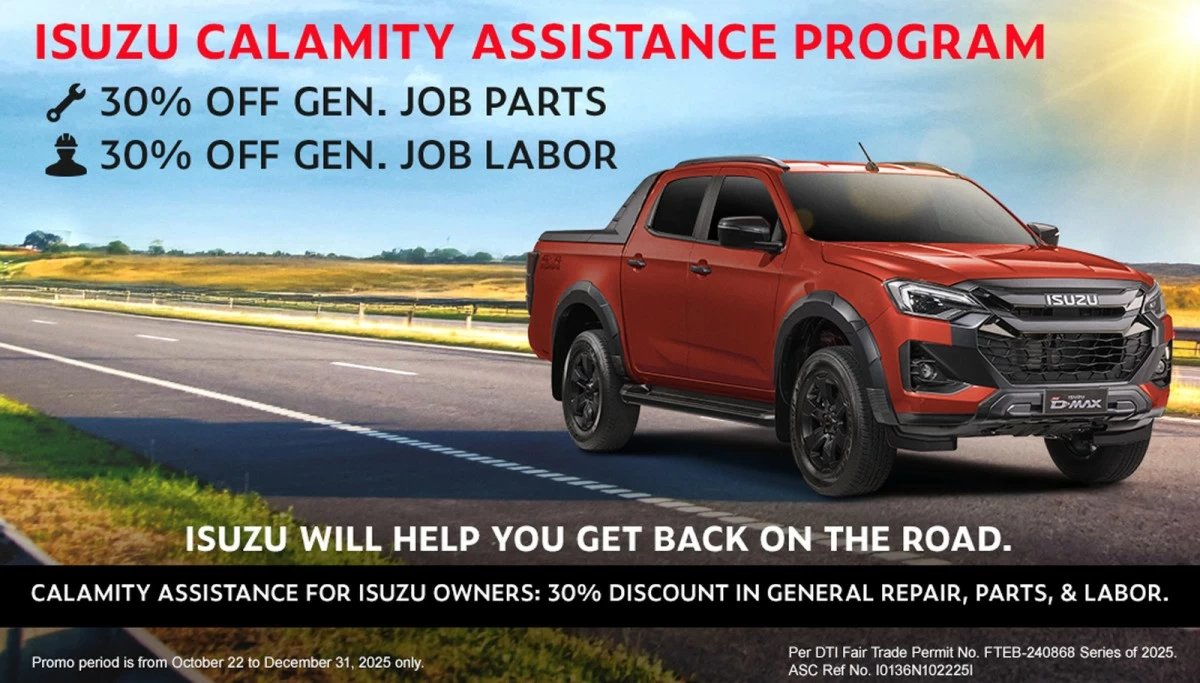
  • Customers whose vehicles have been damaged by natural calamities can avail themselves of a 30% discount on essential parts and repair services.
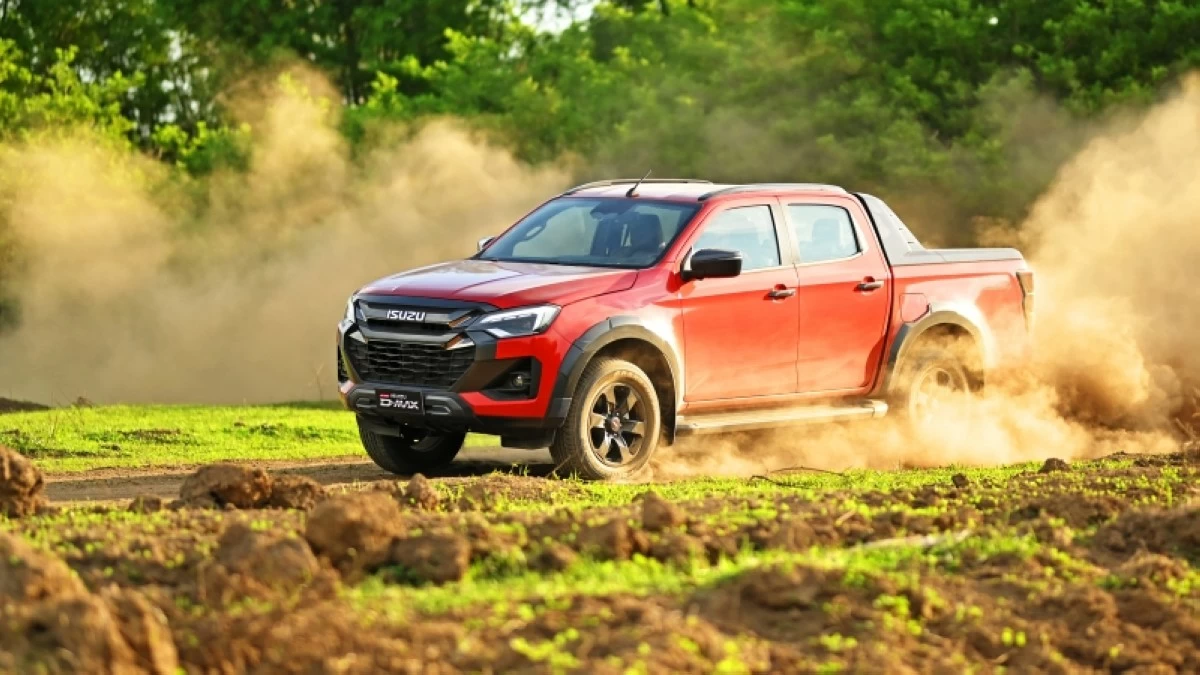
In response to the increasing frequency and severity of natural calamities in the Philippines, Isuzu Philippines Corporation (IPC) has officially launched its Calamity Assistance Program, a comprehensive initiative designed to help Isuzu vehicle owners recover from the impacts of various natural calamities, including typhoons, floods, volcanic eruptions, ashfalls, earthquakes, and landslides.
This program builds on the Typhoon Assistance Program introduced last year, which primarily supported customers affected by floods and typhoons. Recognizing the need for broader coverage, IPC has expanded its assistance efforts to address a wider range of calamities, reinforcing its commitment to being Your Responsible Partner in times of crisis.
“In Isuzu, we understand that natural calamities can disrupt not only mobility but livelihoods,” said IPC President, Mikio Tsukui. “Through this expanded Calamity Assistance Program, we aim to provide timely and practical support to our customers, helping them restore their vehicles and resume their daily lives with confidence. This is part of our ongoing commitment to be Your Responsible Partner and helping customers in times of need.”
The Calamity Assistance Program is available to owners of all Isuzu light commercial vehicles (LCV) and commercial vehicles (CV), regardless of year model. Customers whose vehicles have been damaged by natural calamities can avail themselves of a 30% discount on essential parts and repair services. This discount applies to essential vehicle components such as engine parts and assemblies, transmission systems, drivetrain components, electrical parts (including bulbs and cluster meters), electronic control modules (ECM/TCM), and collision-related body parts like panels and doors.
While the program offers extensive coverage for essential vehicle components, certain items and services fall outside its scope. These include non-critical accessories and electronics such as audio/DVD units, LCD monitors, keyless entry systems, back sensors, alarms, and batteries. Services like towing, painting, detailing, and washing are also excluded, along with accessory installations and sublet repairs such as machining, calibration, radiator servicing, and rewinding. Additionally, parts purchased over the counter are not eligible under the program.
The Calamity Assistance Program runs until December 31, 2025, and is available across participating Isuzu dealerships nationwide. To ensure timely and efficient service, customers are encouraged to contact their nearest Isuzu dealer to schedule an appointment.
More than just a service offering, the Calamity Assistance Program reflects IPC’s commitment to empathy, responsibility, and community support. It reinforces the company’s role as Your Responsible Partner, ensuring Isuzu customers are not alone during challenging times.

Related Tags

Isuzu Philippines Corp. (IPC)
ADVERTISEMENT
.most-popular .layout-ratio{ padding-bottom: 79.13%; } @media (min-width: 768px) and (max-width: 1024px) { .widget-title { font-size: 15px !important; } }

{{ articles_filter_1561_widget.title }}

.most-popular .layout-ratio{ padding-bottom: 79.13%; } @media (min-width: 768px) and (max-width: 1024px) { .widget-title { font-size: 15px !important; } }

{{ articles_filter_1562_widget.title }}

.most-popular .layout-ratio{ padding-bottom: 79.13%; } @media (min-width: 768px) and (max-width: 1024px) { .widget-title { font-size: 15px !important; } }

{{ articles_filter_1563_widget.title }}

{{ articles_filter_1564_widget.title }}

.mb-article-details { position: relative; } .mb-article-details .article-body-preview, .mb-article-details .article-body-summary{ font-size: 17px; line-height: 30px; font-family: "Libre Caslon Text", serif; color: #000; } .mb-article-details .article-body-preview iframe , .mb-article-details .article-body-summary iframe{ width: 100%; margin: auto; } .read-more-background { background: linear-gradient(180deg, color(display-p3 1.000 1.000 1.000 / 0) 13.75%, color(display-p3 1.000 1.000 1.000 / 0.8) 30.79%, color(display-p3 1.000 1.000 1.000) 72.5%); position: absolute; height: 200px; width: 100%; bottom: 0; display: flex; justify-content: center; align-items: center; padding: 0; } .read-more-background a{ color: #000; } .read-more-btn { padding: 17px 45px; font-family: Inter; font-weight: 700; font-size: 18px; line-height: 16px; text-align: center; vertical-align: middle; border: 1px solid black; background-color: white; } .hidden { display: none; }
function initializeAllSwipers() { // Get all hidden inputs with cms_article_id document.querySelectorAll('[id^="cms_article_id_"]').forEach(function (input) { const cmsArticleId = input.value; const articleSelector = '#article-' + cmsArticleId + ' .body_images'; const swiperElement = document.querySelector(articleSelector); if (swiperElement && !swiperElement.classList.contains('swiper-initialized')) { new Swiper(articleSelector, { loop: true, pagination: false, navigation: { nextEl: '#article-' + cmsArticleId + ' .swiper-button-next', prevEl: '#article-' + cmsArticleId + ' .swiper-button-prev', }, }); } }); } setTimeout(initializeAllSwipers, 3000); const intersectionObserver = new IntersectionObserver( (entries) => { entries.forEach((entry) => { if (entry.isIntersecting) { const newUrl = entry.target.getAttribute("data-url"); if (newUrl) { history.pushState(null, null, newUrl); let article = entry.target; // Extract metadata const author = article.querySelector('.author-section').textContent.replace('By', '').trim(); const section = article.querySelector('.section-info ').textContent.replace(' ', ' '); const title = article.querySelector('.article-title h1').textContent; // Parse URL for Chartbeat path format const parsedUrl = new URL(newUrl, window.location.origin); const cleanUrl = parsedUrl.host + parsedUrl.pathname; // Update Chartbeat configuration if (typeof window._sf_async_config !== 'undefined') { window._sf_async_config.path = cleanUrl; window._sf_async_config.sections = section; window._sf_async_config.authors = author; } // Track virtual page view with Chartbeat if (typeof pSUPERFLY !== 'undefined' && typeof pSUPERFLY.virtualPage === 'function') { try { pSUPERFLY.virtualPage({ path: cleanUrl, title: title, sections: section, authors: author }); } catch (error) { console.error('ping error', error); } } // Optional: Update document title if (title && title !== document.title) { document.title = title; } } } }); }, { threshold: 0.1 } ); function showArticleBody(button) { const article = button.closest("article"); const summary = article.querySelector(".article-body-summary"); const body = article.querySelector(".article-body-preview"); const readMoreSection = article.querySelector(".read-more-background"); // Hide summary and read-more section summary.style.display = "none"; readMoreSection.style.display = "none"; // Show the full article body body.classList.remove("hidden"); } document.addEventListener("DOMContentLoaded", () => { let loadCount = 0; // Track how many times articles are loaded const offset = [1, 2, 3, 4, 5, 6, 7, 8, 9, 10]; // Offset values const currentUrl = window.location.pathname.substring(1); let isLoading = false; // Prevent multiple calls if (!currentUrl) { console.log("Current URL is invalid."); return; } const sentinel = document.getElementById("load-more-sentinel"); if (!sentinel) { console.log("Sentinel element not found."); return; } function isSentinelVisible() { const rect = sentinel.getBoundingClientRect(); return ( rect.top < window.innerHeight && rect.bottom >= 0 ); } function onScroll() { if (isLoading) return; if (isSentinelVisible()) { if (loadCount >= offset.length) { console.log("Maximum load attempts reached."); window.removeEventListener("scroll", onScroll); return; } isLoading = true; const currentOffset = offset[loadCount]; window.loadMoreItems().then(() => { let article = document.querySelector('#widget_1690 > div:nth-last-of-type(2) article'); intersectionObserver.observe(article) loadCount++; }).catch(error => { console.error("Error loading more items:", error); }).finally(() => { isLoading = false; }); } } window.addEventListener("scroll", onScroll); });

Sign up by email to receive news.