







Blazing trails in good governance, promoting inclusive development
By Sonny Coloma
Published Nov 27, 2025 12:00 am
|
Updated Nov 26, 2025 04:24 pm


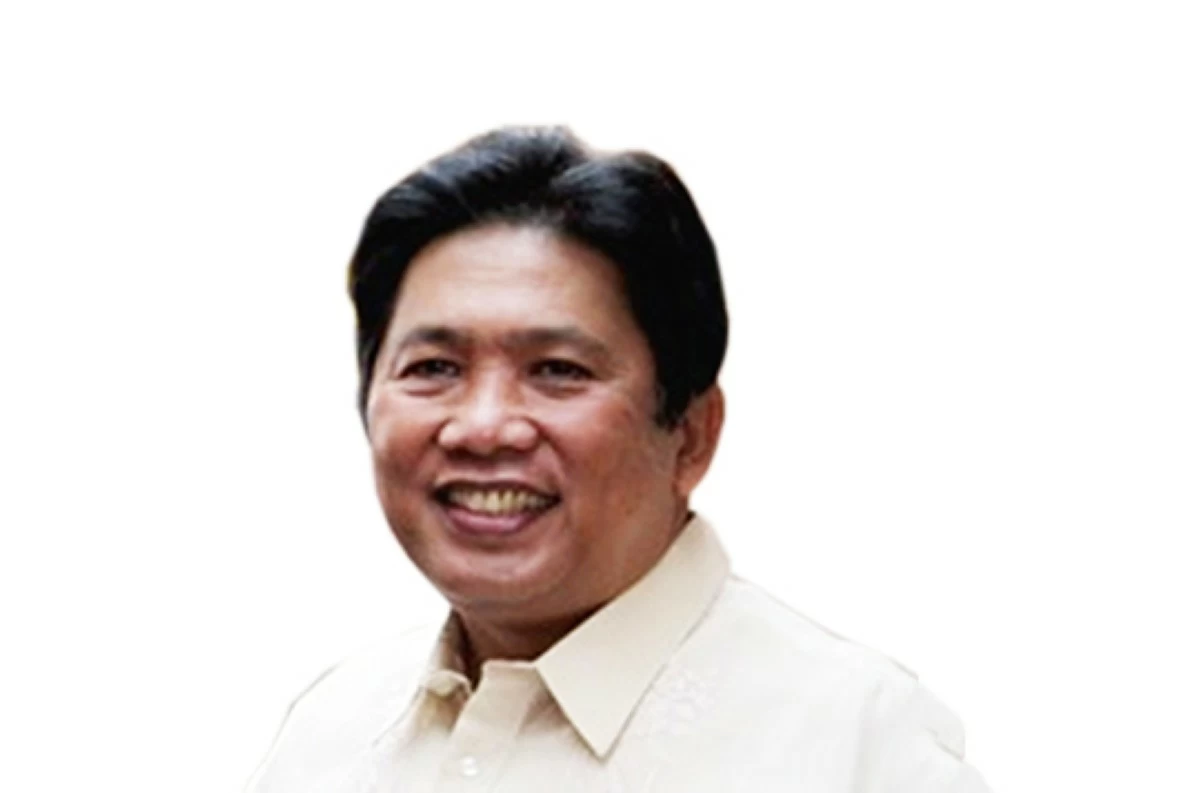
Is there a way out of the present crisis brought on by widespread anomalies in flood control? Good governance in the Philippines is still possible but it requires strong leadership and public pressure.
This was the view expressed by former Finance Secretary Jesus Estanislao in a wide-ranging recent interview with broadcaster Cathy Yang.
Dr. Estanislao has been a leading advocate of good governance. He founded the Institution of Solidarity in Asia (ISA) to focus on the transformation of national agencies and local government units by instilling values of good governance anchored on sound management theory and practice. Specifically, ISA has propagated the adoption of the Balanced Scorecard (BSC).
Crafted by the Harvard Business School, BSC is a strategic management tool that gives organizations a com-prehensive view of performance by tracking financial and non-financial metrics across four key perspectives: financial, customer, internal processes, and learning and growth. It helps align daily operations with strategic goals, track progress toward objectives, and improve decision-making beyond traditional financial measures.
He recalled that ISA was impelled by a need to infuse public servants with a forward-looking perspective in-stead of being demoralized by widespread graft and corruption. He cited erstwhile City Mayors Jose Enrique ‘Joet’ Garcia III of Bataan, and Jerry Treñas, Jesse Robredo and Mel Sarmiento, of Balanga, Iloilo, Naga, and Cal-bayog as the pioneer role models of this transformation.
Then the BSC was also adopted by then Secretary Rogelio ‘Babes’ Singson in the Department of Public Works and Highways (DPWH), an institution deeply afflicted with deeply-embedded corruption. He also cited the transformation of the Bureau of Customs (BOC) under the leadership of retired Army General Rey Leonardo Guerrero who was Commissioner from 2018 to mid-2022.
During Gen. Guerrero’s watch, the BOC enrolled the agency in the ISA's four-stage Performance Governance System (PGS) pathway and pursued the key reform initiatives in automation, transparency and accountability, recognition and stakeholder engagement.
Over 91 percent of the 170 customs processes were automated to reduce human intervention and opportuni-ties for corruption. The reforms aimed to build a new foundation of trust and create a customs administration on par with global standards. Under his leadership, the BOC completed the PGS pathway and was recognized as an Island of Good Governance and a Gold Trailblazer Awardee, the first such recognition in the BOC's history. The BOC enhanced its engagement with stakeholders through improved online services and information cam-paigns to familiarize clients with customs processes.
Despite the palpable gains already achieved, concerns on sustainability of reforms instituted persist. Dr. Estanislao said that good governance is still being observed in the model LGUs and agencies, as exemplified by the Armed Forces of the Philippines that has sustained creditable approval ratings in public opinion polls such as those conducted by the Social Weather Stations (SWS) and Pulse Asia.
He also mentioned the good governance initiatives at the Department of Health (DOH) that were pushed by then Secretary Francisco Duque which his successors, including incumbent Secretary Teodoro Herbosa are con-tinuing to implement.
He mentioned former Secretary Singson’s pitch for the integrated development of the country’s seven major river basins that will ensure long-term sufficiency of water supply. Recalling his experience as DPWH Secretary, he believes this may be achieved by allocating 20 percent of what has been budgeted currently for flood control projects that have apparently gone awry.
Shepherding good governance in national government agencies and LGUs is the President’s responsibility as Chief Executive. The President must demonstrate zero tolerance for budget insertions and ensure that this is enforced by the Development Budget Coordination Committee (DBCC), a top-level inter-agency body that is chaired by the Department of Budget and Management (DBM). The DBCC's main function is to coordinate the government's fiscal program by reviewing and approving macroeconomic targets, revenue projections, and the national budget before it is submitted to the President and Cabinet for final approval.
On the clamor from some sectors to reduce the Value Added Tax (VAT), Dr. Estanislao commented that this would be ill-advised; what should be done is to ensure that every peso collected is spent wisely according to well-defined national priorities identified by the President and the Cabinet.
The Securities and Exchange Commission’s chairman, Francis Lim, has also expressed its readiness to work with the ISC by tapping all publicly listed companies to band together into a Solidarity Network committed to lifting the Philippines from the bottom rungs into the forefront of regional growth, reclaiming its erstwhile reputation as one of Asia’s rising tiger economies. He supports Chairman Lim’s pitch for raising financial liter-acy, and broadening inclusion especially among small and medium enterprises.
One of the significant reform measures supported by the ISA is Senator Paolo Benigno ‘Bam’ Aquino’s pro-posed Philippine National Budget Blockchain Bill (or the ‘Cadena’ Act) that seeks the adoption of blockchain’s inherent properties to deter corruption and restore public trust.
Key aspects of the Aquino bill are: a) real-time public access to all national budget transactions, from allo-cation to disbursement; b) immutability and auditability to ensure that data recorded on the blockchain cannot be altered or erased without the network's consensus, creating a tamper-proof and permanent audit trail that prevents manipulation and "ghost projects"; and c) empowerment of citizens to serve as auditors, tracking how their tax money is spent, comparing material costs across contracts, and flagging anomalies through a user-friendly online portal.
Deterrence of corruption is enhanced by embedding transparency and traceability into the system. The tech-nology would raise the cost and difficulty of hiding corrupt acts like bid rigging or fraudulent projects. The de-sired outcome is a transparent budget enabled by a secure digital infrastructure that departs from the current opaque process that has made it difficult for the public to understand and scrutinize the provisions of the na-tional budget.
The proposed law mandates the filing of administrative and criminal charges against officials who fail to disclose required documents on the platform, making transparency a legal mandate with consequences for non-compliance. Sen. Aquino emphasizes that while blockchain is not a "magic bullet" that can eliminate all cor-ruption on its own, it provides a powerful, system-based tool to enforce transparency and build trust in gov-ernment spending.
Summing up, Dr. Estanislao reaffirmed ISA’s advocacy of ESG: Environment, Social and Government efforts to reduce poverty and promote inclusive growth. The marshaling of the country’s human, natural and financial resources, as proven by our globally recognized Overseas Filipino Workers (OFWs) and trailblazing Business Process Outsourcing (BPO) companies provide positive proof that, indeed, the Philippines is capable of attain-ing ascendancy among its peer nations.
Rather than become extremely cynical about the future, civic-minded Filipinos will be better served by con-tinually denouncing corruption in government and rejecting politicians who resort to ayuda and similar entice-ments. They are better served by truly patriotic individuals who are sufficiently trained in public governance who are impelled by an ardent commitment to serve the people.
Comments may be sent to [email protected]