






Manila Bulletin
 Philippines
National
Turning point for workplace culture: DepEd launches Inclusive Employment Policy
Philippines
National
Turning point for workplace culture: DepEd launches Inclusive Employment Policy
Philippines
National
Turning point for workplace culture: DepEd launches Inclusive Employment Policy
Turning point for workplace culture: DepEd launches Inclusive Employment Policy
New policy promises fair, discrimination-free workplace under Marcos administration
Published Nov 26, 2025 12:01 pm


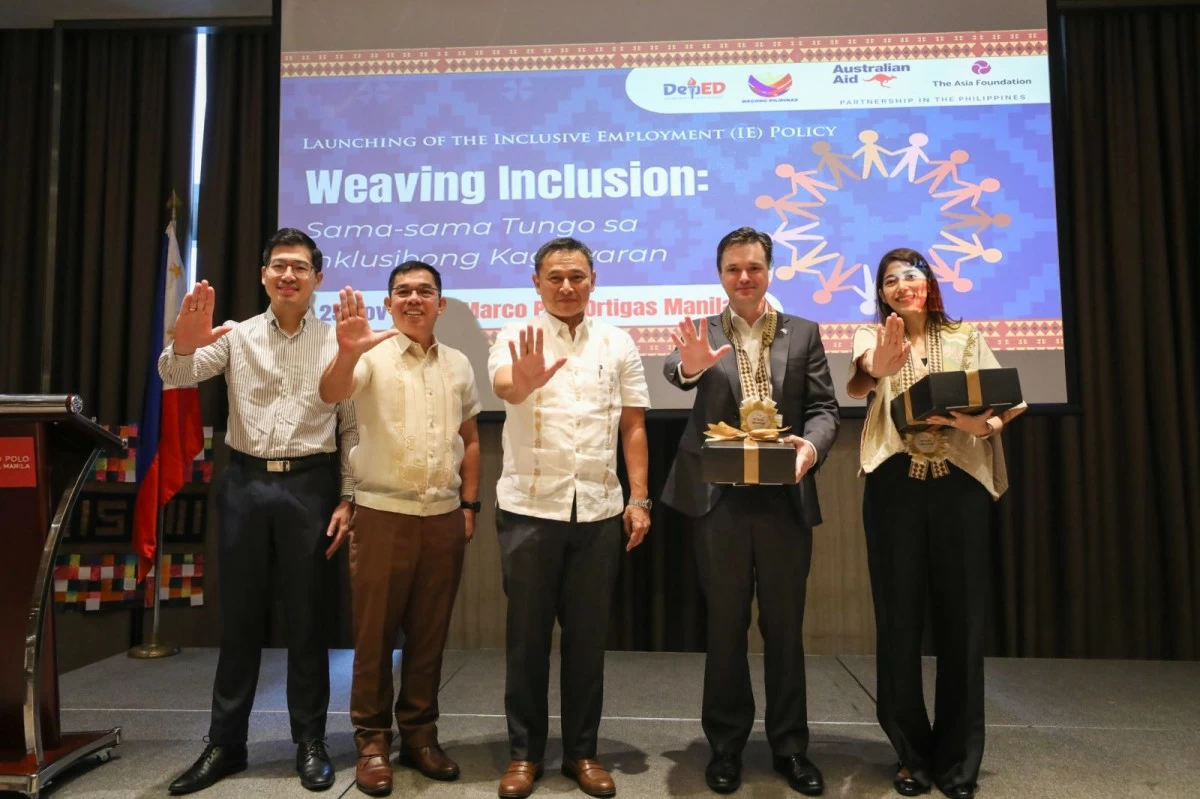
DepEd officials, led by Secretary Sonny Angara, and other stakeholders unveil the Inclusive Employment Policy, marking a major step toward workplace equality for over one million personnel nationwide. (DepEd photo)
Marking a major shift toward a more equitable, accountable, and discrimination-free work environment for over one million teaching and non-teaching personnel nationwide, the Department of Education (DepEd) has officially rolled out its new Inclusive Employment (IE) Policy.
In a statement issued Wednesday, November 26, DepEd said the policy was unveiled through DepEd Order No. 30, s. 2025.
DepEd explained that the policy consolidates years of fragmented diversity and non-discrimination efforts into a unified system—one that supports President Marcos’ education agenda to modernize the teaching workforce and strengthen institutional culture.
Long-overdue reform
Speaking before government agencies, development partners, civil society groups, teachers, and DepEd employees on November 25, Education Secretary Sonny Angara described the policy as a long-overdue reform that ensures every employee is treated with dignity and fairness.
“Kung itinuturo natin sa mga kabataan na ang respeto ay dapat pantay-pantay, dapat iyon din ang nararanasan ng bawat kawani sa DepEd (If we teach the youth that respect must be equal, then that should also be experienced by every employee in DepEd),” Angara said.
“Wala at hindi magkakaroon ng puwang ang diskriminasyon sa ating mga opisina at paaralan (There is no room—and there will never be room—for discrimination in our offices and schools),” he added.
Prior to the policy, practices related to inclusion varied significantly across regions and divisions, resulting in uneven access to opportunities, inconsistent workplace protections, and barriers to career progression.
The IE Policy establishes a single governance system that mandates:
Equal opportunity in hiring and promotion
Standardized workplace protections
Fair and inclusive daily office operations
Annual inclusion reports across all management levels
The framework aims to eliminate bias linked to disability, gender, identity, religion, age, or family status, while creating clearer accountability mechanisms for leadership and HR units.
Representatives from the Australian Embassy, The Asia Foundation, the Department of Social Welfare and Development’s Diversity and Inclusion Committee, and various women’s and labor groups expressed strong support for the initiative, calling it a step toward global standards in inclusive governance.
Civil society leaders noted that the policy could particularly benefit employees who previously faced limited accommodations or stalled career growth due to systemic barriers.
The launch also coincides with the Senate’s approval of DepEd’s historic 2026 budget—the largest education allocation to date—which includes funding for new teaching and non-teaching positions.
DepEd officials said the additional resources will help accelerate the rollout and enforcement of the IE Policy across all regions.
Angara stressed that the new policy is operational, measurable, and designed to create lasting improvements in the DepEd workforce. He emphasized that all personnel should feel valued, heard, and given equal opportunity to grow.
“Panahon na para maramdaman ng bawat empleyado na may lugar sila, may boses sila, at may pagkakataon silang umunlad (It is time for every employee to feel that they have a place, a voice, and an opportunity to grow),” he said.
With the implementation now underway, DepEd aims to set a new standard for public-sector employment—one that ensures every worker, regardless of background, has the opportunity to thrive.