ADVERTISEMENT

ADB calls for better pay, reforms to retain Filipino nurses

Published Nov 26, 2025 12:43 pm  |  Updated Nov 26, 2025 04:00 pm
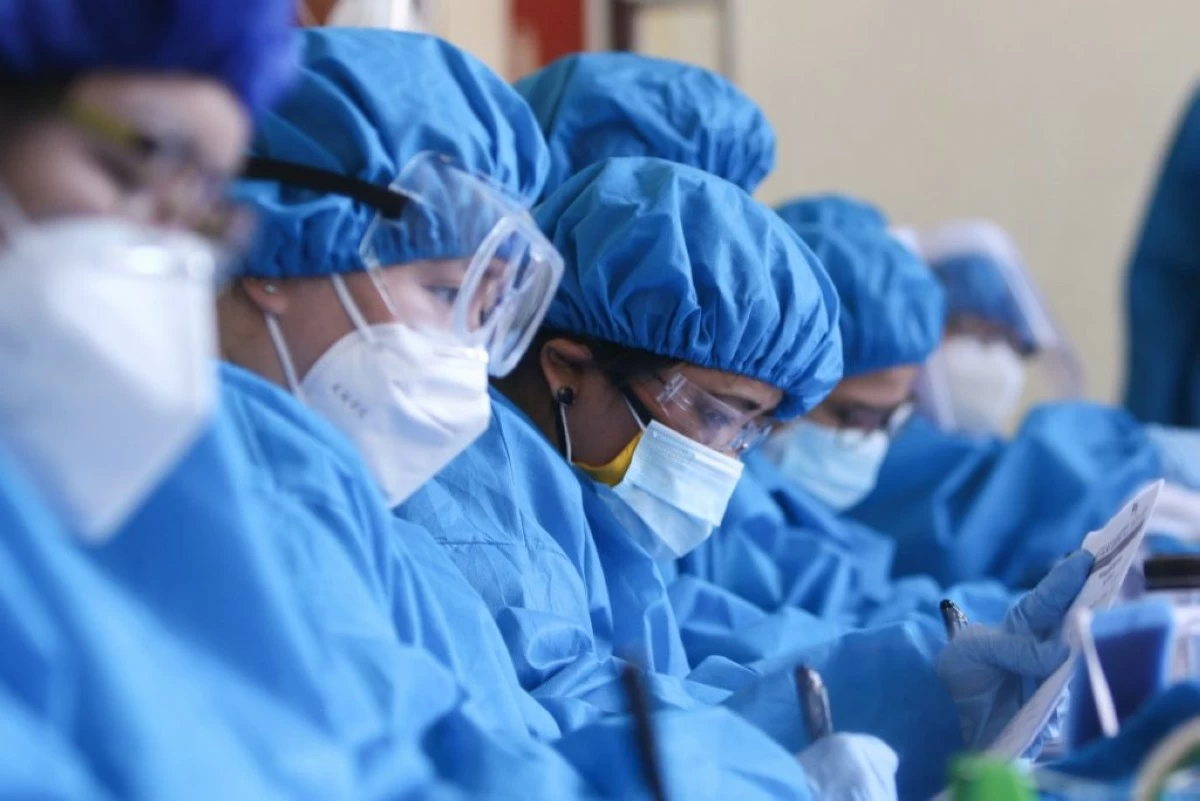
Despite improvements in nursing education nationwide, the Philippines continues to grapple with a severe shortage of nurses as thousands of qualified professionals depart for better-paying jobs abroad, the Manila-based Asian Development Bank (ADB) reported.
“The country is experiencing a significant loss of qualified nurses because of low wages and overseas migration,” the ADB said about its host country, the Philippines, in a brief titled “Enhancing Nursing Education and Training in Asia and the Pacific,” published on Nov. 25.
While acknowledging the expansion of nursing programs and licensure systems, the ADB emphasized that economic realities continue to drive Filipino nurses overseas.
“Raising salaries and strengthening professional recognition are vital. Complementary measures—such as training, career development pathways, and institutional reforms—are also essential to improve nurse retention and reinforce their role within the domestic health system,” the ADB added.
The ADB noted that “out-migration” is especially pronounced in the Philippines, as well as in Bangladesh and Sri Lanka, where English-proficient nurses move to high-income countries, creating shortages in their domestic workforces.
The ADB pointed out that the Philippines maintains one of the most established national licensure examinations for nurses (NLEN), stressing that both the accreditation of nursing schools and NLEN play a crucial role in upholding the quality of healthcare services.
The country also maintains a well-developed nursing licensure process, the ADB said, with biannual written exams and a two-day practical assessment designed to maintain high-quality benchmarks.
“In most OECD [Organization for Economic Cooperation and Development] countries, nurses outnumber physicians, with an average nurse-to-physician ratio of 2.5:1.8. Laos and the Philippines exceed this ratio, whereas Bangladesh, Sri Lanka, and Vietnam fall below,” the ADB said.
It added that strong standards for Bachelor of Science in Nursing (BSN) programs in the Philippines have helped ensure the provision of high-quality nursing education. However, the ADB stressed that a large share of graduates continue to migrate to English-speaking countries, resulting in workforce gaps at home.
To address these shortages, the ADB noted that the Commission on Higher Education (CHED) lifted its 10-year moratorium on establishing new nursing departments in 2022, opening the door for expansion.
Since then, the number of higher education institutions offering BSN programs has increased from 354 to 408 as of December 2024. An additional 54 BSN programs were approved for 2023 to 2025, which the ADB estimates will produce around 2,052 more graduates between 2027 and 2028—evidence of the continuing growth of nursing education in the country.
“In the Philippines, CHED implements clearly defined standards for BSN programs, covering community involvement, faculty, instruction, library resources, laboratories, physical plant, student services, and administration,” the ADB added.
The ADB also recognized the Philippines’ progress in advancing the quality of nursing education, although it noted that further curriculum enhancement is needed to prepare graduates for global health challenges and evolving nursing roles. Tutors in the Philippines, Bangladesh, and Sri Lanka all emphasized the need for stronger curricula.
“In the Philippines, efforts are underway to integrate emerging global issues such as climate change, carbon emission reduction, and population aging,” the ADB said.
The ADB concluded that the Philippines, along with Bangladesh, Laos, Sri Lanka, and Vietnam, could strengthen nursing education through several approaches. These include expanding access and reducing urban–rural gaps, improving working conditions and retaining skilled faculty, modernizing curricula and strengthening educator capacity, and establishing systems for quality assurance and professional recognition.
(Ricardo M. Austria)
ADVERTISEMENT
.most-popular .layout-ratio{ padding-bottom: 79.13%; } @media (min-width: 768px) and (max-width: 1024px) { .widget-title { font-size: 15px !important; } }

{{ articles_filter_1561_widget.title }}

.most-popular .layout-ratio{ padding-bottom: 79.13%; } @media (min-width: 768px) and (max-width: 1024px) { .widget-title { font-size: 15px !important; } }

{{ articles_filter_1562_widget.title }}

.most-popular .layout-ratio{ padding-bottom: 79.13%; } @media (min-width: 768px) and (max-width: 1024px) { .widget-title { font-size: 15px !important; } }

{{ articles_filter_1563_widget.title }}

{{ articles_filter_1564_widget.title }}

.mb-article-details { position: relative; } .mb-article-details .article-body-preview, .mb-article-details .article-body-summary{ font-size: 17px; line-height: 30px; font-family: "Libre Caslon Text", serif; color: #000; } .mb-article-details .article-body-preview iframe , .mb-article-details .article-body-summary iframe{ width: 100%; margin: auto; } .read-more-background { background: linear-gradient(180deg, color(display-p3 1.000 1.000 1.000 / 0) 13.75%, color(display-p3 1.000 1.000 1.000 / 0.8) 30.79%, color(display-p3 1.000 1.000 1.000) 72.5%); position: absolute; height: 200px; width: 100%; bottom: 0; display: flex; justify-content: center; align-items: center; padding: 0; } .read-more-background a{ color: #000; } .read-more-btn { padding: 17px 45px; font-family: Inter; font-weight: 700; font-size: 18px; line-height: 16px; text-align: center; vertical-align: middle; border: 1px solid black; background-color: white; } .hidden { display: none; }
function initializeAllSwipers() { // Get all hidden inputs with cms_article_id document.querySelectorAll('[id^="cms_article_id_"]').forEach(function (input) { const cmsArticleId = input.value; const articleSelector = '#article-' + cmsArticleId + ' .body_images'; const swiperElement = document.querySelector(articleSelector); if (swiperElement && !swiperElement.classList.contains('swiper-initialized')) { new Swiper(articleSelector, { loop: true, pagination: false, navigation: { nextEl: '#article-' + cmsArticleId + ' .swiper-button-next', prevEl: '#article-' + cmsArticleId + ' .swiper-button-prev', }, }); } }); } setTimeout(initializeAllSwipers, 3000); const intersectionObserver = new IntersectionObserver( (entries) => { entries.forEach((entry) => { if (entry.isIntersecting) { const newUrl = entry.target.getAttribute("data-url"); if (newUrl) { history.pushState(null, null, newUrl); let article = entry.target; // Extract metadata const author = article.querySelector('.author-section').textContent.replace('By', '').trim(); const section = article.querySelector('.section-info ').textContent.replace(' ', ' '); const title = article.querySelector('.article-title h1').textContent; // Parse URL for Chartbeat path format const parsedUrl = new URL(newUrl, window.location.origin); const cleanUrl = parsedUrl.host + parsedUrl.pathname; // Update Chartbeat configuration if (typeof window._sf_async_config !== 'undefined') { window._sf_async_config.path = cleanUrl; window._sf_async_config.sections = section; window._sf_async_config.authors = author; } // Track virtual page view with Chartbeat if (typeof pSUPERFLY !== 'undefined' && typeof pSUPERFLY.virtualPage === 'function') { try { pSUPERFLY.virtualPage({ path: cleanUrl, title: title, sections: section, authors: author }); } catch (error) { console.error('ping error', error); } } // Optional: Update document title if (title && title !== document.title) { document.title = title; } } } }); }, { threshold: 0.1 } ); function showArticleBody(button) { const article = button.closest("article"); const summary = article.querySelector(".article-body-summary"); const body = article.querySelector(".article-body-preview"); const readMoreSection = article.querySelector(".read-more-background"); // Hide summary and read-more section summary.style.display = "none"; readMoreSection.style.display = "none"; // Show the full article body body.classList.remove("hidden"); } document.addEventListener("DOMContentLoaded", () => { let loadCount = 0; // Track how many times articles are loaded const offset = [1, 2, 3, 4, 5, 6, 7, 8, 9, 10]; // Offset values const currentUrl = window.location.pathname.substring(1); let isLoading = false; // Prevent multiple calls if (!currentUrl) { console.log("Current URL is invalid."); return; } const sentinel = document.getElementById("load-more-sentinel"); if (!sentinel) { console.log("Sentinel element not found."); return; } function isSentinelVisible() { const rect = sentinel.getBoundingClientRect(); return ( rect.top < window.innerHeight && rect.bottom >= 0 ); } function onScroll() { if (isLoading) return; if (isSentinelVisible()) { if (loadCount >= offset.length) { console.log("Maximum load attempts reached."); window.removeEventListener("scroll", onScroll); return; } isLoading = true; const currentOffset = offset[loadCount]; window.loadMoreItems().then(() => { let article = document.querySelector('#widget_1690 > div:nth-last-of-type(2) article'); intersectionObserver.observe(article) loadCount++; }).catch(error => { console.error("Error loading more items:", error); }).finally(() => { isLoading = false; }); } } window.addEventListener("scroll", onScroll); });

Sign up by email to receive news.