ADVERTISEMENT

Philippines extends ban on molasses imports until March 2026

Published Nov 26, 2025 12:10 pm
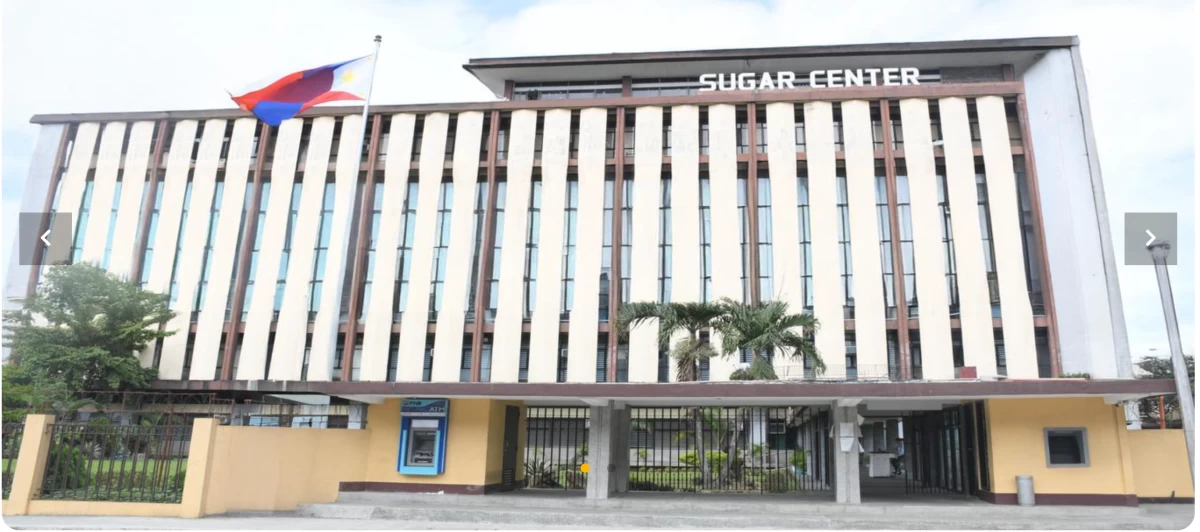
Sugar Regulatory Administration (SRA) Head Office in Quezon City
The Philippines will extend the temporary ban on molasses importation until March next year as the government races to halt the sharp decline in millsite prices, the Sugar Regulatory Administration (SRA) said.
SRA said it will extend the period of moratorium embodied under Molasses Order (MO) No. 1, which was issued on Sept. 30 and took effect on Oct. 3.
Under this order, the country suspended the entry of imported molasses until the end of the year to prevent millsite prices from falling.
The sugar agency noted that the average millsite price of domestic molasses is 30-percent lower than last year’s average of ₱18,000 per metric ton (MT), down to ₱12,000 per MT as of Aug. 24.
The decline is attributed to reduced withdrawals of local molasses following a spike in imports, which stood at 853,285 MT as of Aug. 31. This figure is 28-percent higher than the average annual imports in the three previous crop years.
The influx of imports took place even as the country recorded strong domestic output, growing 21 percent to 1.18 million MT in the first eight months compared to last year’s total production of 975,934 MT.
Under MO 1, the import ban may be extended or lifted depending on stock levels.
SRA Administrator Pablo Luis Azcona said he is extending the ban until March 2026 after millsite prices plunged to ₱10,000 per MT in early November, or one month into the moratorium.
Azcona said prices continue to fall due to the increase in molasses production last milling season, coupled with additional imported supply.
In his recommendation to Department of Agriculture (DA) Secretary Francisco Tiu Laurel, Azcona noted that the SRA Board found the extension necessary to “help relieve our millers’ tanks of local stock and, hopefully, support better molasses prices.”
The SRA Board, the policy-making body of the sugar agency, is chaired by Tiu Laurel.
“Based on the recommendation of the SRA, and in the interest of our farmers and millers, Administrator Azcona and I have agreed to extend the moratorium on molasses imports until March 30, 2026,” the DA chief said.
Tiu Laurel added the suspension could still be extended further “depending on local stock levels.”
Azcona has assured the public that there will be no shortfall in molasses supply as stock levels remain at around 250,000 MT, which is considered ample for domestic use.
He added that milling operations already started last month in Negros Island, the country’s top sugar-producing region, with molasses output reaching nearly 84,000 MT as of Nov. 9.
“It should be noted that only locally produced molasses is allowed to be used for bio-ethanol production,” said Azcona.
“Both local and imported molasses may be used for baking, confectionery, cooking, and beverages, as well as in the production of animal feeds, vinegar, citric acid, and potable and sanitary alcohol, among others,” he added.
Under MO 1, SRA also took note of concerns among stakeholders regarding the discrepancy between the volume of local molasses used as feedstock and the corresponding volume of finished products.
The bulk of molasses production in the country is used by ethanol producers, as required by the Biofuels Act for all liquid fuels.
The sugar agency said the temporary ban will provide ample time to revisit and review the policy to ensure compliance.
One of the expected outcomes from the suspension is the creation of a performance-based policy for the import allocation of molasses.
ADVERTISEMENT
.most-popular .layout-ratio{ padding-bottom: 79.13%; } @media (min-width: 768px) and (max-width: 1024px) { .widget-title { font-size: 15px !important; } }

{{ articles_filter_1561_widget.title }}

.most-popular .layout-ratio{ padding-bottom: 79.13%; } @media (min-width: 768px) and (max-width: 1024px) { .widget-title { font-size: 15px !important; } }

{{ articles_filter_1562_widget.title }}

.most-popular .layout-ratio{ padding-bottom: 79.13%; } @media (min-width: 768px) and (max-width: 1024px) { .widget-title { font-size: 15px !important; } }

{{ articles_filter_1563_widget.title }}

{{ articles_filter_1564_widget.title }}

.mb-article-details { position: relative; } .mb-article-details .article-body-preview, .mb-article-details .article-body-summary{ font-size: 17px; line-height: 30px; font-family: "Libre Caslon Text", serif; color: #000; } .mb-article-details .article-body-preview iframe , .mb-article-details .article-body-summary iframe{ width: 100%; margin: auto; } .read-more-background { background: linear-gradient(180deg, color(display-p3 1.000 1.000 1.000 / 0) 13.75%, color(display-p3 1.000 1.000 1.000 / 0.8) 30.79%, color(display-p3 1.000 1.000 1.000) 72.5%); position: absolute; height: 200px; width: 100%; bottom: 0; display: flex; justify-content: center; align-items: center; padding: 0; } .read-more-background a{ color: #000; } .read-more-btn { padding: 17px 45px; font-family: Inter; font-weight: 700; font-size: 18px; line-height: 16px; text-align: center; vertical-align: middle; border: 1px solid black; background-color: white; } .hidden { display: none; }
function initializeAllSwipers() { // Get all hidden inputs with cms_article_id document.querySelectorAll('[id^="cms_article_id_"]').forEach(function (input) { const cmsArticleId = input.value; const articleSelector = '#article-' + cmsArticleId + ' .body_images'; const swiperElement = document.querySelector(articleSelector); if (swiperElement && !swiperElement.classList.contains('swiper-initialized')) { new Swiper(articleSelector, { loop: true, pagination: false, navigation: { nextEl: '#article-' + cmsArticleId + ' .swiper-button-next', prevEl: '#article-' + cmsArticleId + ' .swiper-button-prev', }, }); } }); } setTimeout(initializeAllSwipers, 3000); const intersectionObserver = new IntersectionObserver( (entries) => { entries.forEach((entry) => { if (entry.isIntersecting) { const newUrl = entry.target.getAttribute("data-url"); if (newUrl) { history.pushState(null, null, newUrl); let article = entry.target; // Extract metadata const author = article.querySelector('.author-section').textContent.replace('By', '').trim(); const section = article.querySelector('.section-info ').textContent.replace(' ', ' '); const title = article.querySelector('.article-title h1').textContent; // Parse URL for Chartbeat path format const parsedUrl = new URL(newUrl, window.location.origin); const cleanUrl = parsedUrl.host + parsedUrl.pathname; // Update Chartbeat configuration if (typeof window._sf_async_config !== 'undefined') { window._sf_async_config.path = cleanUrl; window._sf_async_config.sections = section; window._sf_async_config.authors = author; } // Track virtual page view with Chartbeat if (typeof pSUPERFLY !== 'undefined' && typeof pSUPERFLY.virtualPage === 'function') { try { pSUPERFLY.virtualPage({ path: cleanUrl, title: title, sections: section, authors: author }); } catch (error) { console.error('ping error', error); } } // Optional: Update document title if (title && title !== document.title) { document.title = title; } } } }); }, { threshold: 0.1 } ); function showArticleBody(button) { const article = button.closest("article"); const summary = article.querySelector(".article-body-summary"); const body = article.querySelector(".article-body-preview"); const readMoreSection = article.querySelector(".read-more-background"); // Hide summary and read-more section summary.style.display = "none"; readMoreSection.style.display = "none"; // Show the full article body body.classList.remove("hidden"); } document.addEventListener("DOMContentLoaded", () => { let loadCount = 0; // Track how many times articles are loaded const offset = [1, 2, 3, 4, 5, 6, 7, 8, 9, 10]; // Offset values const currentUrl = window.location.pathname.substring(1); let isLoading = false; // Prevent multiple calls if (!currentUrl) { console.log("Current URL is invalid."); return; } const sentinel = document.getElementById("load-more-sentinel"); if (!sentinel) { console.log("Sentinel element not found."); return; } function isSentinelVisible() { const rect = sentinel.getBoundingClientRect(); return ( rect.top < window.innerHeight && rect.bottom >= 0 ); } function onScroll() { if (isLoading) return; if (isSentinelVisible()) { if (loadCount >= offset.length) { console.log("Maximum load attempts reached."); window.removeEventListener("scroll", onScroll); return; } isLoading = true; const currentOffset = offset[loadCount]; window.loadMoreItems().then(() => { let article = document.querySelector('#widget_1690 > div:nth-last-of-type(2) article'); intersectionObserver.observe(article) loadCount++; }).catch(error => { console.error("Error loading more items:", error); }).finally(() => { isLoading = false; }); } } window.addEventListener("scroll", onScroll); });

Sign up by email to receive news.