






Manila Bulletin
 Business
Trade & Industry
Local dairy output seen up 9%, but fails to close 80% supply gap
Business
Trade & Industry
Local dairy output seen up 9%, but fails to close 80% supply gap
Business
Trade & Industry
Local dairy output seen up 9%, but fails to close 80% supply gap
Local dairy output seen up 9%, but fails to close 80% supply gap
Published Nov 26, 2025 11:05 am


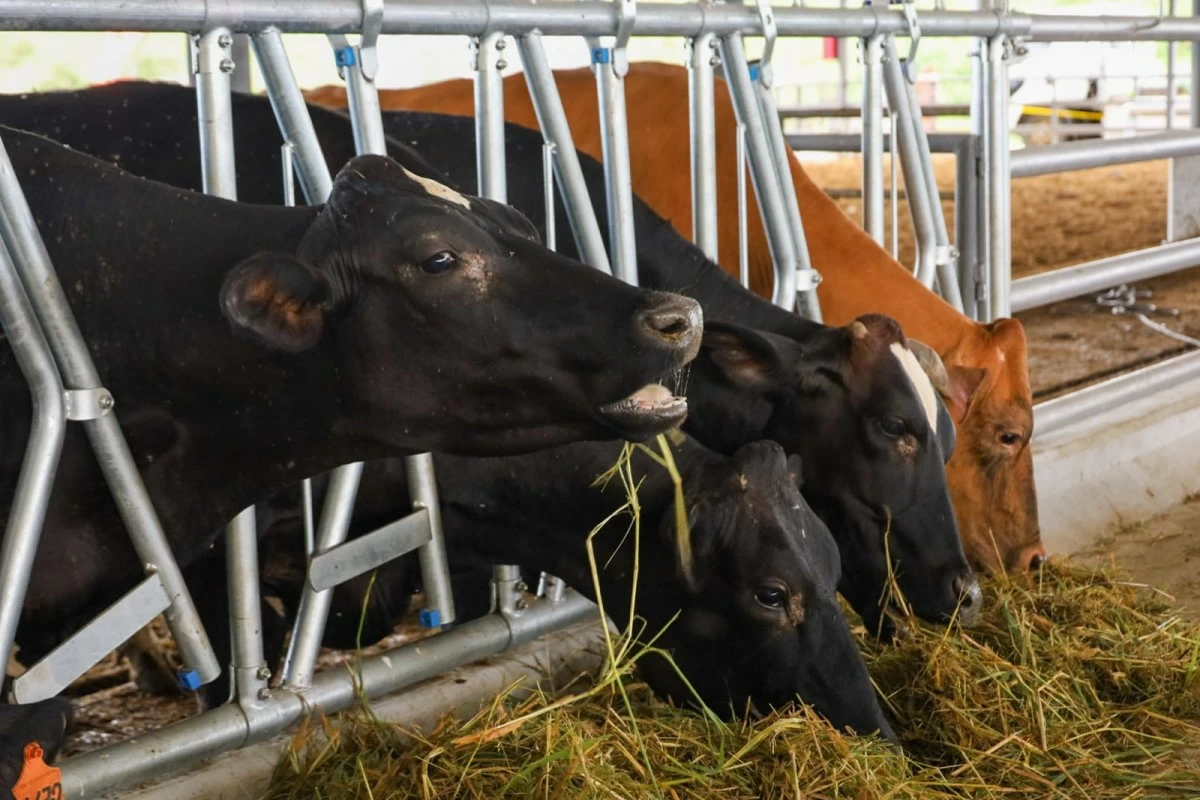
(Department of Agriculture photo)
The country’s dairy production is expected to grow nine percent this year, driven by a growing dairy herd and the implementation of the government’s dairy development programs, according to the United States Department of Agriculture (USDA).
In a Nov. 25 report by the USDA’s Foreign Agricultural Service (FAS), local dairy output is projected to reach 36,000 metric tons (MT) in liquid milk equivalent compared to 32,980 MT last year.
The foreign agency attributed the growth to the increase in the population of dairy animals, which rose nearly seven percent to 36,300 heads from last year’s 33,982 heads.
It also cited the active implementation of the government’s dairy development projects, particularly through the National Dairy Authority’s (NDA) initiatives to strengthen the dairy industry, for boosting the country’s dairy output.
With the NDA’s establishment and operationalization of NDA’s stock farms, feed centers, and community-based farm enterprise development programs, among others, dairy output next year is also expected to rise.
The USDA estimates that dairy production will reach 37,000 MT in 2026, a three-percent improvement from this year’s projection.
However, despite these expected improvements, local production still accounts for only 20 percent of the country’s annual milk requirement.
This means that one out of five glasses of liquid milk consumed is sourced locally, with the rest being imported.
The USDA said the country’s average milk production is being outpaced by strong demand, with dairy cows producing 10 liters a day, buffalo 4.5 liters a day, and goats 1.5 liters a day. In contrast, the average milk yield in the US is around 30 liters a day.
“Production remains low mainly due to poor feeding and management practices resulting from high production costs and lack of adequate infrastructure,” the report read.
The foreign agency expects the country’s dairy consumption to reach 3.49 million MT this year, and to grow to 3.54 million MT next year.
The higher consumption is credited to the growing population and middle class, supported by infrastructure investments, such as cold chain facilities, supermarkets, and display areas.
Since the Philippines produces only around one percent of its dairy demand, the USDA expects the dairy market to remain competitive, with the US and New Zealand leading the race.
NDA data showed that the country imported 3.50 million MT last year, with the US accounting for 30 percent while New Zealand with 21 percent.
In the first half of this year, a total of 1.73 million MT of dairy shipments arrived in the country, with the US and New Zealand at 28 percent and 23 percent, respectively.
“Post forecasts for overall dairy imports to grow 1.5 percent in 2026 as demand expands due to increasing consumption. Growth in demand prompted manufacturers to produce more dairy products,” the report read.
Notwithstanding the limited dairy output, the country still exports value-added dairy products, such as cream, cheese, milk powder, and ice cream, manufactured with both local and imported ingredients.
The USDA projects exports will remain flat this year, following last year’s 42,860 MT.