








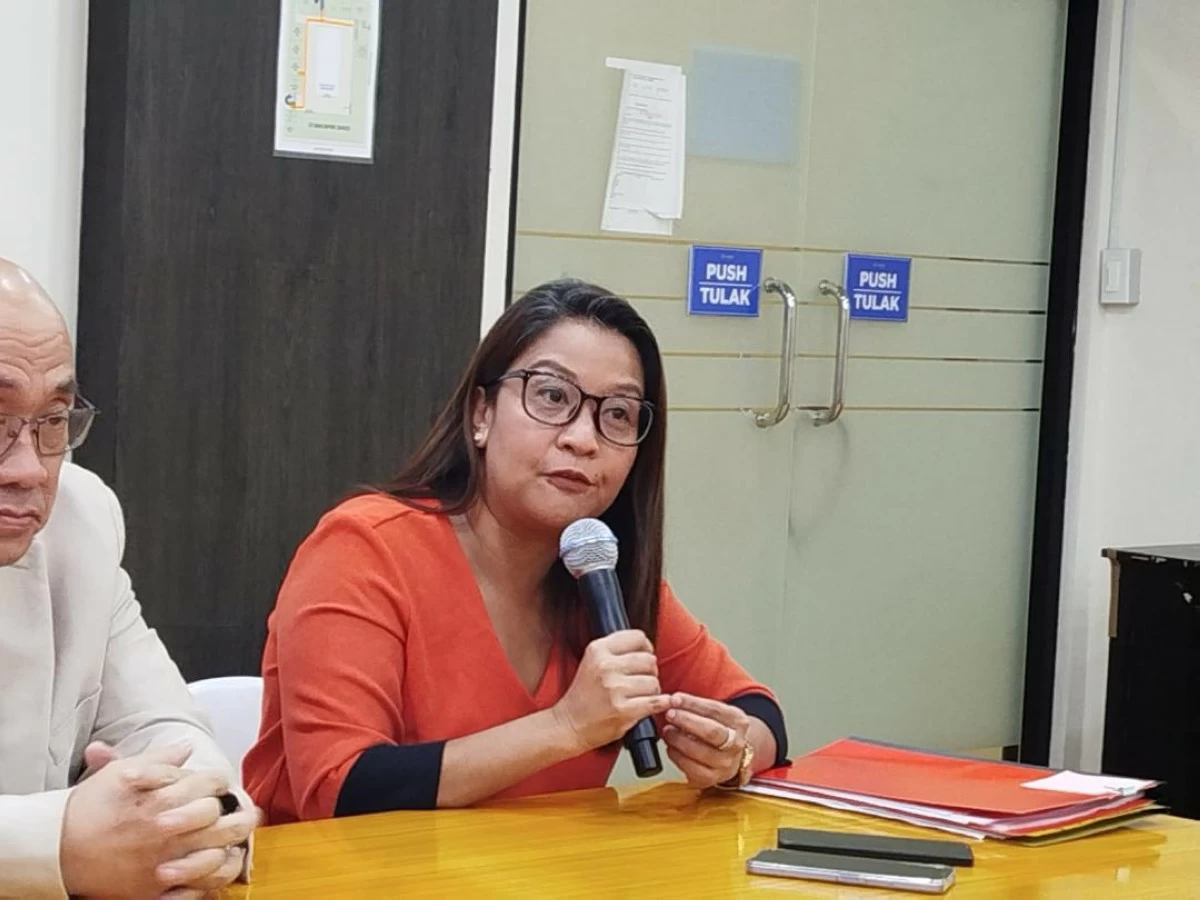
PRINCIPE (Photo via Ivy Tejano)
DAVAO CITY – A Davao City councilor confirmed on Tuesday, Nov. 25, that the city government is collaborating with the Department of Education and the local school board to address classroom shortages and expedite the construction of school buildings.
Councilor Petite Principe, chairperson of the Committee on Education, Science and Technology, Arts, and Culture, said during the Pulong-Pulong sa Dabawenyos that education remains one of the city’s priority programs.
Principe said talks are continuing between the Davao City government, led by the Local School Board and acting City Mayor Sebastian Duterte, and the DepEd to address the city’s classroom shortage, particularly in far-flung areas.
She said her committee is currently prioritizing the facilitation of deeds of usufruct processing between the city government and the DepEd, as many schools are city-owned and yet local funds can’t be used for building until proper documents are in place.
“Many school properties are titled under the city, but due to the absence of proper documentation, we cannot use local funds to construct buildings on these sites,” Principe said. “This is not just a problem here, it’s a perennial issue across the country.”
The councilor stated that last month, the city government and the DepEd Central Office finalized protocols for the passage of deeds of usufruct. She added that this legal instrument enables the use of local government funds for school construction.
Principe noted that 66 out of more than 400 schools in Davao City have pending deeds of usufruct, while the city faces a total classroom shortage of over 4,000, which the government aims to address over the next three years.
“The plan for 2026 is to prioritize schools with the greatest need for classrooms and identify sites for new buildings, especially in far-flung areas, such as the Marilog and Paquibato districts, where access and electricity are limited,” Principe said.
She also said they are exploring pilot solar projects to energize schools without electricity. “With proper deeds of usufruct in place and strategic planning for the needed things to be done, we hope to make substantial progress next year.”
Principe said that the initiative aligns with the local government’s commitment to improving educational infrastructure and ensuring that students have safe and adequate learning environments.
DepEd-Davao City Schools Division Superintendent Reynante Solitario said that the city lacks 4,053 classrooms, following the standard of one classroom per 30 elementary students.
DepEd-Davao expressed optimism that the local government will move forward with the program and assured that their department is prepared to supply all required documents to support the building of new classrooms.