






Manila Bulletin
 Business
The Economy
Sun Life: Philippine growth to stay sluggish as investors hold back through 2026
Business
The Economy
Sun Life: Philippine growth to stay sluggish as investors hold back through 2026
Business
The Economy
Sun Life: Philippine growth to stay sluggish as investors hold back through 2026
Sun Life: Philippine growth to stay sluggish as investors hold back through 2026
Published Nov 25, 2025 03:38 pm


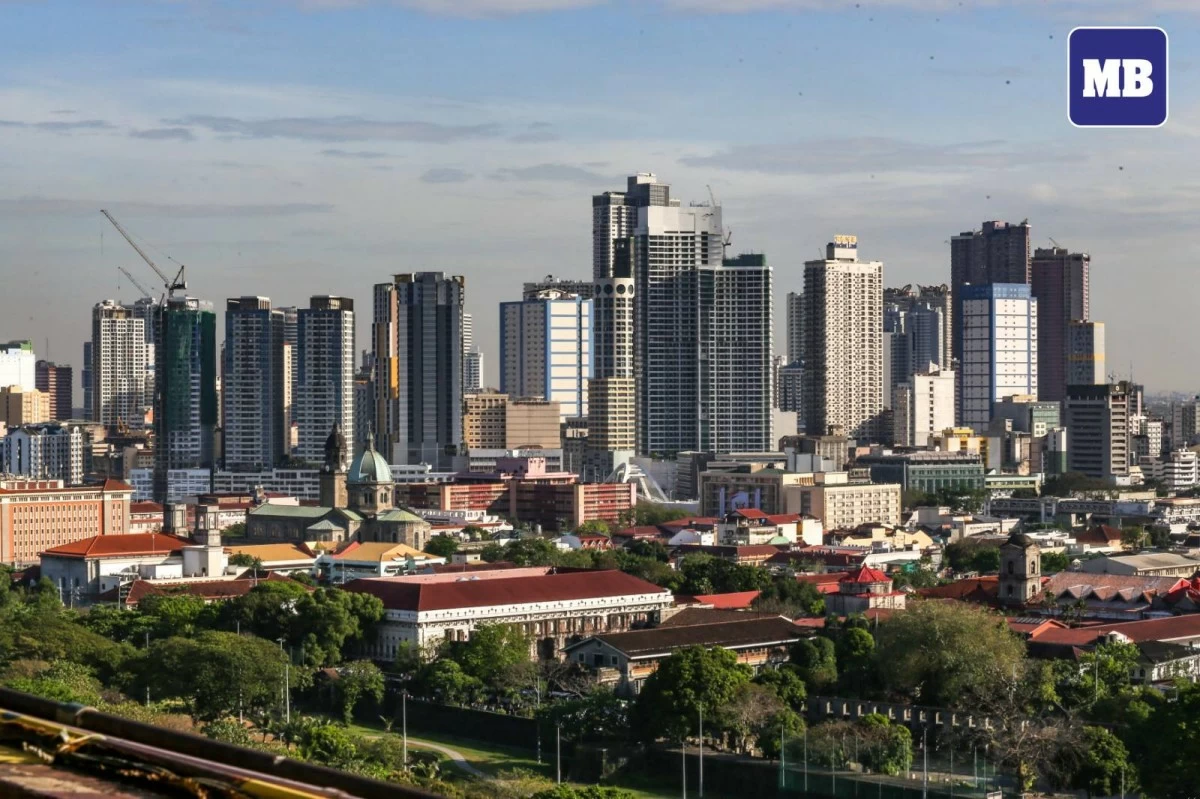
The country’s economic growth is projected to fall below five percent this year and settle at around four to five percent in 2026, as investments are expected to remain sluggish, according to a Sun Life Philippines official. This falls short of the government’s full-year targets of 5.5 to 6.5 percent for 2025 and six to seven percent for 2026 to 2028.
Speaking on the sidelines of Sun Life Philippines’ year-end media event on Monday, Nov. 24, Sun Life Investment Management and Trust Corp. (SLIMTC) President Michael Gerard D. Enriquez emphasized that big changes would need to take place within the next three to six months to improve the country’s current outlook, adding that the government has already been taking steps in this direction.
Enriquez highlighted the need to “restart the spending,” noting that government spending could spur the big push for the economy.
“I think the government has been doing a good job; at least currently that’s what we’ve been seeing,” he said, pointing to what he described as greater transparency from authorities.
He noted that “even President BBM [Ferdinand R. Marcos Jr.] was the one who updated the public on what has happened recently... that several have already been issued arrest warrants,” adding that this helps build confidence that the government is serious about addressing the issue.
Enriquez emphasized that the broader economy remains “something that we really need to watch closely.” He added that, “We need definitely help from the BSP [Bangko Sentral ng Pilipinas] to help pump-prime in terms of lowering their policy rates.”
He noted that BSP Governor Eli M. Remolona Jr. has signaled a willingness to support growth, saying the central bank is prepared to “help and pump-prime the economy” by adjusting policy rates further as early as next month.
“That’s something that we welcome—especially to spur consumer spending, lowering interest rates would definitely help also create capital formation and start borrowings for real capital—so that is something that we’re watching closely,” he said.
Enriquez noted that the private sector also needs to step up to help offset the effects of weaker government spending. He warned that the slowdown in construction activities would affect not only the construction sector but also related industries.
“If we can look for other ways to augment that in terms of the private sector, definitely that will really help our economy,” he added.
In terms of the insurance sector, Enriquez said performance remains closely tied to consumer sentiment. “We’re trying our best to continue to market the importance of insurance. But if the consumers themselves are not confident, and it is considered as an expense, rather than, of course, obviously another investment, it’s harder—it’s going to be harder for us,” he added.
While inflation has eased, he noted that households have continued to delay purchases of items such as insurance, as higher food prices have forced them to prioritize essential spending.
“I think if consumer sentiment increases and at the same time overall local financial market performance starts rebounding, even if it’s not linked to investments because if the financial market is good, usually you get a sense that people are more willing to buy insurance policies. It’s highly correlated,” he said.
On the financial market outlook, Enriquez said that by the end of 2025, “equity will probably see closer to probably where it is right now, probably 6,000 but what would probably be monitoring more is interest rates.”
He added that interest rates, particularly for long-term instruments, have begun to decline. He noted that despite recent controversies, foreign funds and the country’s credit rating have not been affected. Long-term local interest rates have also stayed stable, indicating that investors continue to lend to the government—a development he described as “a good sign.”
“If nobody is lending, then rates should shoot up because of all these controversies. But now we’ve seen 10-year rates go below six percent and there’s a lot of liquidity in the system—it’s just that people are not willing to take on risk assets such as equities,” he said.
For SLIMTC, Enriquez said they are rolling out a range of new products and strategies for clients. “But it’s more on the global-centric strategies,” he added, referring to increased participation in global markets.
“Given that a lot of the experience of local investors, giving them a chance to diversify outside of the local markets. So we’ve been launching a lot of these global-centric funds to give ordinary investors access to global investments,” he said.
Looking ahead, Enriquez said SLIMTC is targeting an additional ₱20 billion in assets under management (AUM) growth next year—₱10 billion to ₱15 billion coming from unit investment trust funds (UITFs) and around ₱5 billion from segregated mandates.
“We’re continuing to license. We’ve licensed already about 1,400 advisors. If we build that sales force more, we’re doing another probably 1,500 more next year. If we increase, then probably it gives us a better chance to improve the AUM growth for us,” he added.
(Ricardo M. Austria)