






Manila Bulletin
 Business
The Economy
Oil price run-up to fuel December pump hike amid geopolitical hedges
Business
The Economy
Oil price run-up to fuel December pump hike amid geopolitical hedges
Business
The Economy
Oil price run-up to fuel December pump hike amid geopolitical hedges
Oil price run-up to fuel December pump hike amid geopolitical hedges
Published Nov 25, 2025 05:00 pm


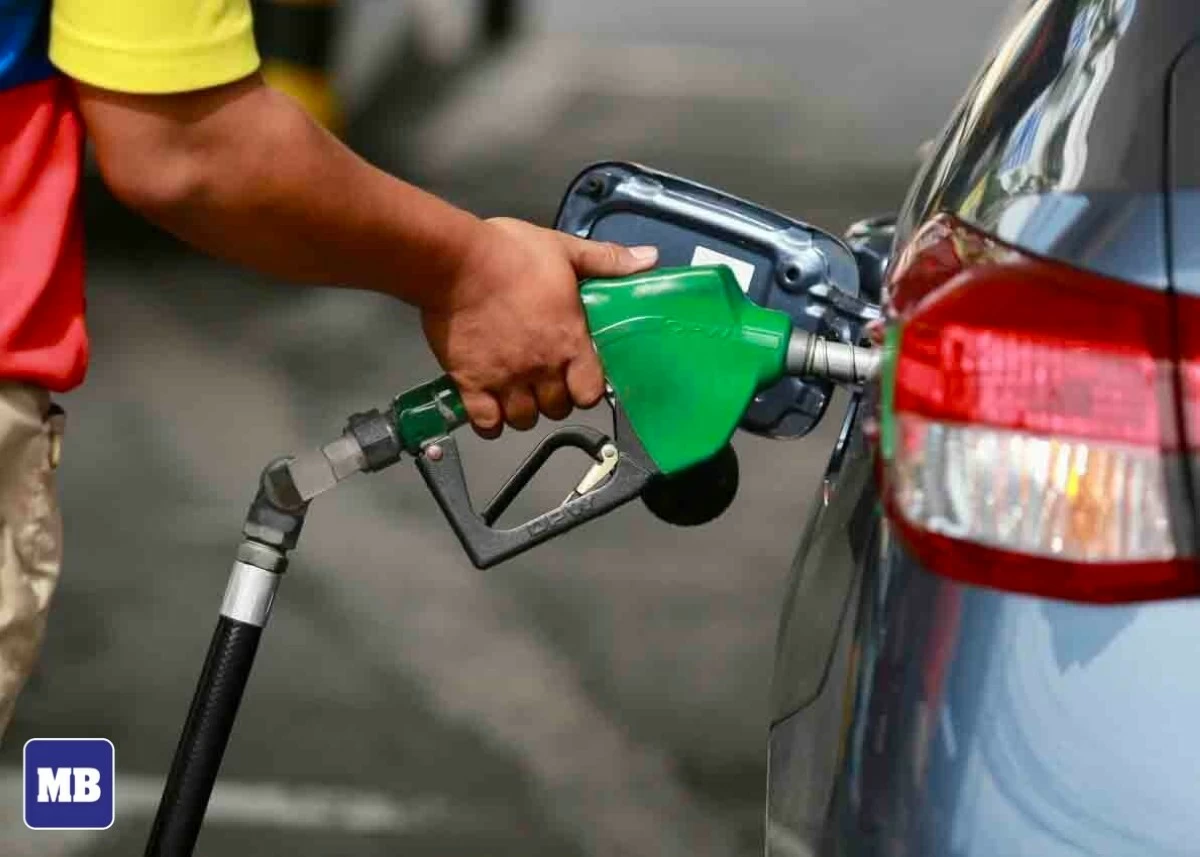
At a Quezon City gas station, a pump attendant fills a car's fuel tank. This week, the cost of petroleum products has risen, a direct result of escalating geopolitical tensions in the Middle East.
Dutch financial giant ING Groep NV is projecting another round of fuel price increases in December, driven by rising investor optimism and ongoing uncertainty surrounding Ukraine peace talks.
In an analysis released Tuesday, Nov. 25, ING analysts noted that investors are taking on more risk, stock markets are rallying, and a potential interest rate cut by the United States (US) Federal Reserve could stimulate the global economy. These factors, in turn, are expected to boost oil demand.
However, geopolitical tensions, particularly the Russia-Ukraine war, continue to inject uncertainty into the market.
“Reports suggest that there have been significant changes to the proposed peace plan, with the U.S. and Ukraine essentially drafting a new one,” the analysis stated.
Should a resolution be realized, the oil market could shed significant war-related price risks and shift its focus entirely to supply and demand fundamentals. This potential shift could result in softer fuel prices in the future.
“The more contentious points, such as those related to territory, will need to be ironed out by President Trump and President Zelensky. Obviously, Russia must agree on any deal. For oil markets, a deal could remove significant supply risk, leaving participants to focus on bearish supply fundamentals through 2026,” ING elaborated.
On the local front, discussions continue over the country’s biodiesel blend mandate. While the government aims to lower fuel prices by halting an increase in the biodiesel blend, the Philippine Biodiesel Association (TPBA) argued that the proposed bill, which preserves blending mandates for bioethanol and biodiesel, could imperil the local coconut industry.
In a newly released statement, the TPBA stressed that the coco-biodiesel mandate is a vital contributor to the income of coconut farmers, traders, millers, processors, transporters, and rural supply chains.
“Any disruption to this demand threatens farmer incomes, slows rural development, and undermines the economics of the government’s ambitious coconut replanting program, which aims to plant up to 100 million new coconut trees over the next three years, supported by ₱3.5 billion in national funding,” the association stated on Tuesday.
Ramon Taniola, TPBA executive director, further explained that halting the mandate would affect up to 25 million Filipinos dependent on the coconut industry.
“The biodiesel mandate is the bridge between today’s rural incomes and tomorrow’s modern coconut economy. HB 4151 puts that bridge at risk,” he said.
House Bill 4151, also known as the “Murang Langis Act,” aims to protect end-users and motorists from volatile high prices and aligns with the Biofuels Act of 2006 (Republic Act No. 9367).
Despite motorists’ concerns about the biodiesel blend’s effect on pump prices, TPBA clarified that consumers also benefit from improved fuel efficiency.
“Consumers also directly benefit from biodiesel’s 6–10 percent improved fuel mileage, which offsets the minor nominal cost difference at the pump and generates ₱17 billion to ₱32.6 billion in net annual savings,” the group said.
Beyond price concerns, the TPBA also emphasized that the bill could discourage investment, slow down farm modernization, lessen rural income stability, and reverse gains made in air quality.
Currently, the three percent biodiesel blend (B3) remains in place after the National Biofuels Board (NBB) previously recommended suspending the planned increase to a four percent (B4) blend to mitigate the impact of high fuel prices.