






Manila Bulletin
 Philippines
National
Marcoleta cites China model in call to revamp PH anti-poverty programs
Philippines
National
Marcoleta cites China model in call to revamp PH anti-poverty programs
Philippines
National
Marcoleta cites China model in call to revamp PH anti-poverty programs
Marcoleta cites China model in call to revamp PH anti-poverty programs
By Dhel Nazario
Published Nov 25, 2025 01:28 pm


At A Glance
- Sen. Rodante Marcoleta raised questions over whether the Department of Social Welfare and Development's (DSWD) dozen major interventions—amounting to P212.5 billion under the Senate version of the 2026 national budget—are reaching their intended beneficiaries and meaningfully reducing poverty nationwide.
Senator Rodante Marcoleta raised questions over whether the Department of Social Welfare and Development’s (DSWD) dozen major interventions—amounting to P212.5 billion under the Senate version of the 2026 national budget—are reaching their intended beneficiaries and meaningfully reducing poverty nationwide.
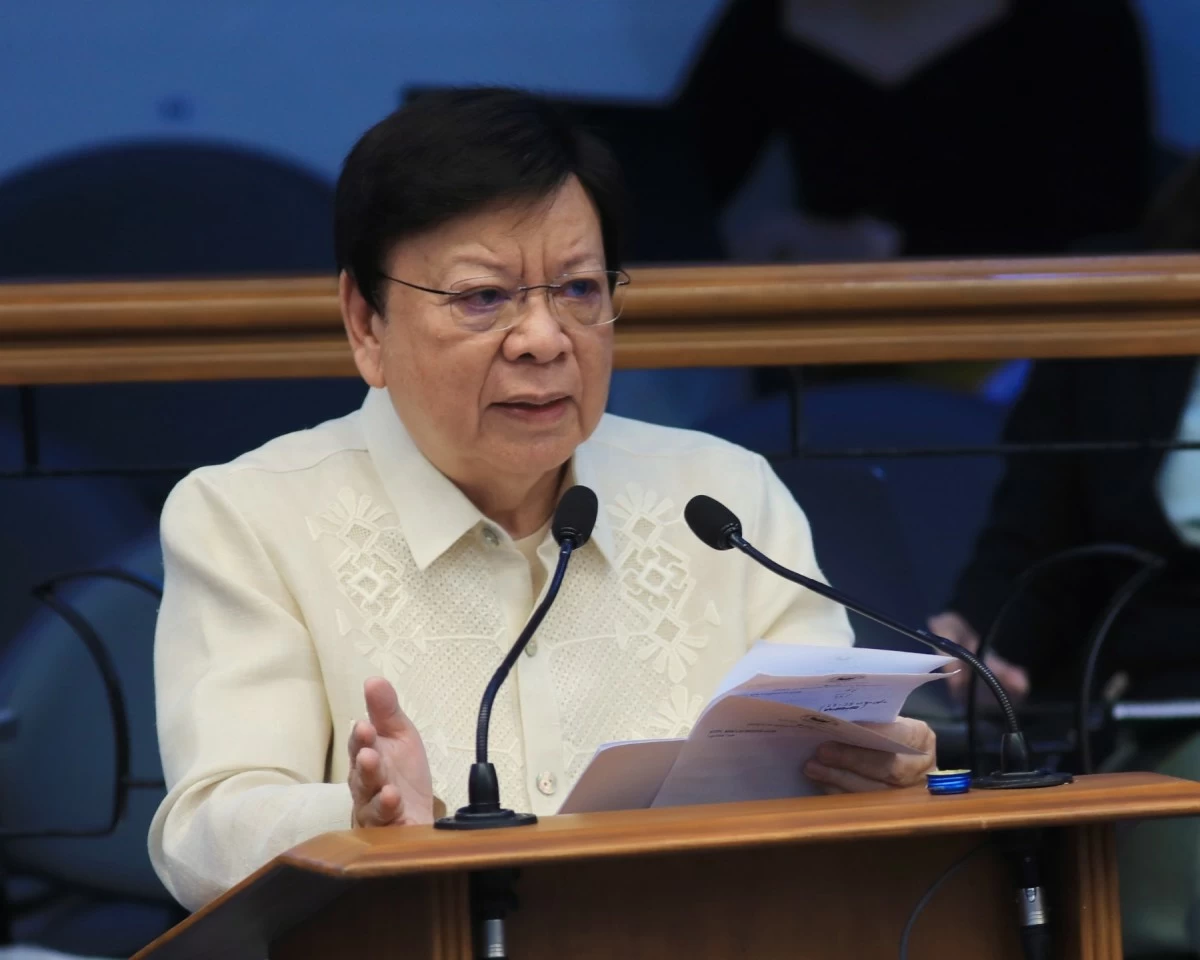
Senator Rodante Marcoleta (Senate PRIB photo)
During the plenary deliberations on Monday, Nov. 24, Marcoleta said that despite the breadth of programs such as the Pantawid Pamilyang Pilipino Program (4Ps), social pension, protective services, supplementary feeding, and livelihood assistance, independent surveys continue to show high levels of self-rated poverty and hunger. He noted that more than half of the DSWD budget for next year goes to 4Ps alone.
“Napakarami pong interventions, pero halos kalahati ng pamilyang Pilipino ay nagsasabing sila ay mahirap pa rin,” he said.
Citing Social Weather Stations (SWS) surveys, he pointed out that self-rated poverty stayed at 48 percent in 2022 and 2023, rose to 57 percent in 2024, and stood at around 50 percent by September 2025. He estimated this to be equivalent to around 14.2 million families, or about 25 to 30 million Filipinos if each household has five members.
Marcoleta also flagged the prevalence of involuntary hunger, saying that 27.2 percent of respondents in a March 2025 survey reported experiencing hunger because they lacked food. “Ito ang pinakamasakit. Gusto mong kumain pero wala ka talagang makain,” he said, adding this represents around 7.5 million households.
He said these figures suggest that despite the wide range of social welfare programs, many families do not feel improvements in their daily lives.
Marcoleta also raised concern about the political use of certain programs, recalling his experience as a member of the House of Representatives. He mentioned instances where lawmakers’ presence in events was linked to supposed allotments under AICS, TUPAD, and MAIP—practices he described as “napakasamang halimbawa.”
Beyond concerns on implementation, the senator questioned whether the current strategy is enough to lift millions out of poverty. He noted that 4Ps was launched in 2008 and later institutionalized through Republic Act 11310, yet poverty remains widespread after 17 years of implementation.
“Pantawid lang ba talaga? Paano pagkatwid niya nakakita ng multo?” he said, referring to reports of “ghost projects” and the failure of some households to achieve long-term stability.
Marcoleta then cited China’s anti-poverty program as a model that could be studied. Based on World Bank data, he said China lifted 800 million people out of poverty from 1978 to 2018, averaging 19 million individuals per year. He stressed two elements of the Chinese approach: opening new economic opportunities to raise income levels and providing targeted support to households facing structural disadvantages.
“If we assume na ang mahirap nating Pilipino ay 17.17 million, then applying what China was able to do, theoretically kaya natin itong iangat nang isang taon (If we assume that our poor Filipinos number 17.17 million, then by applying what China was able to do, we could theoretically lift them out of poverty within a year),” he said.
He clarified that his intention was not to downplay DSWD’s efforts but to examine whether similar strategies, particularly those that boost incomes—could be adapted locally.
As an example, Marcoleta suggested subsidizing the electricity bills of households consuming 200 kWh per month or less. He said such savings would allow low-income families to redirect money toward food and other basic needs.
Senator Pia Cayetano, sponsor of the DSWD budget, acknowledged the concerns and said the agency is working to evaluate the effectiveness of its programs. She said that upon the President’s instruction, DSWD is commissioning a study to determine which interventions work best and which may need adjustment or consolidation.
Cayetano agreed that some programs may be effective but lack sufficient funding. She cited the "1,000 Days" nutrition program, which provides only P350 per month—a level she described as too low to produce the desired outcomes. She also mentioned the “Walang Gutom” food subsidy project, where families receive P3,000 monthly. The program recorded a four-percent decrease in self-reported hunger among beneficiaries.
The senator also highlighted DSWD’s accomplishments under 4Ps, saying that 1.44 million households exited the program between 2022 and 2025 after reaching self-sufficiency benchmarks. She said many children from beneficiary families have graduated from elementary and high school, passed board examinations, and even topped licensure tests. She added that 2.44 million beneficiaries have transitioned to livelihood assistance programs.
Cayetano agreed that more needs to be done.
“It’s great to have targets, and the Secretary is not settling for these numbers,” she said. The DSWD, she added, aims to identify the most efficient use of funds and ensure that the needs of the poorest Filipinos are addressed effectively.
Marcoleta welcomed the explanation but reiterated that sustained poverty reduction requires raising incomes, not only providing assistance. He said reviewing China’s two-pillar approach may offer lessons.
“Kung hindi natin nagagawa na itaas ang kanilang average income, kahit gaano karami ang intervention, hindi rin magiging sapat (If we are unable to raise their average income, then no matter how many interventions we implement, it still won’t be enough),” he said.
He emphasized that the goal should be long-term economic stability for Filipino families, not short-term relief.