

ADVERTISEMENT

Filipino children to endure 5 annual heatwaves by 2050 increasing heatstroke possibility—study

Published Nov 25, 2025 11:26 am  |  Updated Nov 25, 2025 01:18 pm
(PHOTO: UNICEF)
(PHOTO: UNICEF)
Almost all children in the Philippines will experience around five annual heatwaves by 2050, increasing the possibility of heatstroke, dehydration, and preterm births, a study showed.
In a joint study conducted by UNICEF Philippines and the Department of Environment and Natural Resources (DENR), it was found that 99 percent of children in the country will experience at least five heat waves every year by 2050.
“By 2050, nearly all children in the Philippines will face at least five heat waves annually. Rainfall will become more erratic and intense,” UNICEF Philippines Representative Kyungsun Kim said in her speech during the launch of the Climate Landscape Analysis for Children (CLAC) study in Quezon City on Tuesday, Nov. 25.
“Super typhoons, like the one that devastated families across the country two weeks ago, will become more frequent,” she went on.

UNICEF Philippines Representative Kyungsun Kim (JEL SANTOS/MB PHOTO)
The study also found that 80 percent of the Philippines’ water supply may be at risk by 2040.
“Typhoons and other disasters damage water infrastructure, raising risks of disease outbreaks,” UNICEF stated.
Due to climate hazards, it was also discovered that students lost 32 school days, or 18 percent, during the 2023 to 2024 school year.
Per the CLAC study, climate change increases risks of violence, exploitation, poverty, and overburdened social support systems.
It also identified areas in the Philippines that experience “frequent climate hazards and have weak infrastructure.”
These are Palawan, Camarines Norte, Camarines Sur, Quezon, Maguindanao del Sur, Maguindanao del Norte, Sulu, and the Special Geographic Areas of the Bangsamoro Autonomous Region in Muslim Mindanao.
What to scale up?
According to Kim, the Philippines must strengthen its investments in adaptation and in the response to loss and damage.
“And we have seen more children casualties in the recent typhoons. We must scale up investments in adaptation and in the response to loss and damage, particularly in the basic services children rely on to survive and thrive, namely health, nutrition, education, water and sanitation, and protection,” she said.
Meanwhile, she acknowledged that the Philippines is a “global leader on climate change.”
“The Philippines has strong national adaptation plan that prioritizes many social services for children, such as the ones that we listed, health, water resources, livelihood and social protection systems, and protection for those displaced or forced to migrate,” said Kim.
“Yet today, we see that a very small proportion of overseas development assistance and national government budget is dedicated, or better said, implemented, to adaptive measures in these sectors.”
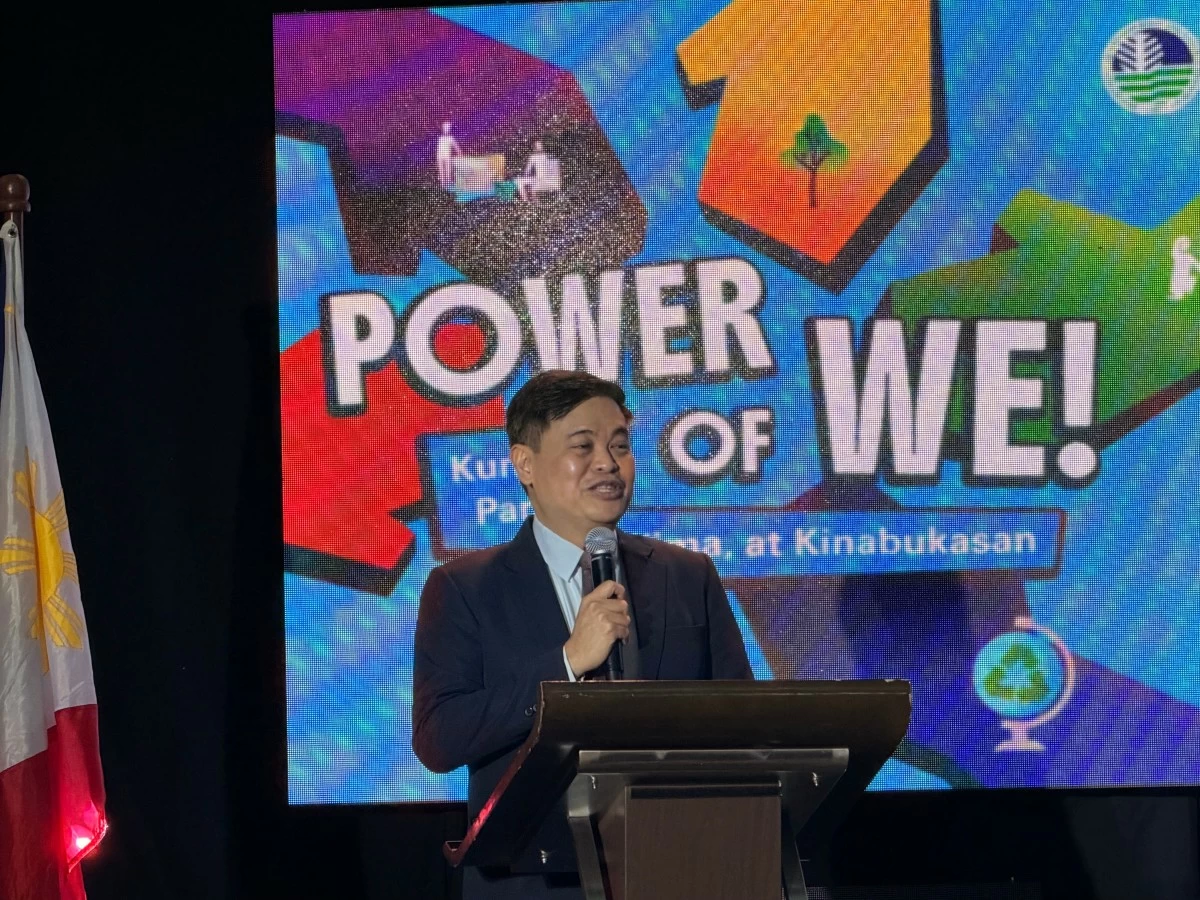
CCC Vice Chairperson and Executive Director Robert E.A. Borje (JEL SANTOS/MB PHOTO)
For his part, Climate Change Commission (CCC) Vice Chairperson and Executive Director Robert E.A. Borje noted that the Philippines experiences at least 20 tropical cyclones annually.
“Of those 9.7 million child displacements, 8.3 million, approximately 85 percent were caused by storms and typhoons. And the science tells us this will not abate,” he said.
In the next 30 years, Borje said 2.5 million Filipino children will remain at risk of displacement from storm surges alone.

Related Tags

UNICEF HEATWAVES PHILIPPINES CCC FILIPINO CHILDREN
ADVERTISEMENT
.most-popular .layout-ratio{ padding-bottom: 79.13%; } @media (min-width: 768px) and (max-width: 1024px) { .widget-title { font-size: 15px !important; } }

{{ articles_filter_1561_widget.title }}

.most-popular .layout-ratio{ padding-bottom: 79.13%; } @media (min-width: 768px) and (max-width: 1024px) { .widget-title { font-size: 15px !important; } }

{{ articles_filter_1562_widget.title }}

.most-popular .layout-ratio{ padding-bottom: 79.13%; } @media (min-width: 768px) and (max-width: 1024px) { .widget-title { font-size: 15px !important; } }

{{ articles_filter_1563_widget.title }}

{{ articles_filter_1564_widget.title }}

.mb-article-details { position: relative; } .mb-article-details .article-body-preview, .mb-article-details .article-body-summary{ font-size: 17px; line-height: 30px; font-family: "Libre Caslon Text", serif; color: #000; } .mb-article-details .article-body-preview iframe , .mb-article-details .article-body-summary iframe{ width: 100%; margin: auto; } .read-more-background { background: linear-gradient(180deg, color(display-p3 1.000 1.000 1.000 / 0) 13.75%, color(display-p3 1.000 1.000 1.000 / 0.8) 30.79%, color(display-p3 1.000 1.000 1.000) 72.5%); position: absolute; height: 200px; width: 100%; bottom: 0; display: flex; justify-content: center; align-items: center; padding: 0; } .read-more-background a{ color: #000; } .read-more-btn { padding: 17px 45px; font-family: Inter; font-weight: 700; font-size: 18px; line-height: 16px; text-align: center; vertical-align: middle; border: 1px solid black; background-color: white; } .hidden { display: none; }
function initializeAllSwipers() { // Get all hidden inputs with cms_article_id document.querySelectorAll('[id^="cms_article_id_"]').forEach(function (input) { const cmsArticleId = input.value; const articleSelector = '#article-' + cmsArticleId + ' .body_images'; const swiperElement = document.querySelector(articleSelector); if (swiperElement && !swiperElement.classList.contains('swiper-initialized')) { new Swiper(articleSelector, { loop: true, pagination: false, navigation: { nextEl: '#article-' + cmsArticleId + ' .swiper-button-next', prevEl: '#article-' + cmsArticleId + ' .swiper-button-prev', }, }); } }); } setTimeout(initializeAllSwipers, 3000); const intersectionObserver = new IntersectionObserver( (entries) => { entries.forEach((entry) => { if (entry.isIntersecting) { const newUrl = entry.target.getAttribute("data-url"); if (newUrl) { history.pushState(null, null, newUrl); let article = entry.target; // Extract metadata const author = article.querySelector('.author-section').textContent.replace('By', '').trim(); const section = article.querySelector('.section-info ').textContent.replace(' ', ' '); const title = article.querySelector('.article-title h1').textContent; // Parse URL for Chartbeat path format const parsedUrl = new URL(newUrl, window.location.origin); const cleanUrl = parsedUrl.host + parsedUrl.pathname; // Update Chartbeat configuration if (typeof window._sf_async_config !== 'undefined') { window._sf_async_config.path = cleanUrl; window._sf_async_config.sections = section; window._sf_async_config.authors = author; } // Track virtual page view with Chartbeat if (typeof pSUPERFLY !== 'undefined' && typeof pSUPERFLY.virtualPage === 'function') { try { pSUPERFLY.virtualPage({ path: cleanUrl, title: title, sections: section, authors: author }); } catch (error) { console.error('ping error', error); } } // Optional: Update document title if (title && title !== document.title) { document.title = title; } } } }); }, { threshold: 0.1 } ); function showArticleBody(button) { const article = button.closest("article"); const summary = article.querySelector(".article-body-summary"); const body = article.querySelector(".article-body-preview"); const readMoreSection = article.querySelector(".read-more-background"); // Hide summary and read-more section summary.style.display = "none"; readMoreSection.style.display = "none"; // Show the full article body body.classList.remove("hidden"); } document.addEventListener("DOMContentLoaded", () => { let loadCount = 0; // Track how many times articles are loaded const offset = [1, 2, 3, 4, 5, 6, 7, 8, 9, 10]; // Offset values const currentUrl = window.location.pathname.substring(1); let isLoading = false; // Prevent multiple calls if (!currentUrl) { console.log("Current URL is invalid."); return; } const sentinel = document.getElementById("load-more-sentinel"); if (!sentinel) { console.log("Sentinel element not found."); return; } function isSentinelVisible() { const rect = sentinel.getBoundingClientRect(); return ( rect.top < window.innerHeight && rect.bottom >= 0 ); } function onScroll() { if (isLoading) return; if (isSentinelVisible()) { if (loadCount >= offset.length) { console.log("Maximum load attempts reached."); window.removeEventListener("scroll", onScroll); return; } isLoading = true; const currentOffset = offset[loadCount]; window.loadMoreItems().then(() => { let article = document.querySelector('#widget_1690 > div:nth-last-of-type(2) article'); intersectionObserver.observe(article) loadCount++; }).catch(error => { console.error("Error loading more items:", error); }).finally(() => { isLoading = false; }); } } window.addEventListener("scroll", onScroll); });

Sign up by email to receive news.