







DA to revamp 'outdated' pork import rules by December
Published Nov 25, 2025 06:54 am


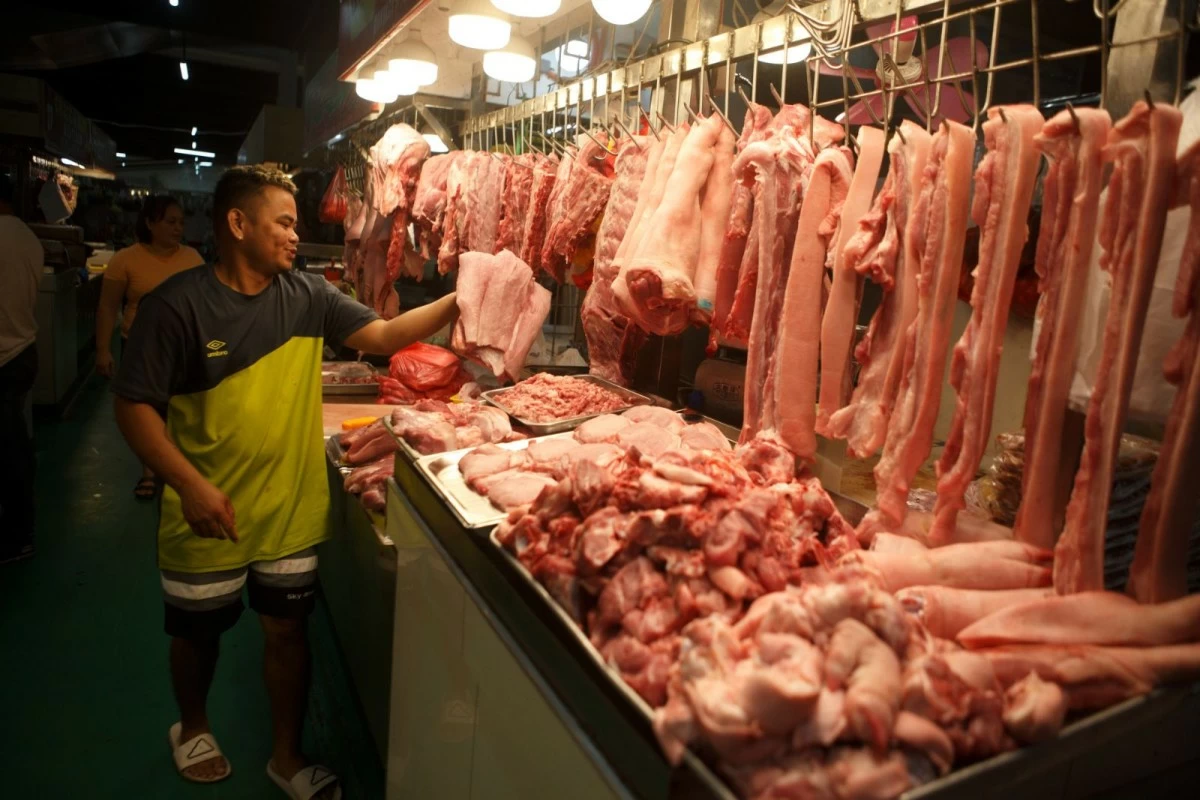
(Manila Bulletin file photo)
The Department of Agriculture (DA) plans to release the country’s new policy on the minimum access volume (MAV) on imported pork before the end of the year, revising the nearly three-decade-old rule allegedly exploited by a handful of traders.
Agriculture Secretary Francisco Tiu Laurel said his agency has already finalized the new MAV rules, having just completed consultations with the hog industry for their feedback.
Tiu Laurel said he will review the final version of the policy this week, with public issuance expected as early as the first week of December.
“The basic changes that will happen there are due to the MAV rules already being outdated,” he said.
As part of its commitments under the World Trade Organization (WTO), the Philippines implements MAV to allow the entry of agricultural commodities at a lower tariff rate.
For pork, imports within the MAV enjoy a 15 percent tariff, while those outside the quota face a 25 percent tariff.
Tiu Laurel said this system, written in 1996, has enabled big-time importers to essentially exploit it.
In April, the DA reported that of the 130 quota holders, 47 account for 80 percent of the total MAV allocation, which stands at 54,210 metric tons (MT).
Further, 22 out of the 47 are seen to have cornered 70 percent of the volume. This means the quota holders have significant influence in dictating the market for imported pork.
As part of the new MAV policy, Tiu Laurel said both big and small traders will receive the same quota to spur competition. He added that this will make them “honest” about the retail prices of pork.
Traders and importers are expected to contend for 30 percent of the entire MAV volume, or around 16,200 MT.
The remaining large chunk will be allocated for meat processors, as the DA seeks to prevent spikes in prices of processed meat such as hotdogs and ham.
A portion of the volume will be allocated to the Kadiwa program, providing the government with an option to intervene in the market to help curb soaring prices.
The DA earlier opened applications for the 2026 MAV this month, with a pork volume of 54,210 MT available. This has since been halted in lieu of the new rules.
Tiu Laurel said the agency plans to immediately open applications for the new system upon issuance, with quotas expected to be announced before Dec. 31.
Since the country typically imports well beyond the MAV, he said the DA is still open to expanding the quota to as much as 150,000 MT under the MAV-plus scheme.
Back in July, Tiu Laurel said 100,000 MT of the volume will be allocated to Kadiwa, 30,000 MT for meat processors, and 20,000 MT for the food service industry.
“We requested from the OP (Office of the President) that we will have a MAV plus. So it can be 150,000 MT, but that is only on standby, in case needed,” he said.
But the secretary said it is still “not the right time” to raise the MAV given the sharp decline in farmgate prices of hogs, largely due to the influx of pork imports.
According to the Bureau of Animal Industry (BAI), the country imported 632,991 MT of pork from January to September, up 22 percent from 517,860 MT in the same period last year.
To keep imports in check, the DA is planning to recommend the restoration of the pork import tariff to 40 percent from the current 25 percent.
“As of the moment, given the current situation with our farmgate prices, our hog raisers are incurring losses. The DA will be proposing to increase the tariff again, among other measures, to raise our farmgate prices,” Tiu Laurel said.
Until such time that the tariffs are changed, the country’s MAV policy will retain a 15-percent in-quota rate and a 25-percent out-quota rate.