






Manila Bulletin
 Philippines
National
Budget growth alone won't fix learning crisis without reforms — advocacy group
Philippines
National
Budget growth alone won't fix learning crisis without reforms — advocacy group
Philippines
National
Budget growth alone won't fix learning crisis without reforms — advocacy group
Budget growth alone won't fix learning crisis without reforms — advocacy group
PBEd backs proposed 2026 education budget; urges transparency, accountability in spending
Published Nov 25, 2025 04:38 pm


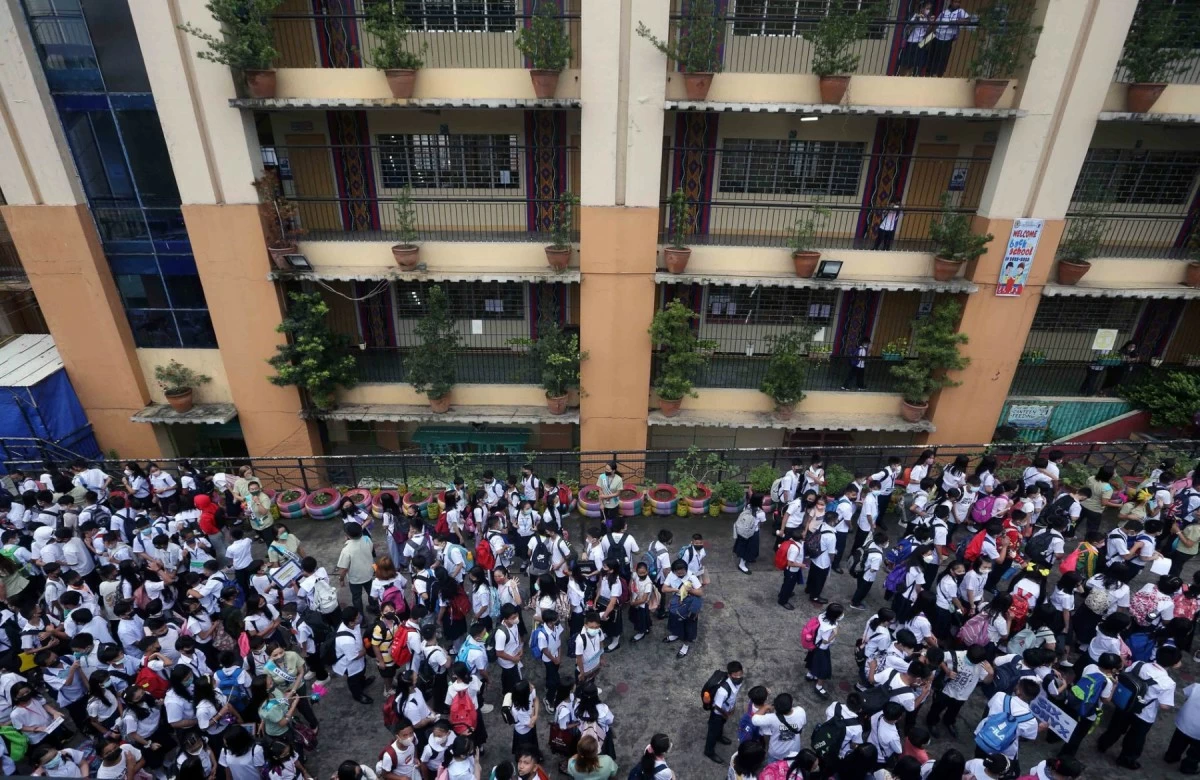
The Philippine Business for Education (PBEd) has backed the proposed 2026 Department of Education (DepEd) budget, while emphasizing the need for stronger accountability in education spending. (Manila Bulletin / file)
Recognizing that the increase brings the country closer to global standards in education spending and reflects a clear commitment to long-term human capital development, an industry-led advocacy group on Tuesday, November 25, expressed strong support for the proposed allocation for the education sector under the 2026 national budget.
In a statement, the Philippine Business for Education (PBEd) said the higher investment provides a critical opportunity to address persistent learning gaps, improve teacher quality, and upgrade school facilities—key areas that have hindered national competitiveness in recent years.
However, the group stressed that these goals can only be achieved if the budget is implemented through transparent, accountable, and evidence-based processes.
“Budget growth alone will not translate into higher literacy rates, improved teacher effectiveness, or better alignment between education and labor market needs without disciplined implementation,” PBEd said. “Government spending must be anchored on evidence-based reforms, with performance rigorously tracked and made public,” it added.
Call for transparency in final budget deliberations
PBEd urged greater public scrutiny in the bicameral conference committee, where final budget allocations are set.
Decisions at this stage, PBEd added, have significant implications for which programs are prioritized and how resources will be distributed across the sector.
“Ensuring transparency must be coupled with stronger accountability measures and appropriate corrective action for parties proven to have mismanaged education funds,” PBEd said.
“This is essential to safeguard public resources and uphold the integrity of the education reform agenda,” it added.
Funding must be tied to long-term reforms
PBEd reiterated that increased spending alone will not guarantee higher literacy rates, better teaching outcomes, or stronger alignment between education and workforce needs.
The group underscored the importance of consistent leadership and effective management in the Department of Education (DepEd) to ensure that additional funding is allocated to “high-priority areas such as teacher professional development, learning remediation, and system governance.”
Government spending, PBEd said, must be anchored on evidence-based reforms, with progress rigorously tracked to ensure that improved funding leads to real learning gains.
“Investing in our people remains foundational to economic and social development,” PBEd said. “Sustained, well-governed investment in education is not just a social imperative—it is an economic strategy that will define the Philippines’ trajectory for decades,” it added.
Support for DepEd leadership
PBEd emphasized the need for “consistent leadership and effective management” within DepEd, noting that additional funds should be directed toward high-impact priorities.
It also reaffirmed its confidence in DepEd Secretary Sonny Angara and the current DepEd leadership, citing their commitment to transparency, data-driven policymaking, and collaboration as key to sustaining reform momentum.
“A clear signal of support for both the increased budget and the continuation of the reform agenda is essential for sustaining momentum and ensuring that education investments yield meaningful results,” PBEd said.
Investment as an economic strategy
Calling education investment a “foundational economic strategy,” PBEd said sustained and well-governed funding will shape the country’s social and economic trajectory for decades, particularly as the labor market rapidly evolves.
“PBEd stands ready to support the continued implementation of reforms that strengthen the education system and prepare our learners for a rapidly evolving labor market,” the group added.
RELATED STORY: