







Just like the movies: Nanobots that dissolve blood clots
Published Nov 24, 2025 02:51 pm


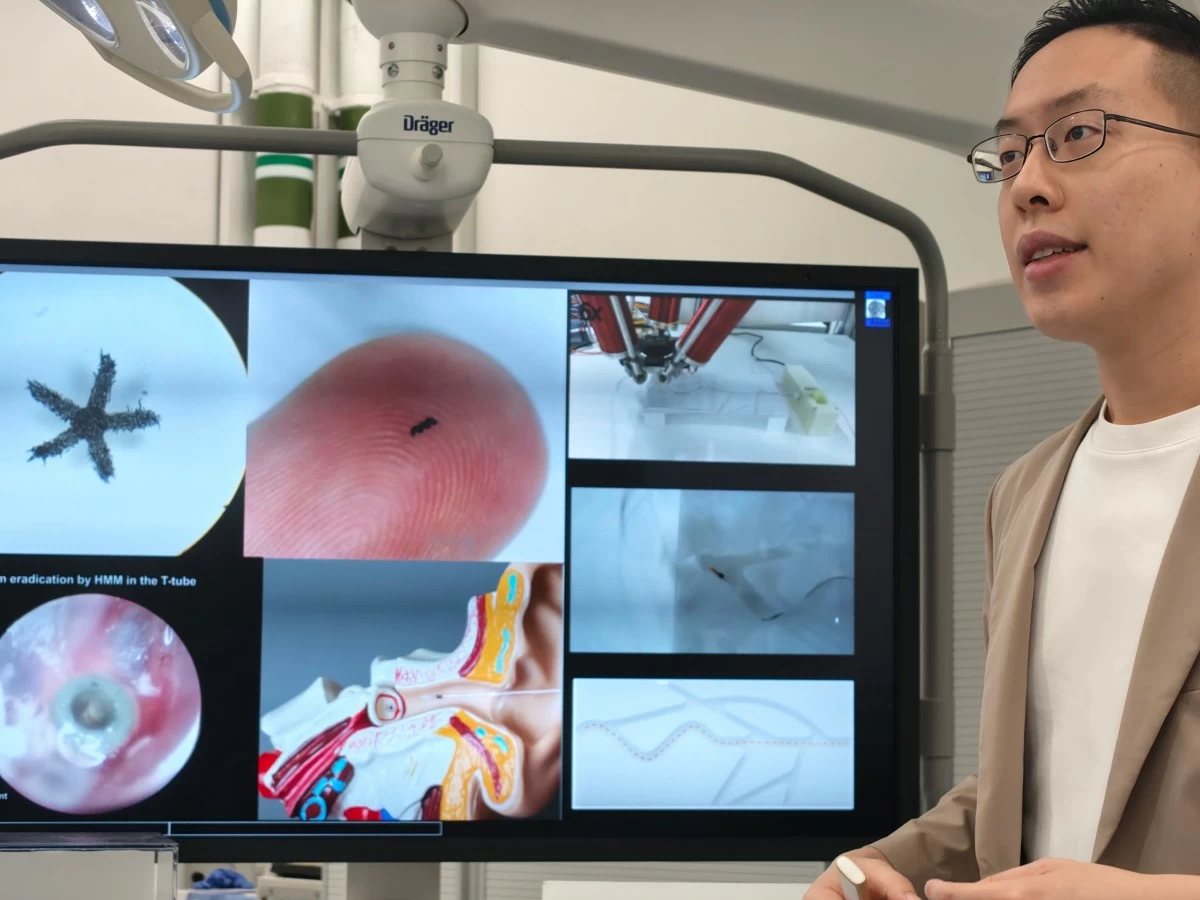
Professor Tony Chan explains how the tPA-nbots work.
“These nanobots can dissolve blood clots.” Professor Tony Chan from the Chinese University of Hong Kong explains, as I am hearing this I can’t help but think that it sounds like a plot in a movie, and I should know because I watch a lot of medical dramas and science fiction, but this was neither. This was real life and I could see the nanobots-placed in a glass container right in front of me.
As part of the Hong Kong Laureate Forum’s commitment to promote understanding and interest in various scientific and technological fields, international media were brought to visit top local research laboratories and one of those stops is the Multi-Scale Medical Robotics Center located at the Hong Kong Science Park.
Stroke is the first cause of morbidity in the Philippines, in 2020 there were 74,167 estimated deaths caused by stroke. Approximately 500,000 Filipinos are affected by stroke.
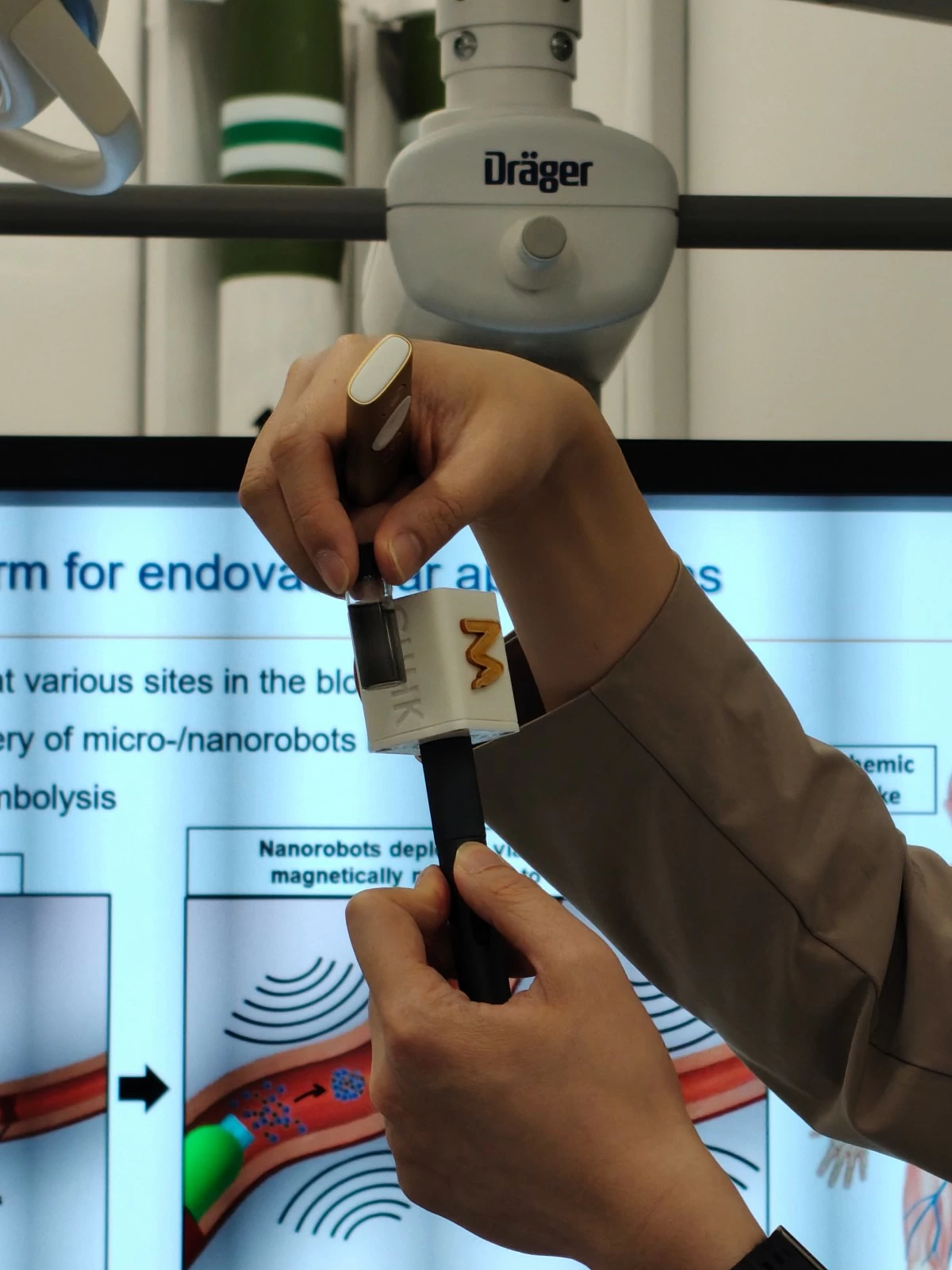
Nanobots inside the glass container as presented by Professor Tony Chan at the Multi-Scale Medical Robotics Center in Hong Kong.
In a press release dated April 2024, the Chinese University of Hong Kong shared their development of magnetic tissue plasminogen activator (tPA)-anchored nanorobots (tPA-nbots) to treat ischemic stroke. Ischemic stroke is caused by a blockage in a blood vessel that supplies the brain with oxygen.
tPA is a drug which is commonly used to dissolve clots by restoring blood flow in patients who have suffered an acute ischemic stroke. The nanobots or in this case, retrievable magnetic tPA-nbots can be deployed through a catheter to the site of the clot, where they directly initiate the thrombolysis process-also known as the process of dissolving a blood clot. This allows for a more focused and direct treatment of the clots. After the clot is lysed, or broken down, the tPA-nbots are guided back into the catheter and out of the body.
With its mission of reshaping the future of medical diagnosis and treatment with robotic technologies, Multi-Scale Medical Robotics Center is breaking boundaries, making good use of Artificial Intelligence through imaging and robotic assisted surgeries and treatments. And it is these exciting developments which the Hong Kong Laureate Forum hopes to inspire the young scientists and students with.
The Hong Kong Laureate Forum which ran from November 5 to 8, invited twelve Shaw Laureates (winners of the Shaw Prize) in various scientific disciplines to speak to, and interact with over 200 young scientists from all over the world. Providing a rich and inspiring space for talented minds to be nurtured, and everyone who was a part of the forum will surely come home looking at the world through a fresh and more hopeful lens.
And if clot dissolving nanobots gets you excited just like me, then I think the future of science and medicine is a little better for it.