






Manila Bulletin
 Environment and Sustainability
Jollibee Group scales up renewable energy and water efficiency efforts
Environment and Sustainability
Jollibee Group scales up renewable energy and water efficiency efforts
Environment and Sustainability
Jollibee Group scales up renewable energy and water efficiency efforts
Jollibee Group scales up renewable energy and water efficiency efforts
By MBrand
Published Nov 24, 2025 04:51 pm
|
Updated Nov 24, 2025 04:00 pm


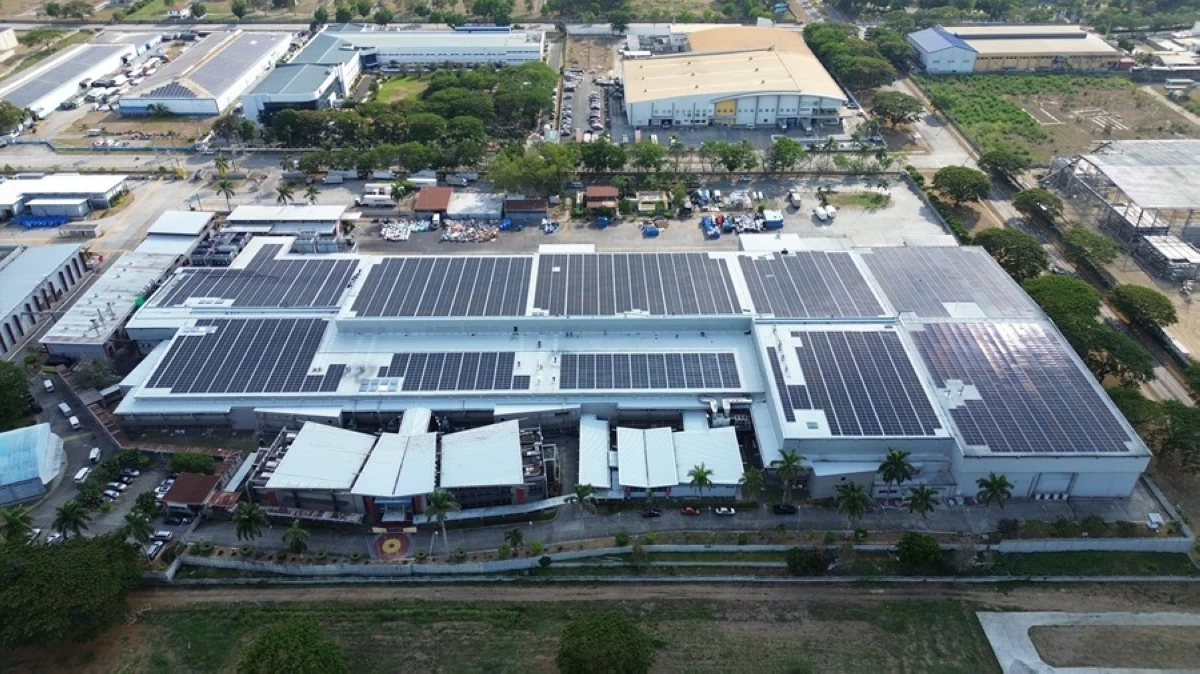
Powering growth responsibly. The Jollibee Group partnered with First Gen Corporation to install over 16,800 solar panels, generating over 9 megawatts of solar power at four of its key supply chain facilities in the Philippines. The fourth and final site (in photo) was completed last May 6, 2023, at the Jollibee Group’s C3 facility in Laguna.
The Jollibee Group continues to accelerate its sustainability journey through substantial investments in renewable energy and an aggressive drive for energy efficiency.
Guided by its global sustainability agenda, Joy for Tomorrow, the company continues to reduce its environmental footprint under the Planet pillar, which emphasizes treating the planet responsibly.
Investing in Renewable Energy
The Jollibee Group completed the installation of more than 16,800 rooftop solar panels across four key manufacturing and logistics facilities in the Philippines, which collectively represent the Group’s largest and most significant operations. These systems deliver 9.1 megawatts of renewable energy capacity, offsetting up to 23% of monthly electricity consumption in specific sites and covering about 12–15% of total manufacturing and logistics demand.
The initiative, executed through an innovative zero-capex Power Purchase Agreement with First Gen’s Pi Energy Inc., highlights the role of strong partnerships in scaling clean energy. Over 25 years, the solar installations are projected to generate 276,752 MWh of clean energy and prevent 75,000 metric tons of greenhouse gas emissions— with an initial impact of 11,600 metric tons avoided in 2025 year to date, equivalent to planting about 300,000 trees.
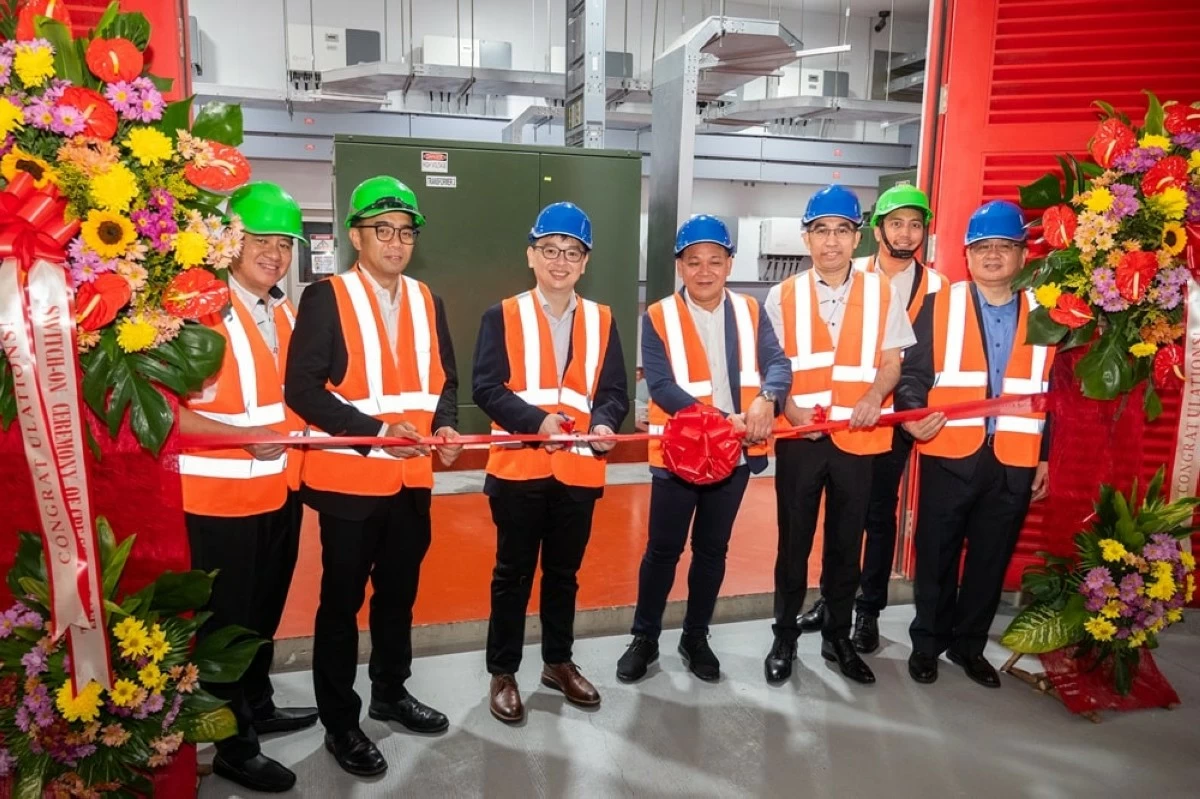
A win for the planet. Officials from the Jollibee Group and First Gen Corp led the switch-on rites of Canlubang Baking Facility’s solar panels last January 9, 2024. In photo are (from L-R): Ronaldo Sales (Zenith Foods Corporation’s AVP-Canlubang Baking Facility & Plant Head), Carlos Lorenzo Vega (First Gen VP for Power Marketing, Trading, & Economics), Michael Ong (Zenith Foods Corporation’s VP & Head Supply Chain Management), Honorable Rosseller Rizal (Mayor of the City of Calamba), Julius Leyba (Zenith Foods Corporation’s AVP & Head of Engineering Services), Mark Malabanan (First Gen’s AVP for Solar), and Manny Portugal (First Gen’s Head of Technology Solutions).
“By increasing our investment in renewable energy, we are not only reducing emissions, but also ensuring a more resilient energy supply for our operations. This reflects our long-term commitment to responsible growth and to creating a sustainable future for generations to come,” said Michael Ong, President, Manufacturing and Logistics, Jollibee Group.
Driving Efficiency Across Operations
Alongside renewable sourcing, the Jollibee Group has implemented energy-saving measures in refrigeration, boilers, lighting, and manufacturing processes. These initiatives helped achieve a 36% reduction in the energy use ratio year-to-date through 2025, compared to a 2020 baseline.
Proving their lasting impact, these renewable energy and efficiency initiatives have already yielded tangible benefits, including an estimated ₱79 million in electricity cost savings since 2024.
Looking ahead, Jollibee Group plans to further expand its renewable energy footprint, with additional solar installations adding 2.78 MWp of capacity.
Enhancing Water Efficiency Across Manufacturing Sites
Complementing its energy initiatives, the Jollibee Group also continues to advance water efficiency across its manufacturing facilities as part of its long-term sustainability strategy under the Planet pillar. In the Philippines, the company is implementing comprehensive water stewardship plans designed to minimize resource depletion and address water supply risks.
To date, the Jollibee Group’s manufacturing sites in the Philippines have achieved a cumulative 40% reduction in water use relative to a 2020 baseline. This milestone was driven by a combination of wastewater treatment upgrades, conservation initiatives, and reuse programs that ensure responsible management of this critical resource.
To strengthen compliance with government environmental standards, the Jollibee Group regularly reviews General Effluent Standards (GES) and submits Self-Monitoring Reports (SMRs) and Discharge Permits to the DENR-EMB. The company also conducts Water Management Assessments to identify risks, develop action plans, and continuously improve its stewardship performance.
Several initiatives contributed to the improvement in water efficiency, including:
- Optimization of water treatment processes, such as filter and membrane backwash and cleaning cycles, based on monitored schedules.
- Installation of nozzles in rinse hoses, condensate recovery, and blowdown optimization to reduce water loss.
- Use of low-flow, high-efficiency faucets and toilet fixtures, along with the Crate Washing Optimization Program, to minimize water use in operations.
- Wastewater treatment and reuse programs, including the installation of new Membrane Bioreactor (MBR) and Dewatering units in commissaries to enhance effluent quality and support water reclamation.
Furthermore, condensate from cooling water, chemical dilution, and other processes are recovered and reused where feasible. Sludge generated from wastewater is collected and treated by accredited third-party providers, ensuring full compliance with environmental regulations.
By embedding sustainability into every aspect of its operations—from water efficiency measures in its manufacturing systems to renewable energy integration across its facilities—the Jollibee Group reinforces its commitment to responsible growth. These initiatives not only protect vital natural resources and reduce emissions but also demonstrate that business success can go hand in hand with environmental stewardship. In advancing global goals, such as the United Nations’ Sustainable Development Goal 7: Affordable and Clean Energy, the company continues to build a future in which clean, reliable, and sustainable resources remain accessible for generations to come.
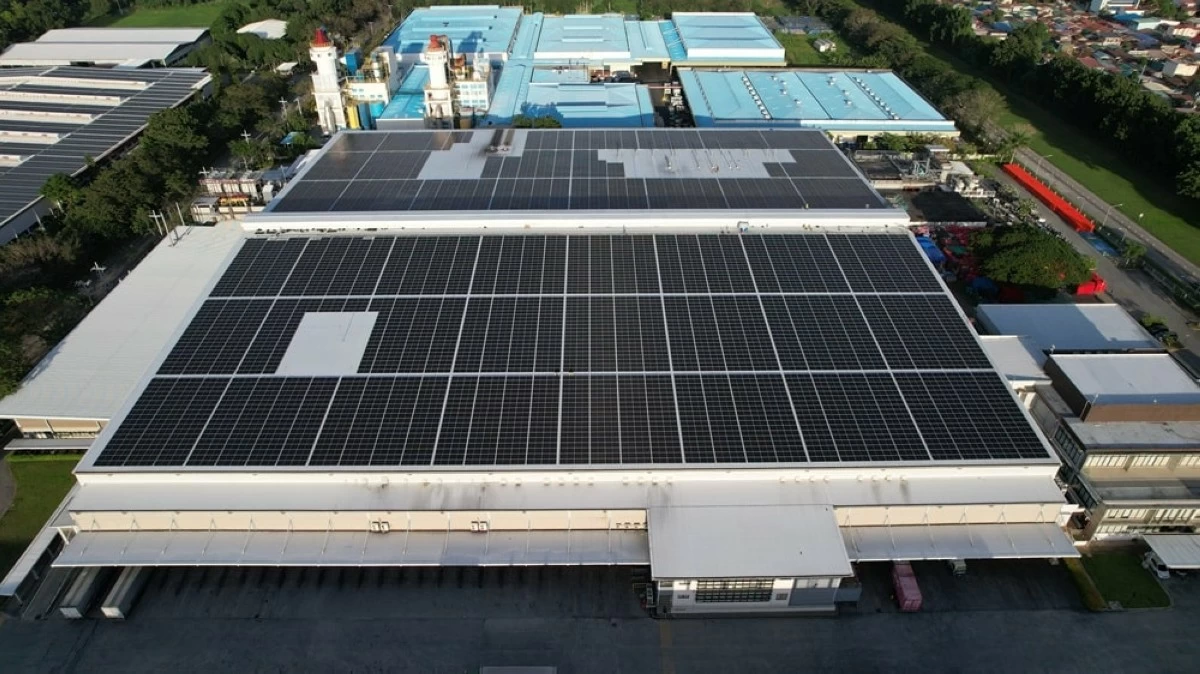
Largest solar site to date. The Canlubang Baking Facility in Laguna is Jollibee Group’s largest rooftop solar site, with 6,300 panels capable of generating up to 3.4 megawatts of clean energy.