

ADVERTISEMENT

Is this one-hour facial treatment worth it?

A look into how Préime DermaFacial works

Published Nov 24, 2025 07:29 pm

At A Glance

  • The treatment takes about an hour. For some people, that feels long. For others, it's proof that someone is actually doing the work properly instead of rushing through.

FAST FACIAL CARE Préime DermaFacial's treatment takes only an hour.
As a medical aesthetics specialist, I’ve learned to spot the difference between marketing promises and actual results. So when someone told me about a facial treatment that uses five different technologies in sequence, my first thought was: here we go again.
But the Préime DermaFacial is turning out to be more interesting than I expected. Not because it’s magic (it isn’t), but because it’s basically the opposite of what most aesthetic clinics are selling these days.
Starting with clean skin
The treatment begins with something called AquaB, which is hydrodermabrasion with a twist. Instead of just blasting your face with water and suction, it delivers specific serums at each stage. The first solution has lactic acid and hyaluronic acid, so you’re getting exfoliation and hydration at the same time. The second step targets congested areas with salicylic acid. Then nourishment, then a rinse to clean the system.
What I appreciate: They adjust the tip size and vacuum strength based on your skin. Sensitive skin gets gentler treatment. Congested skin gets more focused work on problem areas. This seems obvious, but you’d be surprised how many treatments take the same approach for everyone.
The downside? If you’re expecting instant drama, this phase won’t deliver that. It’s thorough, not theatrical.
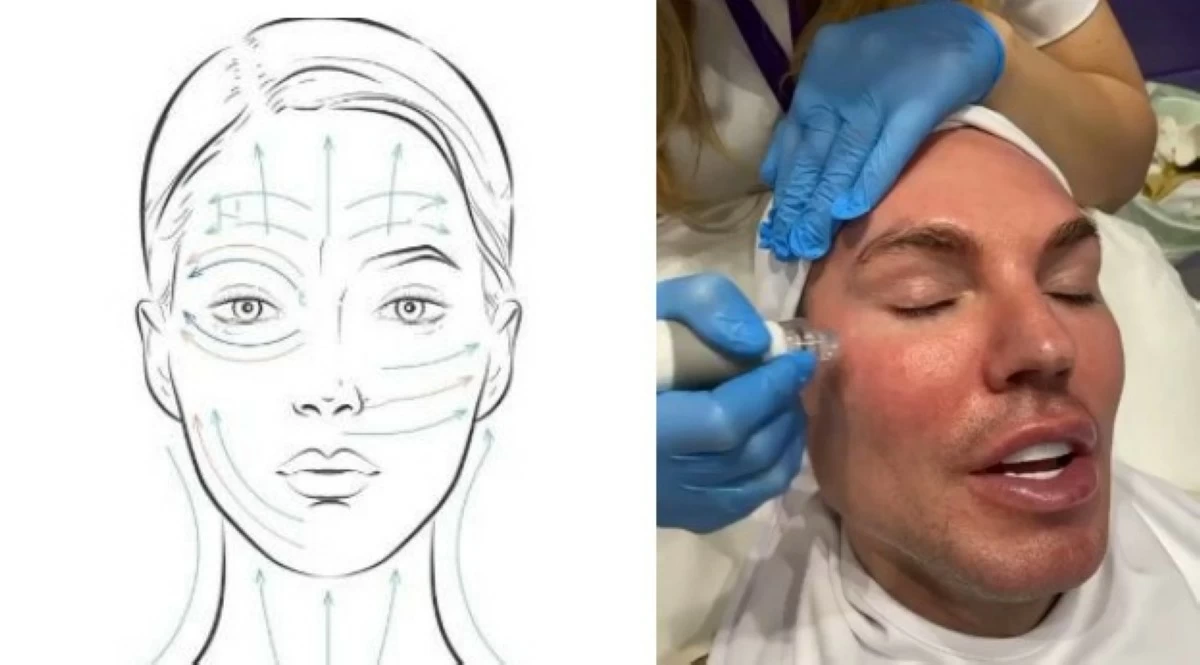
STEP BY STEP A patient undergoes the AquaB cleansing technique.
The tingling part
Next comes VibroX, which combines CO2 microdermabrasion with vibration and red LED. They apply a gel, then use a specialized pod that creates a chemical reaction when it touches the gel. This increases oxygen to your skin tissues.
Clients usually feel tingling. Some find it pleasant, others find it weird. Either reaction is normal – it means something is actually happening at a cellular level. The treatment time is short: Two minutes for sensitive skin, four minutes for normal skin... Because more isn’t always better.
The Fresh gel is gentler, the Bright gel is more aggressive and better for pigmentation or congested skin. Your aesthetician should be choosing this based on your skin, not just whatever’s open on the counter.
Face gym (yes, really)
The MicroT phase uses microcurrent to stimulate facial muscles. I know how this sounds. Face exercises usually fall into the category of things your aunt insists work but probably don’t.
But microcurrent is different. At 400Hz, it contracts muscles in a way that can, over time and with repeated treatments, improve tone. The key word being “can” – only if the person doing it understands facial anatomy and works slowly along the actual muscle fibers.
Cheek muscles get about 10 minutes. The technique matters more than the technology here. A practitioner rushing through this phase might as well skip it entirely.
Controlled heat
Then there’s radiofrequency via the Collagen+ handpiece. RF heats the dermis in a controlled way, which triggers your body to produce new collagen. This isn’t a new concept. RF devices have been around for years. The temperature control on this system is smarter than older versions I’ve seen.
The handpiece shows different colors based on skin temperature. Blue means you’re below 39°C. Garnet means you’re in the target zone of 39-42°C. Red means back off and move to cooler skin. This matters because too much heat causes problems; too little does nothing.
The treatment takes about 12 minutes. You’ll feel warmth, sometimes significant warmth, but not pain. If it hurts, someone is doing it wrong.
The final push
The last step uses ultrasound to drive a hydrating serum deeper into skin. Ultrasound temporarily opens pathways in your skin’s outer layer, so ingredients penetrate better instead of just sitting on the surface.
This is the least exciting part to experience. You feel almost nothing, but it’s important for the overall result.
So does it work?
Here’s my honest take: Yes, but not miraculously. You’ll see improvement. Your skin will look clearer, feel smoother, and appear more hydrated. Fine lines may soften a bit. But you won’t walk out looking 10 years younger, and anyone promising that is selling you something.
The treatment takes about an hour. For some people, that feels long. For others, it’s proof that someone is actually doing the work properly instead of rushing through.
This won’t replace more intensive treatments if you need them. It won’t give you the results of neurotoxins or fillers. But as a maintenance treatment or for people who want to avoid needles, it makes sense.
Would I recommend it to my own patients? Yes, with realistic expectations about what it can and can’t do. And that’s probably the most honest endorsement I can give.​​​​​​​​​​​​​​​​

Related Tags

Health and Wellness
ADVERTISEMENT
.most-popular .layout-ratio{ padding-bottom: 79.13%; } @media (min-width: 768px) and (max-width: 1024px) { .widget-title { font-size: 15px !important; } }

{{ articles_filter_1561_widget.title }}

.most-popular .layout-ratio{ padding-bottom: 79.13%; } @media (min-width: 768px) and (max-width: 1024px) { .widget-title { font-size: 15px !important; } }

{{ articles_filter_1562_widget.title }}

.most-popular .layout-ratio{ padding-bottom: 79.13%; } @media (min-width: 768px) and (max-width: 1024px) { .widget-title { font-size: 15px !important; } }

{{ articles_filter_1563_widget.title }}

{{ articles_filter_1564_widget.title }}

.mb-article-details { position: relative; } .mb-article-details .article-body-preview, .mb-article-details .article-body-summary{ font-size: 17px; line-height: 30px; font-family: "Libre Caslon Text", serif; color: #000; } .mb-article-details .article-body-preview iframe , .mb-article-details .article-body-summary iframe{ width: 100%; margin: auto; } .read-more-background { background: linear-gradient(180deg, color(display-p3 1.000 1.000 1.000 / 0) 13.75%, color(display-p3 1.000 1.000 1.000 / 0.8) 30.79%, color(display-p3 1.000 1.000 1.000) 72.5%); position: absolute; height: 200px; width: 100%; bottom: 0; display: flex; justify-content: center; align-items: center; padding: 0; } .read-more-background a{ color: #000; } .read-more-btn { padding: 17px 45px; font-family: Inter; font-weight: 700; font-size: 18px; line-height: 16px; text-align: center; vertical-align: middle; border: 1px solid black; background-color: white; } .hidden { display: none; }
function initializeAllSwipers() { // Get all hidden inputs with cms_article_id document.querySelectorAll('[id^="cms_article_id_"]').forEach(function (input) { const cmsArticleId = input.value; const articleSelector = '#article-' + cmsArticleId + ' .body_images'; const swiperElement = document.querySelector(articleSelector); if (swiperElement && !swiperElement.classList.contains('swiper-initialized')) { new Swiper(articleSelector, { loop: true, pagination: false, navigation: { nextEl: '#article-' + cmsArticleId + ' .swiper-button-next', prevEl: '#article-' + cmsArticleId + ' .swiper-button-prev', }, }); } }); } setTimeout(initializeAllSwipers, 3000); const intersectionObserver = new IntersectionObserver( (entries) => { entries.forEach((entry) => { if (entry.isIntersecting) { const newUrl = entry.target.getAttribute("data-url"); if (newUrl) { history.pushState(null, null, newUrl); let article = entry.target; // Extract metadata const author = article.querySelector('.author-section').textContent.replace('By', '').trim(); const section = article.querySelector('.section-info ').textContent.replace(' ', ' '); const title = article.querySelector('.article-title h1').textContent; // Parse URL for Chartbeat path format const parsedUrl = new URL(newUrl, window.location.origin); const cleanUrl = parsedUrl.host + parsedUrl.pathname; // Update Chartbeat configuration if (typeof window._sf_async_config !== 'undefined') { window._sf_async_config.path = cleanUrl; window._sf_async_config.sections = section; window._sf_async_config.authors = author; } // Track virtual page view with Chartbeat if (typeof pSUPERFLY !== 'undefined' && typeof pSUPERFLY.virtualPage === 'function') { try { pSUPERFLY.virtualPage({ path: cleanUrl, title: title, sections: section, authors: author }); } catch (error) { console.error('ping error', error); } } // Optional: Update document title if (title && title !== document.title) { document.title = title; } } } }); }, { threshold: 0.1 } ); function showArticleBody(button) { const article = button.closest("article"); const summary = article.querySelector(".article-body-summary"); const body = article.querySelector(".article-body-preview"); const readMoreSection = article.querySelector(".read-more-background"); // Hide summary and read-more section summary.style.display = "none"; readMoreSection.style.display = "none"; // Show the full article body body.classList.remove("hidden"); } document.addEventListener("DOMContentLoaded", () => { let loadCount = 0; // Track how many times articles are loaded const offset = [1, 2, 3, 4, 5, 6, 7, 8, 9, 10]; // Offset values const currentUrl = window.location.pathname.substring(1); let isLoading = false; // Prevent multiple calls if (!currentUrl) { console.log("Current URL is invalid."); return; } const sentinel = document.getElementById("load-more-sentinel"); if (!sentinel) { console.log("Sentinel element not found."); return; } function isSentinelVisible() { const rect = sentinel.getBoundingClientRect(); return ( rect.top < window.innerHeight && rect.bottom >= 0 ); } function onScroll() { if (isLoading) return; if (isSentinelVisible()) { if (loadCount >= offset.length) { console.log("Maximum load attempts reached."); window.removeEventListener("scroll", onScroll); return; } isLoading = true; const currentOffset = offset[loadCount]; window.loadMoreItems().then(() => { let article = document.querySelector('#widget_1690 > div:nth-last-of-type(2) article'); intersectionObserver.observe(article) loadCount++; }).catch(error => { console.error("Error loading more items:", error); }).finally(() => { isLoading = false; }); } } window.addEventListener("scroll", onScroll); });

Sign up by email to receive news.