

ADVERTISEMENT

De Lima wary of 'executive sessions' as ICI moves toward livestreaming of hearings

Published Nov 24, 2025 05:34 pm

At A Glance

  • If Mamamayang Liberal (ML) Party-list Rep. Leila de Lima would have his way, the Independent Commission for Infrastructure (ICI) would have no if or buts attached to the livestreaming of its hearings.
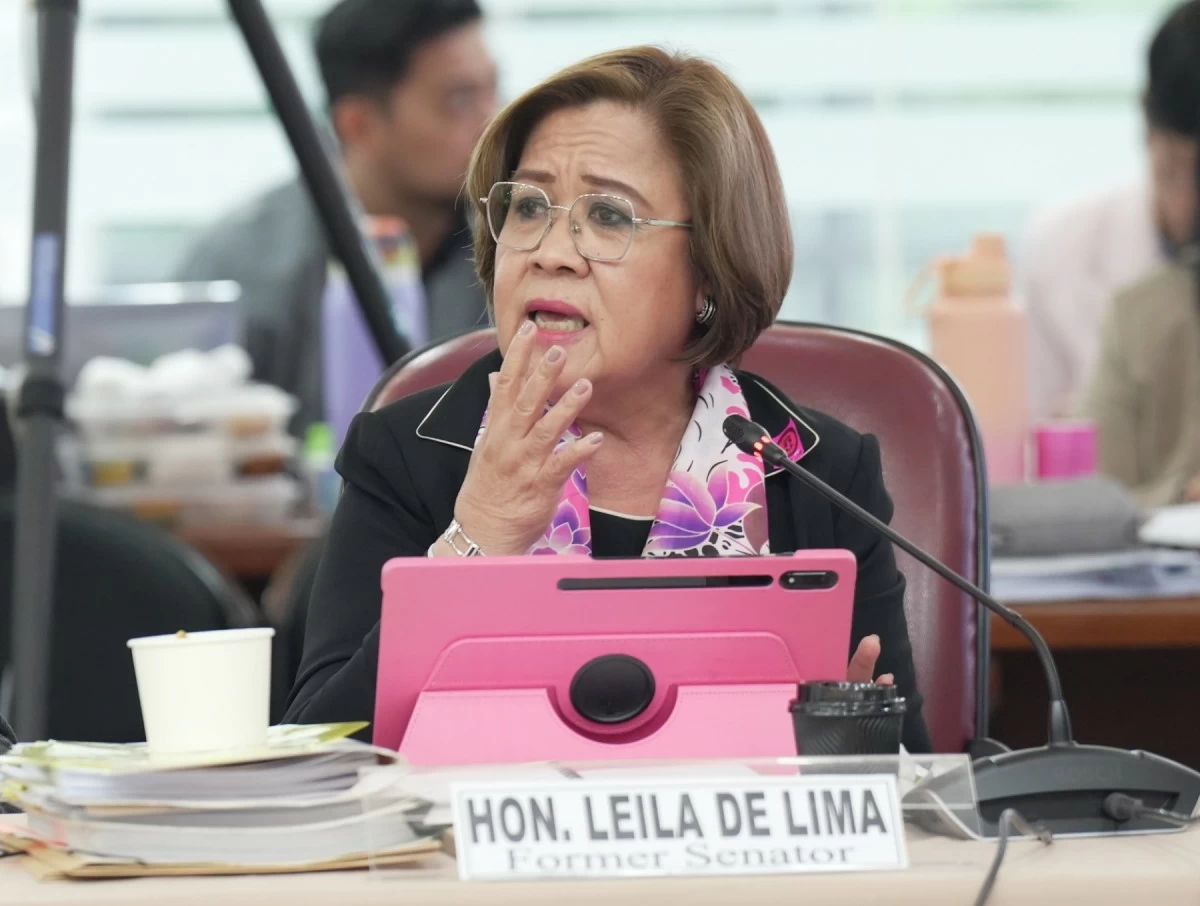
Mamamayang Liberal (ML) Party-list Rep. Leila de Lima (PPAB)


If Mamamayang Liberal (ML) Party-list Rep. Leila de Lima would have his way, the Independent Commission for Infrastructure (ICI) would have no if or buts attached to the livestreaming of its hearings.
"Livestreaming ang dapat na automatic at default mode sa ICC hearings. Ang executive sessions ay pupwede lamang sa bibihirang exceptions na nasa Supreme Court (SC) decisions. Konti lang dapat ang instances for an executive session," De Lima said on Monday, Nov. 24.
(Livestreaming should be the automatic and default mode in ICC hearings. Executive sessions may only be allowed in the rare exceptions provided in Supreme Court decisions. There should be very few instances for an executive session.)
"Otherwise, the very heart and essence of livestreaming, the public's collective demand, will be diluted," noted the former senator.
Since beginning its investigation on the flood control projects corruption scandal in mid-September, the ICC--created by Malacañang itself--has yet to make any of its hearings public.
The commission is slowly but surely moving toward a livestreaming set-up; thus, it remains to be seen how often instances of executive sessions or closed-door proceedings will be.
"While we of course commend ICI's efforts and progress in its work, coupled with the commitment to finally livestream the hearings starting this week, we must nonetheless scrutinize the ICI livestreaming guidelines, lalo na kung may mga probisyon dito na sa tingin natin ay hindi naaayon sa Konstitusyon at mga batas (Especially if there are provisions here that we believe are not in accordance with the Constitution and the laws)," De Lima said.
De Lima says that while ICI hearings shall be livestreamed generally as per the guidelines, on certain occasions--either motu proprio or upon a meritorious request--it can hold its proceedings in executive session. As to its past hearings, the recordings can be made public if there is consent from the affected witness or resource person.
"Sa aking pananaw, may mali po dito (In my view, there is something wrong here)," said the deputy minority leader.
"ICI hearings can be considered 'transactions involving public interest', the full public disclosure of which is commanded by Section 28, Article II of the Constitution. 'Public interest' is written all over EO 94, the presidential issuance that created the ICI. According to one whereas clause, EO 94 was prompted by 'reports and allegations of irregularities, misuse of funds, and possible corruption in government flood control and related projects, which, if true, endanger the safety and security of the Filipino people, threaten the welfare of various communities, and erode public trust in government institutions'," she noted.
"Accordingly, ICI’s mandate is to 'hear, investigate, receive, gather, and evaluate evidence, intelligence reports and information'. Therefore, ICI’s hearings should be livestreamed as they are definitely imbued with public interest," pointed out De Lima.
"Syempre, may mga uri ng impormasyon na talagang sensitibo o privileged na hindi pwedeng isapubliko. Meron ding mga deliberasyon, draft decisions at iba pang purely internal matter na talagang hindi pinapaalam sa publiko pero mahalaga sa operasyon ng ICI," she said.
(Of course, there are types of information that are truly sensitive or privileged and cannot be made public. There are also deliberations, draft decisions, and other purely internal matters that are not disclosed to the public but are essential to the operations of the ICI.)
"Some would argue that the more applicable constitutional provision would be Section 7, Article III pertaining to the right of the people to information on matters of public concern. Access to official records and documents related to official acts is afforded to Filipino citizens, subject to limitations prescribed by law.
"Sa kasawiang-palad ay wala pang ganitong batas; ang meron lamang ay mga nakabinbing mga panukala para sa Freedom of Information Act sa Kongreso (Unfortunately, there is still no such law; what exists are only pending proposals for a Freedom of Information Act in Congress," the neophyte congresswoman further said.
ADVERTISEMENT
.most-popular .layout-ratio{ padding-bottom: 79.13%; } @media (min-width: 768px) and (max-width: 1024px) { .widget-title { font-size: 15px !important; } }

{{ articles_filter_1561_widget.title }}

.most-popular .layout-ratio{ padding-bottom: 79.13%; } @media (min-width: 768px) and (max-width: 1024px) { .widget-title { font-size: 15px !important; } }

{{ articles_filter_1562_widget.title }}

.most-popular .layout-ratio{ padding-bottom: 79.13%; } @media (min-width: 768px) and (max-width: 1024px) { .widget-title { font-size: 15px !important; } }

{{ articles_filter_1563_widget.title }}

{{ articles_filter_1564_widget.title }}

.mb-article-details { position: relative; } .mb-article-details .article-body-preview, .mb-article-details .article-body-summary{ font-size: 17px; line-height: 30px; font-family: "Libre Caslon Text", serif; color: #000; } .mb-article-details .article-body-preview iframe , .mb-article-details .article-body-summary iframe{ width: 100%; margin: auto; } .read-more-background { background: linear-gradient(180deg, color(display-p3 1.000 1.000 1.000 / 0) 13.75%, color(display-p3 1.000 1.000 1.000 / 0.8) 30.79%, color(display-p3 1.000 1.000 1.000) 72.5%); position: absolute; height: 200px; width: 100%; bottom: 0; display: flex; justify-content: center; align-items: center; padding: 0; } .read-more-background a{ color: #000; } .read-more-btn { padding: 17px 45px; font-family: Inter; font-weight: 700; font-size: 18px; line-height: 16px; text-align: center; vertical-align: middle; border: 1px solid black; background-color: white; } .hidden { display: none; }
function initializeAllSwipers() { // Get all hidden inputs with cms_article_id document.querySelectorAll('[id^="cms_article_id_"]').forEach(function (input) { const cmsArticleId = input.value; const articleSelector = '#article-' + cmsArticleId + ' .body_images'; const swiperElement = document.querySelector(articleSelector); if (swiperElement && !swiperElement.classList.contains('swiper-initialized')) { new Swiper(articleSelector, { loop: true, pagination: false, navigation: { nextEl: '#article-' + cmsArticleId + ' .swiper-button-next', prevEl: '#article-' + cmsArticleId + ' .swiper-button-prev', }, }); } }); } setTimeout(initializeAllSwipers, 3000); const intersectionObserver = new IntersectionObserver( (entries) => { entries.forEach((entry) => { if (entry.isIntersecting) { const newUrl = entry.target.getAttribute("data-url"); if (newUrl) { history.pushState(null, null, newUrl); let article = entry.target; // Extract metadata const author = article.querySelector('.author-section').textContent.replace('By', '').trim(); const section = article.querySelector('.section-info ').textContent.replace(' ', ' '); const title = article.querySelector('.article-title h1').textContent; // Parse URL for Chartbeat path format const parsedUrl = new URL(newUrl, window.location.origin); const cleanUrl = parsedUrl.host + parsedUrl.pathname; // Update Chartbeat configuration if (typeof window._sf_async_config !== 'undefined') { window._sf_async_config.path = cleanUrl; window._sf_async_config.sections = section; window._sf_async_config.authors = author; } // Track virtual page view with Chartbeat if (typeof pSUPERFLY !== 'undefined' && typeof pSUPERFLY.virtualPage === 'function') { try { pSUPERFLY.virtualPage({ path: cleanUrl, title: title, sections: section, authors: author }); } catch (error) { console.error('ping error', error); } } // Optional: Update document title if (title && title !== document.title) { document.title = title; } } } }); }, { threshold: 0.1 } ); function showArticleBody(button) { const article = button.closest("article"); const summary = article.querySelector(".article-body-summary"); const body = article.querySelector(".article-body-preview"); const readMoreSection = article.querySelector(".read-more-background"); // Hide summary and read-more section summary.style.display = "none"; readMoreSection.style.display = "none"; // Show the full article body body.classList.remove("hidden"); } document.addEventListener("DOMContentLoaded", () => { let loadCount = 0; // Track how many times articles are loaded const offset = [1, 2, 3, 4, 5, 6, 7, 8, 9, 10]; // Offset values const currentUrl = window.location.pathname.substring(1); let isLoading = false; // Prevent multiple calls if (!currentUrl) { console.log("Current URL is invalid."); return; } const sentinel = document.getElementById("load-more-sentinel"); if (!sentinel) { console.log("Sentinel element not found."); return; } function isSentinelVisible() { const rect = sentinel.getBoundingClientRect(); return ( rect.top < window.innerHeight && rect.bottom >= 0 ); } function onScroll() { if (isLoading) return; if (isSentinelVisible()) { if (loadCount >= offset.length) { console.log("Maximum load attempts reached."); window.removeEventListener("scroll", onScroll); return; } isLoading = true; const currentOffset = offset[loadCount]; window.loadMoreItems().then(() => { let article = document.querySelector('#widget_1690 > div:nth-last-of-type(2) article'); intersectionObserver.observe(article) loadCount++; }).catch(error => { console.error("Error loading more items:", error); }).finally(() => { isLoading = false; }); } } window.addEventListener("scroll", onScroll); });

Sign up by email to receive news.