






Manila Bulletin
 Business
Trade & Industry
DA sets price caps on pork, onions, carrots ahead of holiday season
Business
Trade & Industry
DA sets price caps on pork, onions, carrots ahead of holiday season
Business
Trade & Industry
DA sets price caps on pork, onions, carrots ahead of holiday season
DA sets price caps on pork, onions, carrots ahead of holiday season
Published Nov 24, 2025 01:24 pm


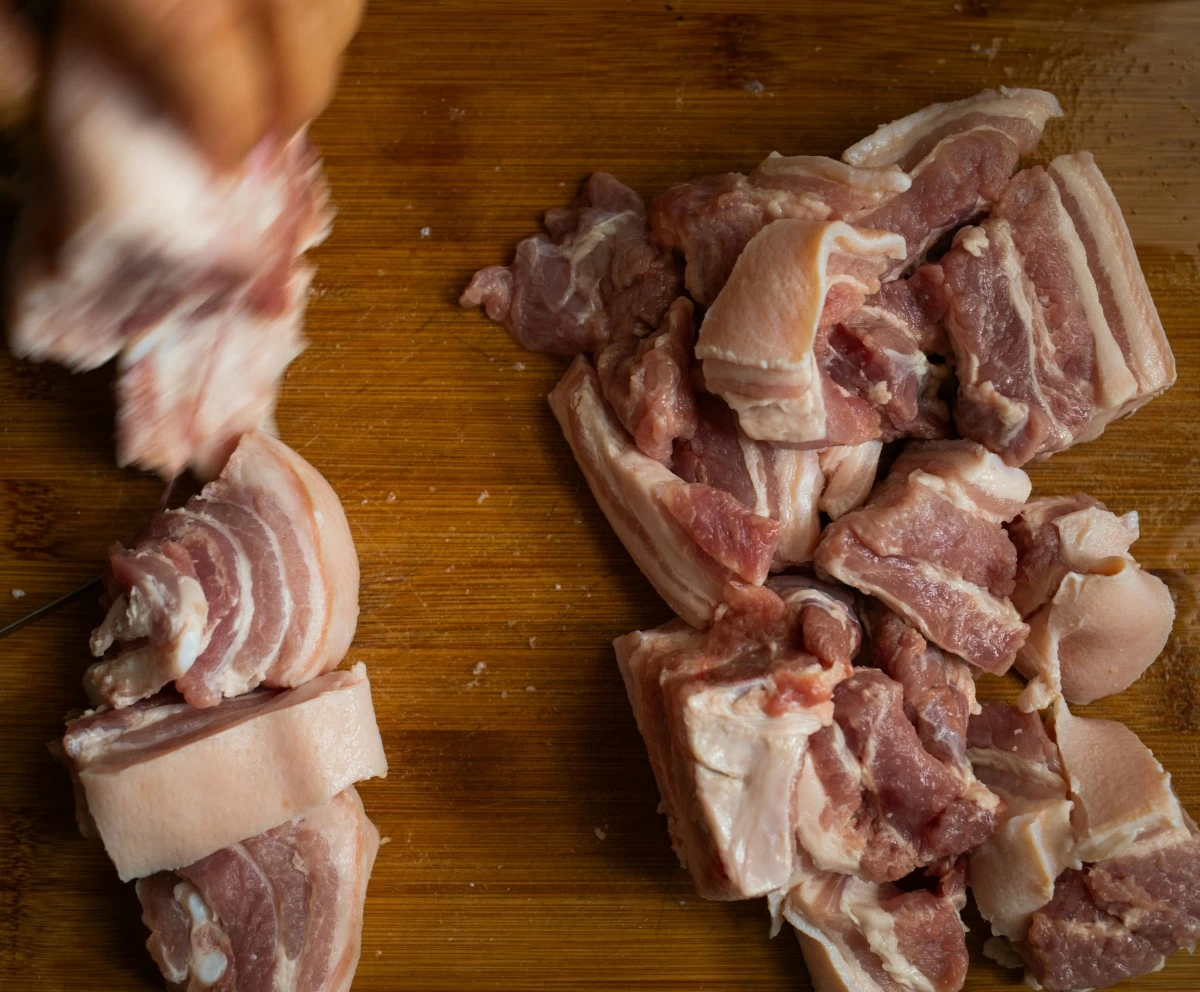
(Unsplash)
The Department of Agriculture (DA) will impose a maximum suggested retail price (MSRP) on pork, onions, and carrots starting next month to curb soaring retail costs ahead of the peak holiday season.
Agriculture Secretary Francisco Tiu Laurel said on Monday, Nov. 24, that the DA is currently reviewing the MSRP scheme for these commodities, with a planned implementation on Dec. 1 or earlier.
The price cap for retail pork is set at ₱340 per kilo for pigue (leg/ham) and kasim (shoulder), and ₱370 per kilo for liempo (pork belly). This is marginally lower than the MSRP initially set by the DA earlier this year, which was ₱350 per kilo for pigue and kasim and ₱380 per kilo for liempo.
A price limit of ₱300 per kilo was also proposed for freshly slaughtered carcasses, or sabit ulo. The final new MSRP for produce, including carrots and onions, is still under review.
To protect producers, a ₱210-per-kilo floor price for live hogs will also be implemented, following an agreement between the DA and local hog producers earlier this month. Tiu Laurel noted his agency is seeking a legal mechanism to enforce the floor price, which is currently only a suggested policy.
Onions, price gouging
For produce, the DA will enforce a ₱120 per kilo price cap for both imported and local red and white onions, as well as imported carrots. The agency plans to keep the MSRP in effect until the end of January, with potential extension if deemed necessary.
Tiu Laurel said the policy is part of the government’s efforts to stabilize food prices during the Christmas and New Year period, which builds on recent measures. The Department of Trade and Industry (DTI) earlier directed manufacturers to maintain current prices on basic and prime commodities until the year's end. This was followed by President Ferdinand Marcos Jr.’s Nov. 6 declaration of a state of national calamity, mandating a 60-day price freeze across many goods.
“We are doing our best to make sure that this Christmas season, the spikes will be avoided. And if possible, the prices will go down,” Tiu Laurel said in a press briefing.
The secretary added the MSRP would also help stamp down on cases of profiteering. He highlighted that while the cost of importing red onions is only around ₱60 per kilo, market monitoring showed retail prices spiking to as much as ₱300 per kilo.
Tiu Laurel called this an abuse of the allowable profit margin, stating the maximum price should be closer to the ₱120 per kilo cap. He estimated that excessive markups, considered profiteering, are committed by 10% to 15% of the market, primarily small retailers with high operating costs, such as rent.
Under the MSRP policy, the DTI will monitor retailer compliance, while the DA will oversee importers.
“We are allowing you to import because we have a shortage, but there is a responsibility that comes with being granted that privilege—they should also sell at the correct price in the market, so that our consumers are protected,” Tiu Laurel said, underscoring that importation is a privilege, not a right.
The DA is expected to ramp up monitoring to prevent a repeat of its initial pork MSRP enforcement earlier this year, which was partly suspended due to low compliance among retailers.
Rice subsidy digital registry
In a separate announcement, the DA said it will launch a digital registry system for beneficiaries of the government’s subsidized ₱20-per-kilo rice program.
The P20 Benteng Bigas Masterlist Registry System, or PBBM, aims to streamline the agency’s oversight of the subsidized rice initiative. “This project is a clear example of how the DA can leverage technology to modernize Philippine agriculture and food security,” Tiu Laurel said.
The digital platform will initially record transactions but is planned to soon include a payment feature. Intended beneficiaries can register at designated outlets of the ₱20 rice program, where a unique QR code will be generated upon successful registration. This QR code will become a requirement for purchasing the subsidized rice starting in March next year.
Since its launch in May, the program has expanded coverage to sectors including senior citizens, solo parents, persons with disabilities (PWDs), Pantawid Pamilyang Pilipino Program (4Ps) beneficiaries, minimum wage workers, and rice farmers.
“With this online system, we can now step up the expansion of the ₱20 rice program to include other sectors such as teachers, security guards, and other transport sector workers like bus drivers and delivery riders,” Tiu Laurel said. The program has been rolled out to 81 provinces, with Tawi-Tawi remaining the only province not yet covered.
President Marcos earlier directed the DA to continue the ₱20 rice program until the end of his term in June 2028, targeting 15 million households or 60 million Filipinos.