








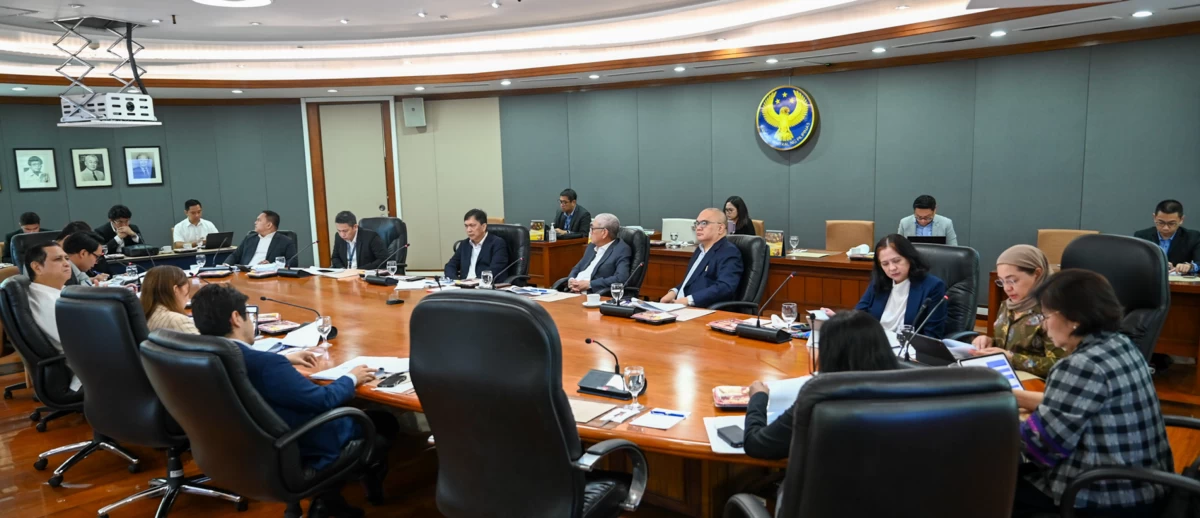
The interagency Financial Stability Coordination Council (FSCC) is working to establish standardized rules for bond pricing as part of a push to refine open capital market operations.
“As part of its capital market development efforts, the FSCC is working to establish a standardized bond pricing convention and to refine open market operations for greater efficiency,” the FSCC said in a statement released Saturday, Nov. 22.
The move accompanies the council’s effort to develop a coordinated response protocol to address looming or potential disruptions in the Philippine financial system.
According to the Bangko Sentral ng Pilipinas (BSP), which heads the council, the initiative aligns with the comprehensive mapping of corporate linkages in the Philippines—the FSCC’s priority measure for 2026.
Mapping out connections among financial and non-financial institutions will be crucial in “identifying contagion pathways and stress points in the financial ecosystem,” the FSCC explained.
FSCC Chairman and BSP Governor Eli M. Remolona, Jr. stressed that the interagency body prioritizes “staying ahead of emerging risks and responding as one cohesive front.”
“By improving system-wide monitoring and coordination, the FSCC aims to safeguard the stability of the Philippine financial system,” Remolona said.
The FSCC assessed the banking sector as resilient despite both global and local headwinds. The sector is armed with robust capital, healthy liquidity, and sufficient loan-loss provisioning, the council said.
“Stress tests also showed that post-shock capital adequacy ratios remain comfortably above regulatory thresholds,” the statement read.
Furthermore, the FSCC noted that the link between non-financial firms and the financial system has "deepened" in recent years.
“Risks from this linkage are being shaped largely by housing market trends and by leverage in the corporate and household sectors,” it added.
Chaired by the BSP, FSCC member agencies include the Department of Finance, Insurance Commission, Philippine Deposit Insurance Corporation, and the Securities and Exchange Commission. Together, they monitor and manage systemic risks in the local financial system.