







Story of how Victor Genuino is betting big on the cloud
Wiring up the nation:
Published Nov 22, 2025 09:09 am


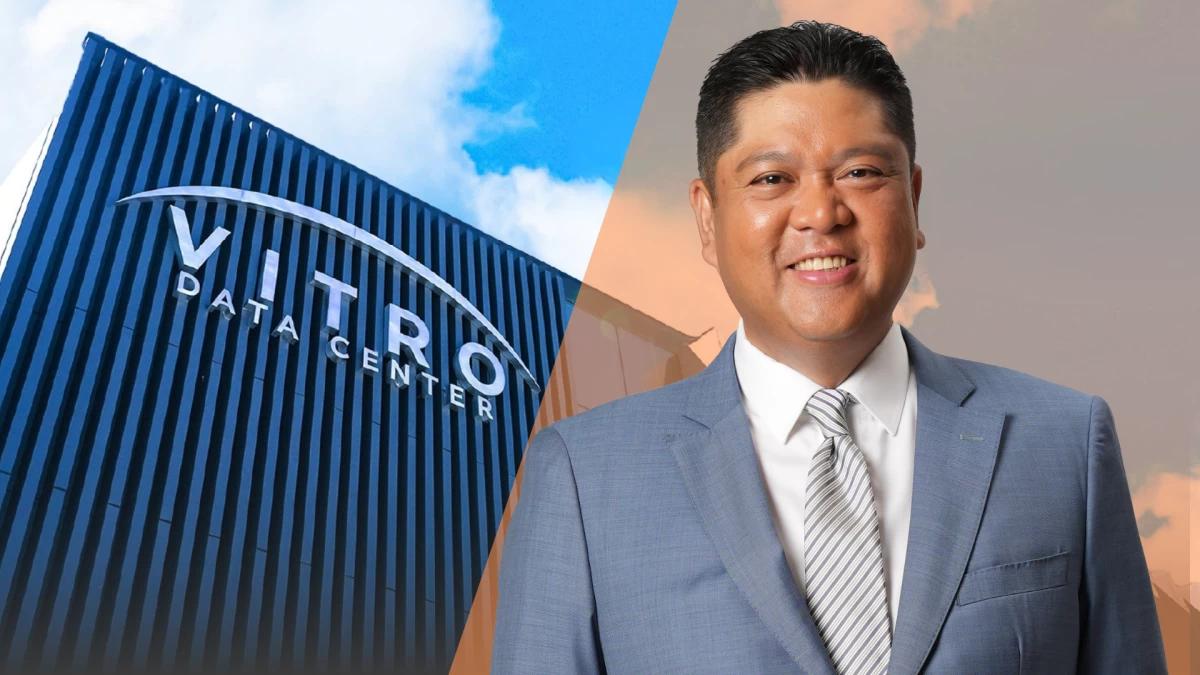
Victor Genuino
For seasoned executive Victor Genuino, the Philippines is poised to become a major powerhouse for data centers—a go-to destination for tech companies driving the next wave of digital progress. It’s a bold vision, and one he is already executing as head of VITRO Inc.
“My dream is for the Philippine data center industry to compete with the likes of Singapore, Malaysia, and Thailand,” Genuino told the Manila Bulletin, describing his long-term vision for an industry still in its infancy.
Genuino is the president and chief executive officer of VITRO, the data center arm of telecommunications giant PLDT Inc. He has built a career on turning lofty ambitions into reality, with extensive experience in leadership roles in the Philippines and abroad, including positions at Philips Electronics and Siemens Mobile.
His expertise in business fundamentals, communications, and product development led him to serve as general manager for Hong Kong at PLDT’s international arm, PLDT Global. There, Genuino spearheaded the launch of the telco’s first mobile virtual network operator (MVNO) arrangement in the early 2000s, a move that enabled Filipinos working in Hong Kong to call and text relatives back home—a capability that was revolutionary at the time.
As the digital world unfolded in the 2010s, Genuino shifted to another Pangilinan-led firm, Manila Electric Co. (Meralco), following a personal invitation from then-PLDT Global chief Al Panlilio. Genuino spent a decade at Meralco, focusing on ensuring consistent reliability for all consumers.
He later returned to the telco giant’s fold at Panlilio’s request, a move that eventually led to his appointment as President and CEO of ePLDT Inc., VITRO’s parent company.
Honed by decades of experience, the executive took charge of optimizing ePLDT’s operations by phasing out sunset services and prioritizing growth drivers. These drivers, Genuino realized, were literally “up in the cloud.”
“We felt that the future was all going to be cloud-driven,” Genuino said, referring to the online storage space for all kinds of data. “At that time, we had adequate capacity, but we did not prepare for the future. So we said, look, if this is an industry that we felt was going to boom, we need to really prepare for the eventual growth.”
Byte by byte expansion

Genuino, who returned to the PLDT fold after a decade at Meralco, is now focused on optimizing VITRO’s operations and shifting the company's focus entirely toward high-growth, cloud-driven services.
As ePLDT shifted its focus, it became clear the company was going all-in on data centers. Genuino said VITRO’s stronger push came as no surprise, as customers had been demanding facilities to cater to their growing data needs.
PLDT built its first data center in Pasig in 2000, initially for internal use. But as demand for data storage grew, it quickly transitioned to serving customers.
“A lot of our customers were looking for applications beyond connectivity,” Genuino said. “So we said that's an area that I think we should focus on.”
At the heart of VITRO’s strategy is a commitment to deeply understand each enterprise client—their pain points, priorities, and ambitions in the digital space. Genuino said data centers aim to fill these gaps by being a dependable partner, allowing businesses, particularly those in the tech industry, to operate in “a secure, timely, and robust manner.”
“Less headache for you to worry about, that’s kind of how we try to understand how we can serve our customers better,” he added.
VITRO currently operates 11 data centers in the Philippines with a total capacity of 100 megawatts (MW), making the company the country’s largest data center provider.
Half of this capacity comes from its hyperscaler facility in Santa Rosa, Laguna, which is the Philippines’ first artificial intelligence (AI)-ready data center, offering 50 MW.
During the facility’s unveiling last April, PLDT Chairman Manuel V. Pangilinan pledged to expand VITRO’s capacity up to 500 MW. The pledge was made in the presence of President Ferdinand Marcos Jr., who personally attended the event.
Genuino believes this goal is attainable in the near term. VITRO is already planning its 12th—and largest—data center, with a capacity of up to 100 MW. The site for the facility, located in General Trias, Cavite, is still under evaluation.
“We need to double our capacity to be future-proof,” he stated. “We have to think [about] how we can have our sites as flexible to accommodate the requirements of customers now, but at the same time, anticipating what the future will look like.”
A rule of thumb for building a data center is a cost of between $8 million and $9 million per megawatt.
Blueprint for growth

Victor Genuino discusses with President Marcos VITRO’s long-term goal to expand the company’s capacity to 500 megawatts, positioning the Philippines to compete with regional data hubs like Singapore.
While customer demand is integral to VITRO’s expansion, equally important are government policies that lay the foundation for the industry’s growing role in the country’s digital ecosystem.
As Genuino sees it, the Philippines already has the ingredients to compete with its Southeast Asian neighbors as a data center hub.
In terms of infrastructure, he noted that the country has made strides in developing facilities to serve the data needs of hyperscalers and big tech companies, connecting them to global networks via subsea cables.
High power costs, a main concern in data center construction, are being addressed through the Retail Competition and Open Access (RCOA) program. This allows end-users to choose their energy supplier, enabling companies to secure the most competitive peso-per-kilowatt-hour rates. Efforts are also underway to build additional generating capacity and bolster reliable distribution networks like Meralco.
However, the country remains far from becoming a regional powerhouse due to the lack of reforms on data classification and localization.
“If you look at Singapore, Malaysia, Thailand, Indonesia, even Vietnam, they have some form of data sovereignty or data residency laws, which basically says, if your data is classified as highly sensitive it has to be stored in-country,” Genuino said. “And when I look at that compared to what we have now, we don't have any.”
Data classification would categorize information based on its sensitivity and value. Data localization would ensure highly sensitive or national security-related information is properly stored within the country.
Genuino noted that while the government has taken significant steps to protect the country’s physical borders, such as the West Philippine Sea, it lacks laws and regulations around data. He added that much of the government’s data is not protected due to insufficient infrastructure, leaving it no choice but to store such data in other countries, primarily Singapore.
“Our solution is [the] private sector,” the executive said. “The government need not spend for the infrastructure that they need to be able to house, operate, and more importantly, protect sensitive data because we can do that for them.”
VITRO is urging the Department of Information and Communications Technology (DICT) and the Private Sector Advisory Council (PSAC) to address this. He said both are supportive of introducing reforms, with an executive order from President Marcos already being floated. VITRO hopes these reforms will be implemented as early as this year.
Against all odds
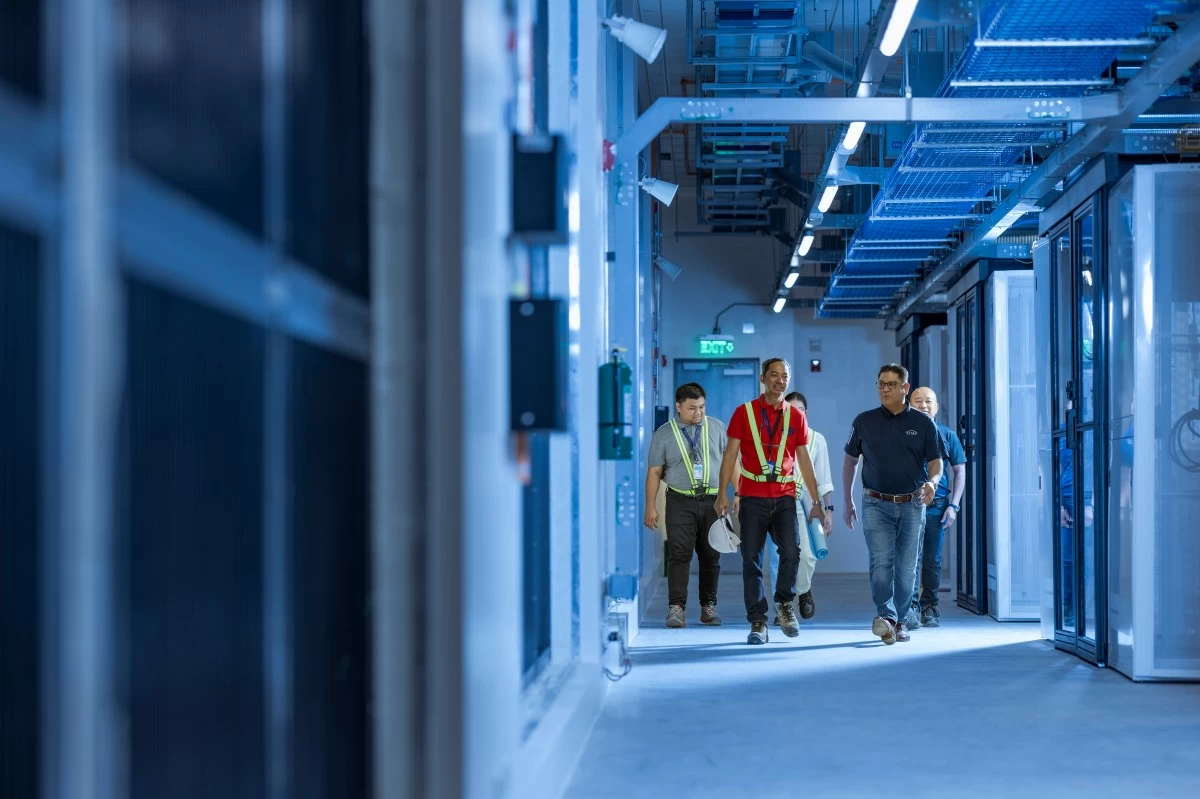
“My dream is for the Philippine data center industry to compete with the likes of Singapore, Malaysia, and Thailand,” says Victor Genuino, who is spearheading VITRO’s massive expansion plans and push for regulatory reform.
Even without these policies, the Philippines remains attractive for tech giants like Amazon, Meta, and Google that are looking to store critical data. With a population of over 112 million, among the top social media users in the world, the country generates massive volumes of data and demands strong connectivity.
“[Companies] are here because there's consumption, there’s usage. So, I’m happy to say that we already host all of the hyperscalers within the VITRO facilities,” Genuino said. “The only question is when they would expand. But they are all here, and it’s a sign that they really see the Philippines as an ideal place to grow their business.”
This confidence has remained firm, even amid recent corruption scandals in the public works sector. These issues have, in a way, “enhanced” VITRO’s pitch to prospective locators.
“They’re now saying, I would rather trust the private sector to be able to manage all of this critical information and data for me,” Genuino said. “And I think that bodes well for us.”
As a publicly listed company through PLDT, its transparency is a quality clients are drawn to.
Even amid natural disasters, such as successive typhoons and earthquakes, VITRO’s data centers remain a go-to for hyperscalers because they provide 99.99 percent uptime, the guaranteed level of availability.
Genuino said the company adheres to global standards set by the American industry group Telecommunications Industry Association (TIA), which require data centers to be concurrently maintainable. This means facilities must have sufficient redundant systems to allow for planned maintenance or equipment replacement without disrupting operations.
Each site undergoes a threat, vulnerability, and risk assessment to ensure its safety—from being located away from fault lines and built on stable soil, to having readily available power infrastructure and a low crime rate.
“Our covenant with our customers is 99.99 percent uptime. And that’s how we ensure that, we really try to find a way to deliver that,” he stated.
Final piece
As AI continues its strong momentum, data centers could very well become a key driver of economic growth. Harvard University economist Jason Furman estimated that the United States’ gross domestic product (GDP) in the first half would have grown only 0.1 percent without investments in data centers and information processing technology.
The ever-optimistic Genuino said this could one day be a reality for the Philippines. But he admitted it remains a long road ahead, requiring more investments in the country’s data center ecosystem.
“I think the main difference between the Philippines and the other markets is if you look at infrastructure as a whole, they've gone to the phase [where] they have their hard infrastructure already ready, and then now the focus is on digital infrastructure,” he explained. “In the Philippines, we still need both.”
Building on this potential, Genuino expects VITRO to remain a growth driver for PLDT as it positions itself as a trusted partner for data requirements. After more than two decades, the company has built a strong reputation powered by a highly skilled and certified workforce.
“Our team is very, very skilled and certified to deliver these services, regardless of what type of solutions they're looking for. So yes, we foresee that we can sustain that growth moving forward,” he stated.
Through its micro-credential program, VITRO Academy, the company is training the next generation of data center workers, guaranteeing the industry’s long-term strength.
While Genuino’s goal is to maintain VITRO’s dominance, he said the ultimate objective is to strengthen the broader data center sector and bolster the country’s role as a go-to hub in the digital space.
Indeed, it’s a bold vision—but every great leap begins with a single step.