






Manila Bulletin
 Philippines
National
PH, Japan navies deepen cooperation on operational interoperability
Philippines
National
PH, Japan navies deepen cooperation on operational interoperability
Philippines
National
PH, Japan navies deepen cooperation on operational interoperability
PH, Japan navies deepen cooperation on operational interoperability
Published Nov 22, 2025 02:38 pm


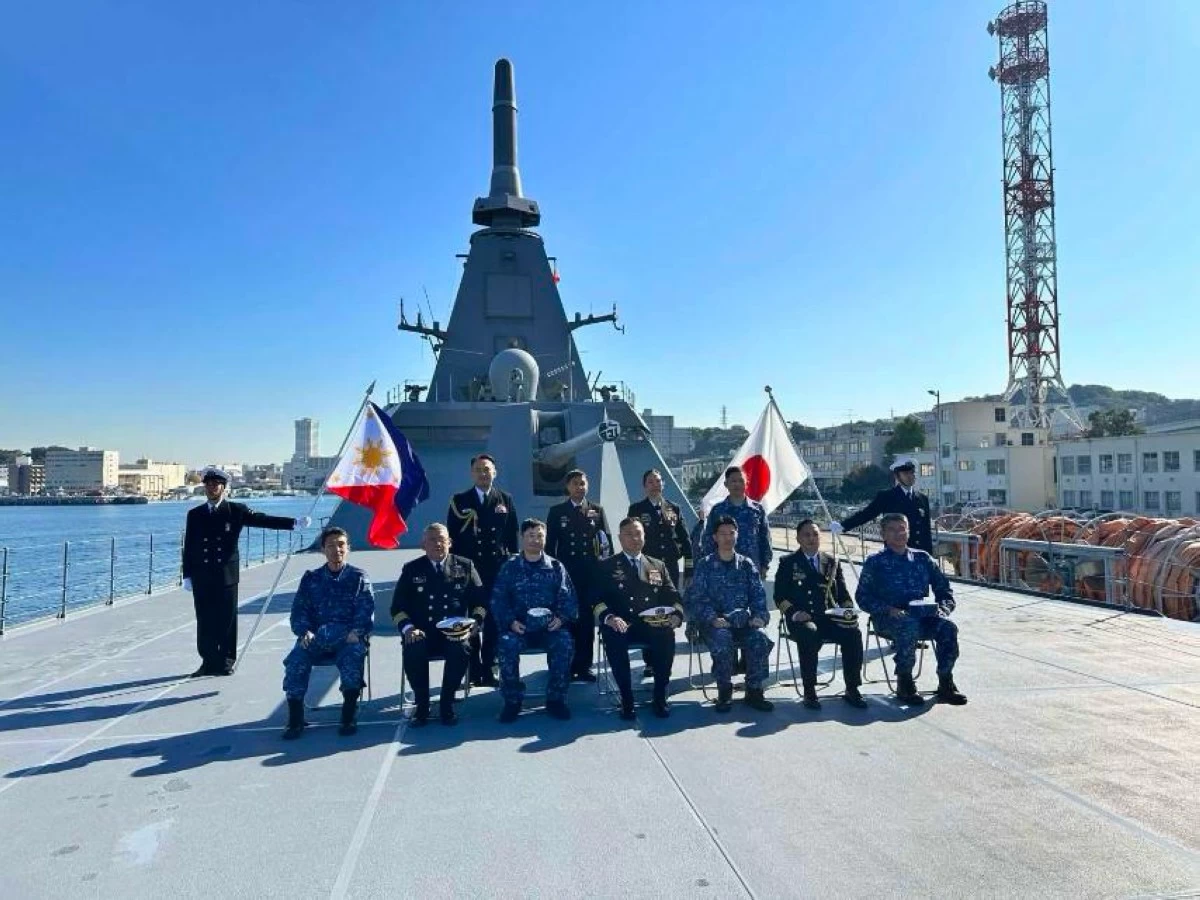
Rear Adm. Joe Anthony C. Orbe (sitting, middle), commander of the Philippine Navy's Philippine Fleet (PN-PF), and his Japanese counterpart, Vice Admiral Katsushi Omachi (third from right), commander of Japan Maritime Self-Defense Force's Japan Self-Defense Fleet (JMSDF-JSDF), pose for a photo with PF and JSDF officials, as well as defense and foreign attaches (DAFA) aboard the forecastle of JS Kumano on Nov. 20, 2022 in Yokosuka, Japan. (Photo: Philippine Navy)
The Philippine Navy (PN) and Japan Maritime Self-Defense Force (JMSDF) stepped up efforts to enhance their tactical coordination following the conclusion of a two-day visit by senior PN officials to Japan over the weekend.
Rear Adm. Joe Anthony C. Orbe, commander of PN’s Philippine Fleet (PF), led the delegation that met with Japanese counterpart Vice Admiral Katsushi Omachi, commander of JMSDF’s Japan Self-Defense Fleet (JSDF), in Yokosuka, Japan on Thursday, Nov. 20.
Orbe and Omachi noted the growing frequency of joint activities between their fleets and highlighted the importance of aligning training and capabilities for future operations, according to a statement from the PF.
Omachi briefed the PF delegation on the JSDF’s force structure and operational missions before hosting them aboard JS Kumano, one of Japan’s multi-role frigates.
Aboard the Japanese vessel, discussions between the PF delegation and JSDF personnel focused on strengthening collaboration in maritime exercises and coordinated responses to humanitarian and disaster scenarios.
On the following day, Orbe paid a courtesy call on Admiral Akira Saito, chief of staff of JMSDF, in Tokyo as the latter commended the PF delegation for the “expanding naval partnership” between the two countries.
“During the call, both naval leaders echoed the importance of strengthening cooperation between the two nations, and working closer together toward maintaining a free and open Indo-Pacific region,” the PF said.
The PF underscored that the visit was a practical step in implementing the recently signed Reciprocal Access Agreement (RAA) between Manila and Tokyo, which expands collaboration in defense exercises, humanitarian assistance and disaster response (HADR), logistics, and personnel exchanges.
The RAA, signed in 2023, provides a legal framework for the rotational presence of forces, joint exercises, and mutual logistical between the two nations, especially as both countries face shared security concerns due to China’s growing presence in the East and South China Seas.
The PF emphasized that ongoing ship visits and personnel exchanges with its Japanese counterpart are laying the groundwork for more robust interoperability amid evolving regional security challenges.