

ADVERTISEMENT

'Iwas flood control': Transparency measures key to prevent corruption in irrigation projects, says Pangilinan

Published Nov 22, 2025 10:42 am
Senator Francis “Kiko” Pangilinan has proposed the inclusion of transparency and accountability mechanisms in the irrigation projects implemented by the National Irrigation Administration (NIA) in a bid to prevent the repeat of anomalous flood control projects.
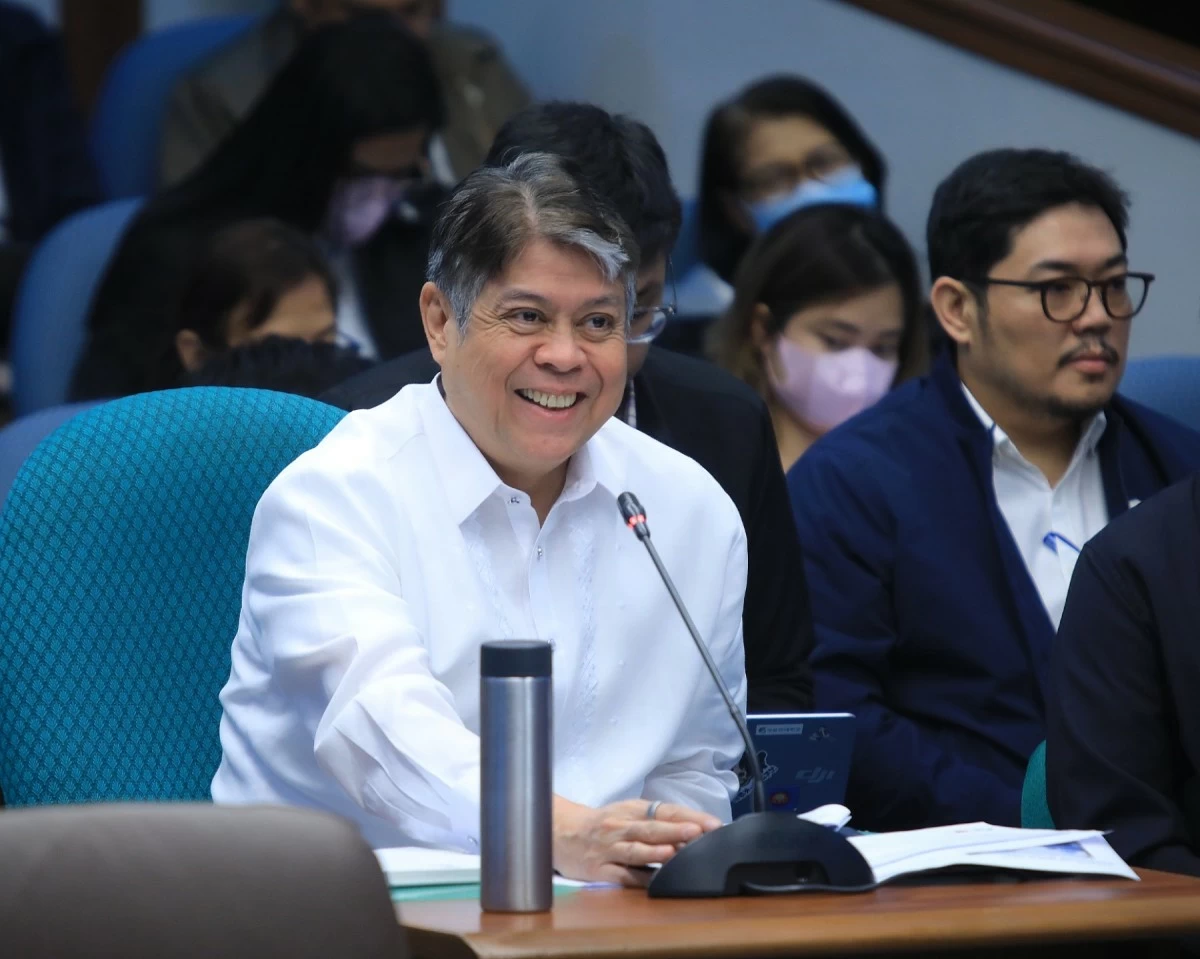
Sen. Francis “Kiko” Pangilinan, chairperson of the Committee on Agriculture, Food and Agrarian Reforms, presents in plenary the proposed 2026 budget of the National Irrigation Administration (NIA) amounting to P54.79 billion. (Senate PRIB photo)
The senator, who heads the Senate Committee on Agriculture, Food, and Agrarian Reform, emphasized that efficient and corruption-free irrigation projects were crucial to enhancing agricultural productivity and bolstering the country’s food security.
“On the issue of monitoring, precisely, we are introducing a transparency special provision in the budget, and an allocation of about P50M for (a) public online dashboard,” he said during his sponsorship of NIA’s proposed budget for the fiscal year 2026 on Thursday, Nov. 20.
“In other words, kasama diyan ang photos, geo-tagging, pangalan ng contractors, amount, status ng proyekto, at ito ay kasama sa mandato for purposes of transparency for all NIA projects (that includes photos, geo-tagging, the names of contractors, the amount, and the project status, and this is part of the mandate for transparency in all NIA projects),” he added.
In the subcommittee report submitted to Senator Sherwin Gatchalian, the chairman of the Senate Committee on Finance, Pangilinan underscored the need for an additional budget for three proposed special provisions—Transparency of Irrigation Projects, Citizen Participatory Audit, and Quarterly Reporting Requirement.
Under these special provisions, the NIA will be mandated to establish and maintain a public online dashboard for irrigation projects, where timeline, status, finances (obligated/disbursed/source of funds), awarded contracts, contractors, and geo-tagged photos taken at key stages (start, mid, completion) will be displayed.
“This will enable real-time monitoring of project implementation and ensure that information on project status, contracts, and fund utilization is accessible to the public and oversight agencies,” the report read.
The report also underscored the need for NIA to support the Citizen Participatory Audit Program of the Commission on Audit (COA) to empower civil society in auditing government activities to ensure that funds are utilized legally and efficiently".
The senator likewise included the quarterly reporting requirement provision, mandating NIA to submit a quarterly report on all irrigation projects to the House Committee on Appropriations and the Senate Committee on Finance to detail the projects' status, implementation progress, financial and physical accomplishments, and any issues affecting completion.
In his manifestation during the budget debate for NIA’s proposed 2026 allocation, Gatchalian said that Pangilinan identified each irrigation project with the exact coordinates instead of merely providing the lump sum amounts in the National Expenditure Program (NEP).
“So thank you, Sen. Kiko Pangilinan, for that very important intervention so that our constituents now can follow to the last project kung saan po yung irrigation projects sa kanilang lokalidad (where the irrigation projects in their localities can be found,” the senator said.
Pangilinan, for his part, expressed hope that all government agencies handling infrastructure projects can specify the details and exact coordinates of each project in their proposed budgets to promote transparency and accountability.

Related Tags

Kiko Pangilinan National Irrigation Administration (NIA) 2026 budget National Expenditure Program (NEP)
ADVERTISEMENT
.most-popular .layout-ratio{ padding-bottom: 79.13%; } @media (min-width: 768px) and (max-width: 1024px) { .widget-title { font-size: 15px !important; } }

{{ articles_filter_1561_widget.title }}

.most-popular .layout-ratio{ padding-bottom: 79.13%; } @media (min-width: 768px) and (max-width: 1024px) { .widget-title { font-size: 15px !important; } }

{{ articles_filter_1562_widget.title }}

.most-popular .layout-ratio{ padding-bottom: 79.13%; } @media (min-width: 768px) and (max-width: 1024px) { .widget-title { font-size: 15px !important; } }

{{ articles_filter_1563_widget.title }}

{{ articles_filter_1564_widget.title }}

.mb-article-details { position: relative; } .mb-article-details .article-body-preview, .mb-article-details .article-body-summary{ font-size: 17px; line-height: 30px; font-family: "Libre Caslon Text", serif; color: #000; } .mb-article-details .article-body-preview iframe , .mb-article-details .article-body-summary iframe{ width: 100%; margin: auto; } .read-more-background { background: linear-gradient(180deg, color(display-p3 1.000 1.000 1.000 / 0) 13.75%, color(display-p3 1.000 1.000 1.000 / 0.8) 30.79%, color(display-p3 1.000 1.000 1.000) 72.5%); position: absolute; height: 200px; width: 100%; bottom: 0; display: flex; justify-content: center; align-items: center; padding: 0; } .read-more-background a{ color: #000; } .read-more-btn { padding: 17px 45px; font-family: Inter; font-weight: 700; font-size: 18px; line-height: 16px; text-align: center; vertical-align: middle; border: 1px solid black; background-color: white; } .hidden { display: none; }
function initializeAllSwipers() { // Get all hidden inputs with cms_article_id document.querySelectorAll('[id^="cms_article_id_"]').forEach(function (input) { const cmsArticleId = input.value; const articleSelector = '#article-' + cmsArticleId + ' .body_images'; const swiperElement = document.querySelector(articleSelector); if (swiperElement && !swiperElement.classList.contains('swiper-initialized')) { new Swiper(articleSelector, { loop: true, pagination: false, navigation: { nextEl: '#article-' + cmsArticleId + ' .swiper-button-next', prevEl: '#article-' + cmsArticleId + ' .swiper-button-prev', }, }); } }); } setTimeout(initializeAllSwipers, 3000); const intersectionObserver = new IntersectionObserver( (entries) => { entries.forEach((entry) => { if (entry.isIntersecting) { const newUrl = entry.target.getAttribute("data-url"); if (newUrl) { history.pushState(null, null, newUrl); let article = entry.target; // Extract metadata const author = article.querySelector('.author-section').textContent.replace('By', '').trim(); const section = article.querySelector('.section-info ').textContent.replace(' ', ' '); const title = article.querySelector('.article-title h1').textContent; // Parse URL for Chartbeat path format const parsedUrl = new URL(newUrl, window.location.origin); const cleanUrl = parsedUrl.host + parsedUrl.pathname; // Update Chartbeat configuration if (typeof window._sf_async_config !== 'undefined') { window._sf_async_config.path = cleanUrl; window._sf_async_config.sections = section; window._sf_async_config.authors = author; } // Track virtual page view with Chartbeat if (typeof pSUPERFLY !== 'undefined' && typeof pSUPERFLY.virtualPage === 'function') { try { pSUPERFLY.virtualPage({ path: cleanUrl, title: title, sections: section, authors: author }); } catch (error) { console.error('ping error', error); } } // Optional: Update document title if (title && title !== document.title) { document.title = title; } } } }); }, { threshold: 0.1 } ); function showArticleBody(button) { const article = button.closest("article"); const summary = article.querySelector(".article-body-summary"); const body = article.querySelector(".article-body-preview"); const readMoreSection = article.querySelector(".read-more-background"); // Hide summary and read-more section summary.style.display = "none"; readMoreSection.style.display = "none"; // Show the full article body body.classList.remove("hidden"); } document.addEventListener("DOMContentLoaded", () => { let loadCount = 0; // Track how many times articles are loaded const offset = [1, 2, 3, 4, 5, 6, 7, 8, 9, 10]; // Offset values const currentUrl = window.location.pathname.substring(1); let isLoading = false; // Prevent multiple calls if (!currentUrl) { console.log("Current URL is invalid."); return; } const sentinel = document.getElementById("load-more-sentinel"); if (!sentinel) { console.log("Sentinel element not found."); return; } function isSentinelVisible() { const rect = sentinel.getBoundingClientRect(); return ( rect.top < window.innerHeight && rect.bottom >= 0 ); } function onScroll() { if (isLoading) return; if (isSentinelVisible()) { if (loadCount >= offset.length) { console.log("Maximum load attempts reached."); window.removeEventListener("scroll", onScroll); return; } isLoading = true; const currentOffset = offset[loadCount]; window.loadMoreItems().then(() => { let article = document.querySelector('#widget_1690 > div:nth-last-of-type(2) article'); intersectionObserver.observe(article) loadCount++; }).catch(error => { console.error("Error loading more items:", error); }).finally(() => { isLoading = false; }); } } window.addEventListener("scroll", onScroll); });

Sign up by email to receive news.