






Manila Bulletin
 Philippines
National
When can AFP step in amid the gov't corruption scandal? Teodoro explains 'strict' constitutional limits
Philippines
National
When can AFP step in amid the gov't corruption scandal? Teodoro explains 'strict' constitutional limits
Philippines
National
When can AFP step in amid the gov't corruption scandal? Teodoro explains 'strict' constitutional limits
When can AFP step in amid the gov't corruption scandal? Teodoro explains 'strict' constitutional limits
Published Nov 21, 2025 02:26 pm


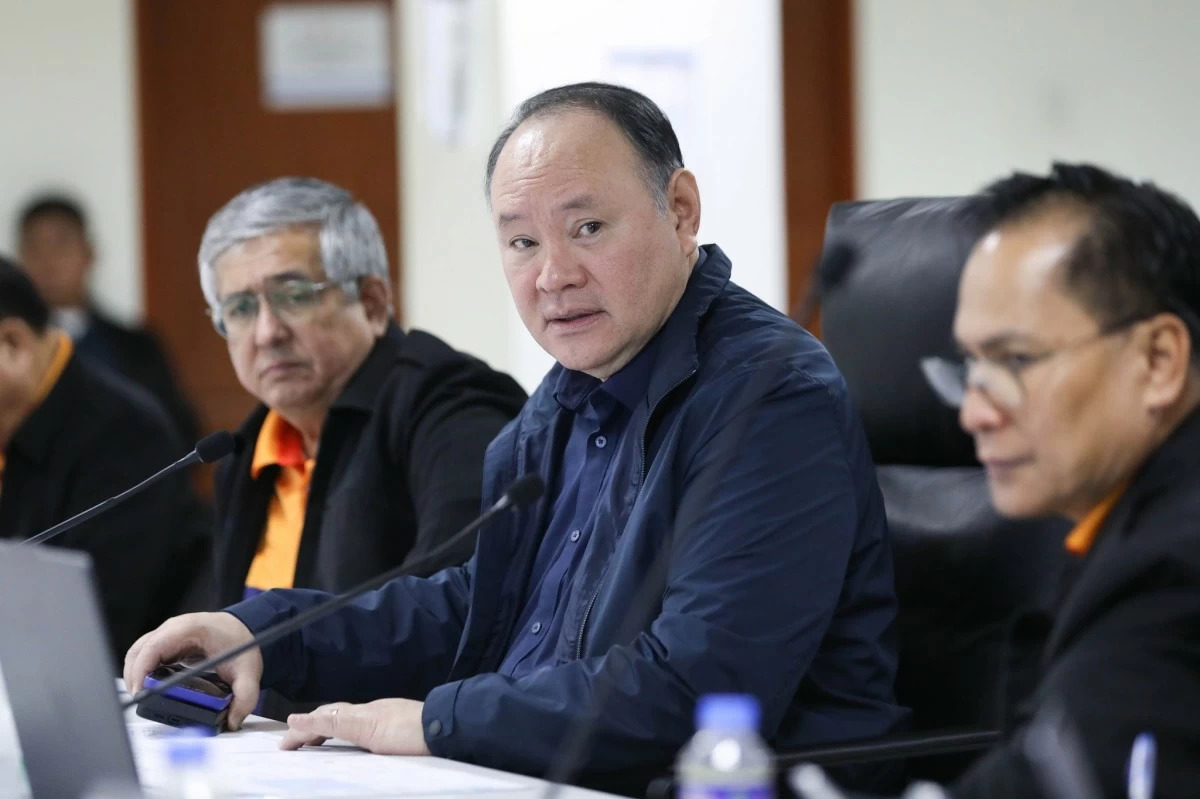
Department of National Defense (DND) Secretary Gilberto Teodoro Jr. (Photo: DND)
Department of National Defense (DND) Secretary Gilberto Teodoro Jr. on Thursday, Nov. 20, underscored that the Armed Forces of the Philippines (AFP) cannot, and will not, intervene in the country’s political turmoil unless the Constitution and the courts explicitly direct them to do so.
Teodoro explained that the public’s rising frustration over corruption issues and slow investigations has created fertile ground for political agitation, leading some groups and individuals to prod the military into taking a more active role.
However, the defense chief stressed that the AFP is bound by strict constitutional limits and, therefore, it cannot act outside the law.
“There is nothing in the Constitution that allows the Armed Forces of the Philippines to interfere in such matters,” he said. “Their duty is clear, that is to safeguard the security of the state against oppressors, foreign or domestic, in accordance with the law.”
The massive corruption scandal in the government's flood control projects and other infrastructure programs has prompted certain groups and individuals, including retired military officers, to urge active military officers to withdraw their support from the Commander in Chief, President Marcos Jr.
But Teodoro explained that even in extreme scenarios, such as the declaration of martial law, the military is not empowered to act on its own.
“Who can declare martial law? Not the Armed Forces. Only one civilian, the President. And when the President does that, within 48 hours, the Congress, in a joint session, must convene,” he noted.
He warned that any attempt to push the AFP into judging political or judicial disputes would undermine the country’s democratic institutions and reverse the lessons learned from past crises.
“The Armed Forces cannot be the judge or arbiter of a political contest. We have learned that lesson many times,” he said.
'No serious threat'
While acknowledging that there are individuals, including some politicians, who try to encourage military involvement, Teodoro said most of these efforts do not reach the level of a serious threat.
He said some are mere disturbances of the peace while others come from retired officers calling for truth and accountability without urging a power grab.
When asked whether there are active destabilization efforts, Teodoro admitted that political conflict can naturally create destabilizing conditions.
“That’s not far-fetched. It really exists. But political destabilization caused by conflict is different from a power grab that bypasses the legal process. That is clearly against the law,” he said.
'AFP remains professional'
Teodoro emphasized that the AFP remains professional and focused on its real missions such as defending the country from external threats, terrorism, and armed groups, and combating disinformation campaigns.
“A soldier is always impatient because they are always ready for action. But what they must do is clear. Getting involved in politics is not part of their role,” he noted.
'Slow investigation fueling public anger'
He said any lingering instability comes not from the military but from unresolved corruption cases that continue to fuel public anger. Slow investigations, he added, deepen doubts across all sectors and invite political forces to exploit the situation.
It has been nearly four months since Marcos ordered an investigation into possible corruption in flood control during his fourth State of the Nation Address (SONA) last July 28. Charges have been filed against the alleged culprits but no one has been imprisoned yet as the investigation continues along with the massive rallies, the latest of which are the upcoming "Baha sa Luneta 2.0" protest and "Trillion Peso March" on November 30.
Despite public anxiety over protests, political rifts, and corruption scandals, Teodoro assured Filipinos that the military remains steadfast in upholding democratic processes.
“Our soldiers can be trusted. If people truly believed that the Armed Forces were being used to maintain an undesirable situation, their trust rating should have gone down. But it hasn’t,” he said.
Teodoro stressed that clear constitutional limits are in place precisely to prevent any institution, military or otherwise, from overstepping at a time when the nation feels unsettled.
“The law already tells us when the military can step in,” he said. “At hindi ngayon iyon (And now is not the time for that).”