






Manila Bulletin
 Business
The Economy
Despite challenges, Philippine economy shows strong resilience—Balisacan
Business
The Economy
Despite challenges, Philippine economy shows strong resilience—Balisacan
Business
The Economy
Despite challenges, Philippine economy shows strong resilience—Balisacan
Despite challenges, Philippine economy shows strong resilience—Balisacan
Published Nov 20, 2025 03:11 pm


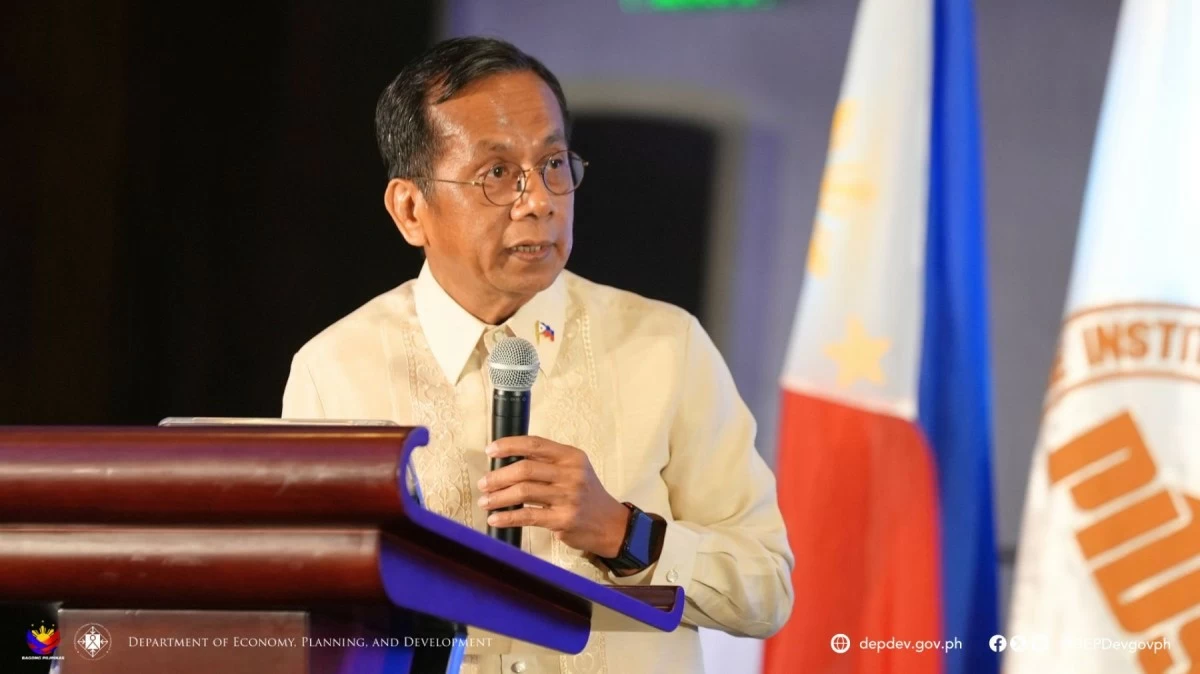
DEPDev Secretary Arsenio Balisacan
The Philippine economy remains on solid footing despite recent domestic challenges and global uncertainties, according to the country’s chief economist.
“Our sound macroeconomic fundamentals—sustained growth, easing inflation, a healthy labor market, a manageable fiscal deficit and public debt, a broadly stable currency and external position, and a robust banking system—continue to anchor our resilience,” Department of Economy, Planning, and Development (DEPDev) Secretary Arsenio M. Balisacan said in a statement on Thursday, Nov. 20.
“Hard-won reforms passed, implemented, and sustained over the years have consistently strengthened our ability to weather periods of domestic or external turbulence. Amid political noise and global headwinds, the economy continued to expand,” he added.
While gross domestic product (GDP) growth slowed to a 4.5-year low of four percent in the third quarter, economic expansion averaged five percent during the first nine months, he noted, adding that international institutions forecast an average growth rate of 5.7 percent for 2026.
The government targets full-year growth of 5.5 to 6.5 percent for this year and six to seven percent for next year.
Balisacan emphasized that the country’s structural strengths include a robust labor force, steady capital investment, improving productivity, and continued technological progress. These factors, he said, support a potential growth rate of at least six percent annually.
“Our medium-term targets reflect this capacity. While short-term fluctuations and external headwinds may affect immediate outcomes, the economy’s overall trajectory remains firm,” he noted.
He added that the economic team’s priorities remain aligned with the Philippine Development Plan (PDP) 2023-2028—the Marcos Jr. administration’s medium-term socioeconomic blueprint—with ongoing efforts to advance key reforms and keep the country on its development path.
To recall, the Marcos Jr. administration had seen a shake-up in its economic team, with former Executive Secretary Lucas Bersamin and former Department of Budget and Management (DBM) Secretary Amenah F. Pangandaman resigning “out of delicadeza” over their offices’ links to alleged flood control irregularities and national budget insertions, respectively.
The President had appointed former Department of Finance (DOF) Secretary Ralph G. Recto as the new Executive Secretary, replacing Bersamin, while Special Assistant to the President for Investment and Economic Affairs (SAPIEA) Frederick D. Go assumed the role of DOF chief.
Balisacan added that the government will continue to deploy fiscal, monetary, financial, technological, social protection policies, and key legislation to keep growth on track, while investing to future-proof the economy against environmental, technological, and geopolitical risks.
“We are strengthening our economic foundations, recognizing that investor and consumer confidence are necessary to sustain growth,” he said.
Balisacan underscored that “much has already been achieved,” including the Public-Private Partnership (PPP) Code, the Konektadong Pinoy (KP) Act, the Corporate Recovery and Tax Incentives for Enterprises to Maximize Opportunities for Reinvigorating the Economy (CREATE MORE) Act, and the Accelerated and Reformed Right-of-Way (ARROW) Act, noting that these measures aim to fast-track infrastructure, boost competitiveness, and widen market access.
He emphasized that the 20th Congress is pushing key structural reforms under the common legislative agenda to strengthen governance and enhance productivity across major economic sectors.
Balisacan said that human capital development remains a priority, with laws, policies, and programs in health, education, skills training, and social protection being implemented or expanded to help Filipinos meet the demands of a rapidly changing economy.
“As these efforts continue, DEPDev is prioritizing actions to enhance the quality of public investments—ensuring that the nation’s resources are directed toward programs and projects with the greatest impact,” Balisacan added.
He added that the government is enhancing planning and budgeting, improving project coordination, expanding strategic monitoring and evaluation, and building capacity in investment planning and project assessment.
“These initiatives form part of the government’s broader efforts to reinforce governance and strengthen institutions. We call on our partners in business, civil society, and the international community to continue working with us as we progressively realize our shared aspirations,” Balisacan said.