







Looking for old things, finding a new Tokyo
A space where the city's relationship with its past becomes visible, where things are not discarded lightly but are given a chance to be rediscovered
Published Nov 19, 2025 05:38 pm


On my recent trip to Tokyo, I realized how familiar my routine had become. It’s my fourth visit, and most of those trips revolved around malls, outlets, and shopping streets. This time, I wanted something different. I'd been seeing posts about the Tokyo City Flea Market and, as a fan of local ukay-ukay culture, I wanted to see what this city lets go of, and what stories remain in the things no longer found on bright retail shelves.

Sai, a half-Iranian, half-American seller who knew a few Tagalog phrases.
The flea market is held every weekend at the parking lot of Oi Racecourse, also known as Tokyo City Keiba (TCK), one of the most popular horse-racing courses in Tokyo. It opens at 9 a.m. and closes promptly at 1:30 p.m. Depending on the weekend, around 300 to 500 vendors set up shop, each using one slot for their vehicle and the next for their wares.
The atmosphere is calm despite the scale. It is a noticeable contrast to the high-energy commercial districts Tokyo is known for, where advertisements, screens, and crowds compete for attention. Here, the pace shifts. People take their time with older things, revealing a quieter, more grounded layer beneath Tokyo’s commercial image. There is no rush, no loud persuasion, no blaring music. The crowd is a good mix of what I reckon are tourists, and from the chitchat, an equal number of Japanese locals.
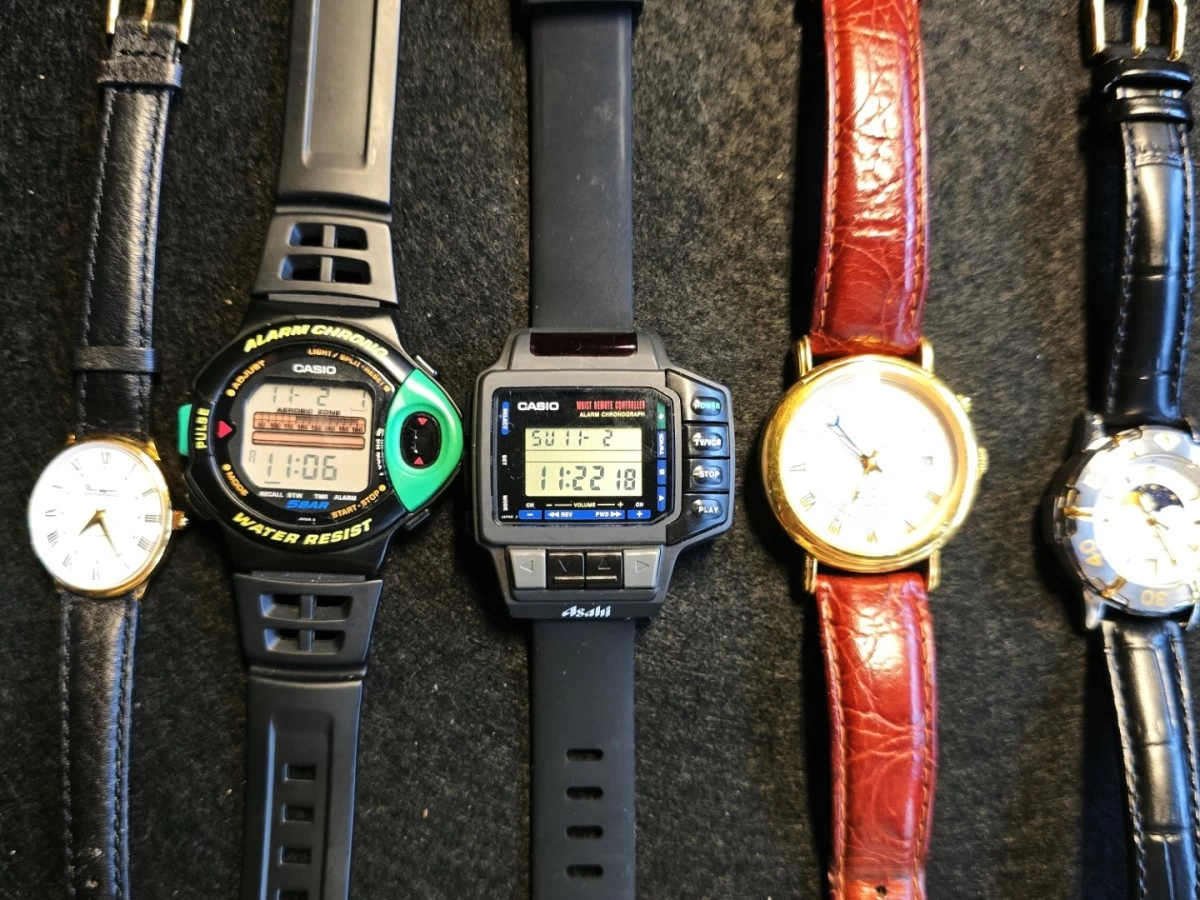
A 1990s Casio CMD-10 (center) with infrared controls. This one was exclusively given to ASAHI employees and goes for $750.
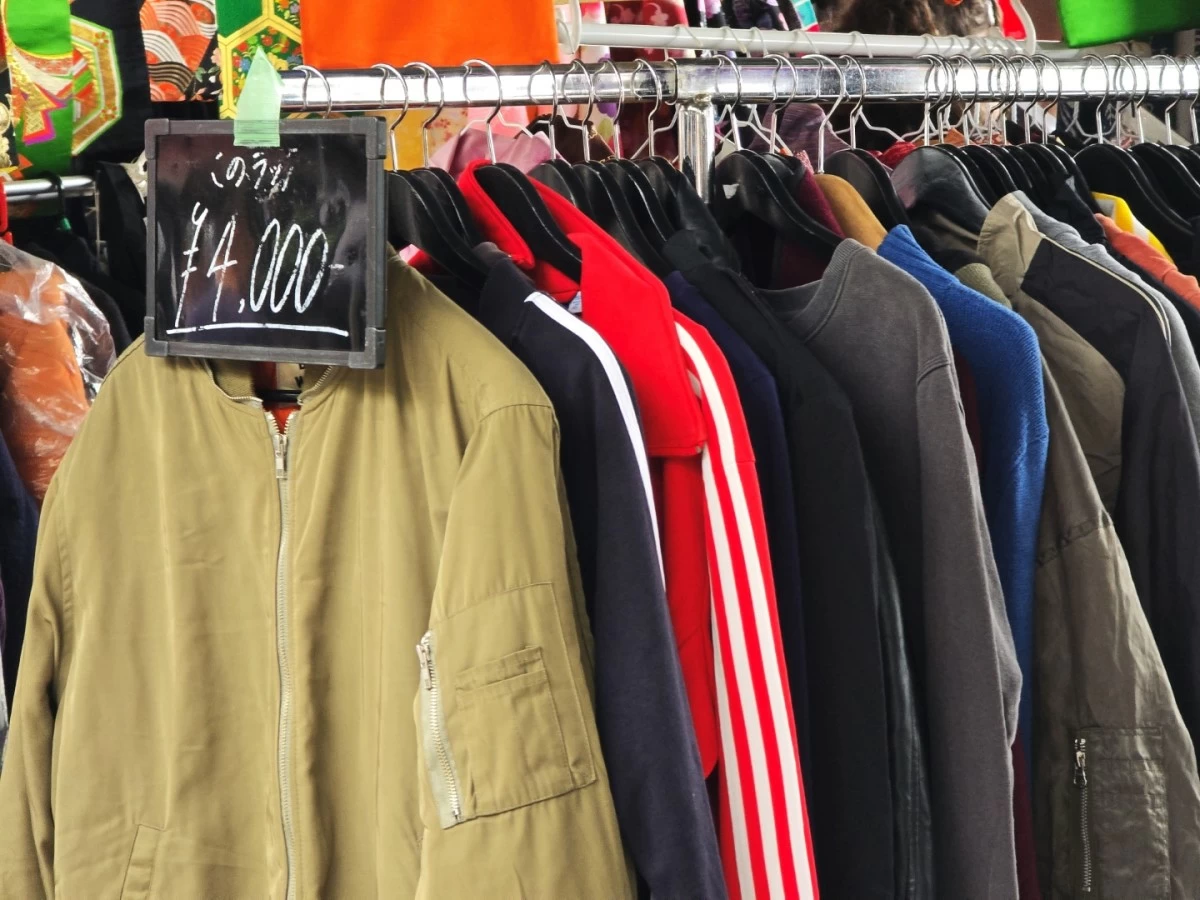
At the open area of the parking lot, clothing occupies the early stretch. Neatly hung jackets share space with giant heaps of shirts and trousers. Vintage Americana seems to be popular here. Shoppers move with deliberateness, inspecting seams, feeling fabric, and holding garments up to the light. Watching them, it became clear that people here look for pieces that still have life in them, checking quality more than trends. Even used clothes are treated with care.
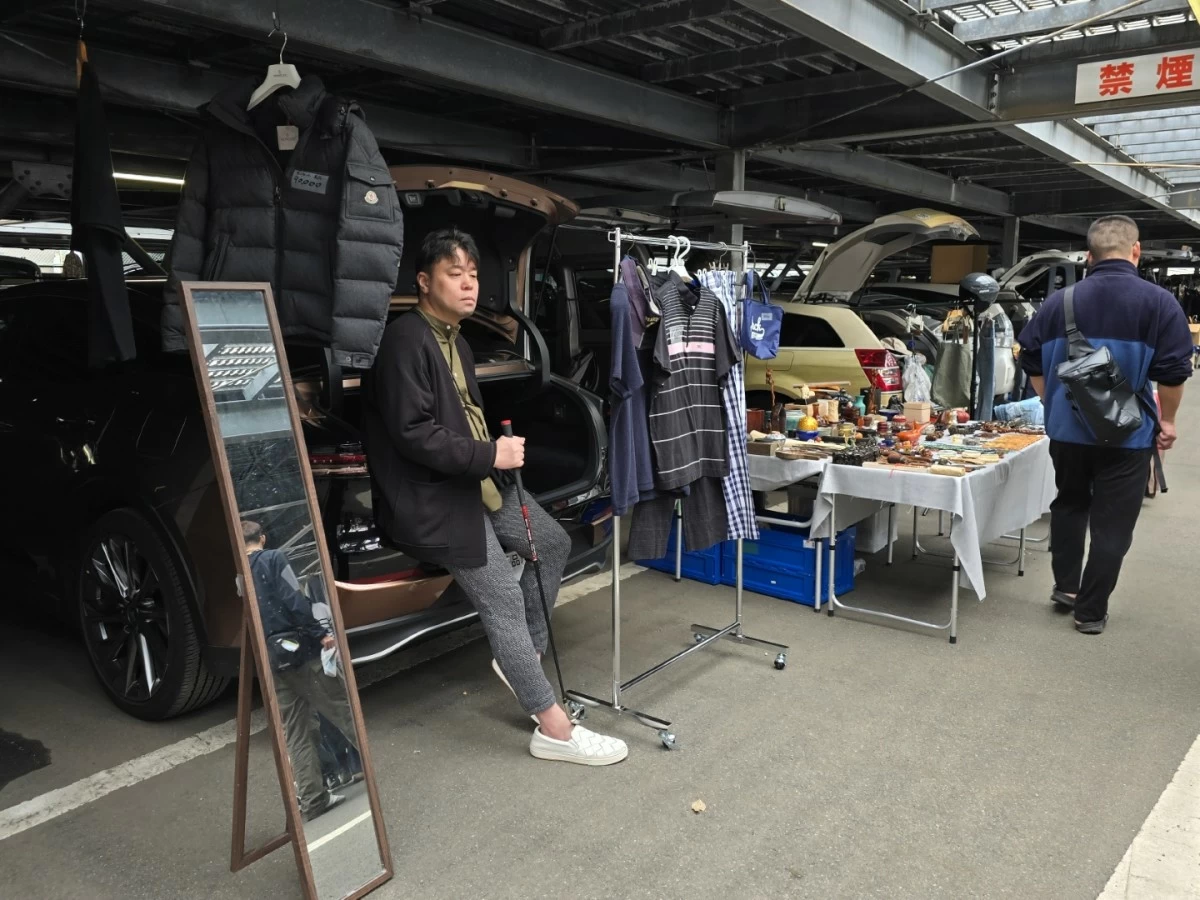
This place echoed the same culture that supports the popularity of stores such as Book-Off, Hard-Off, and the many other second-hand chains that thrive across Japan. These stores thrive because people recognize value in older items, and that same mindset shapes the flea market.
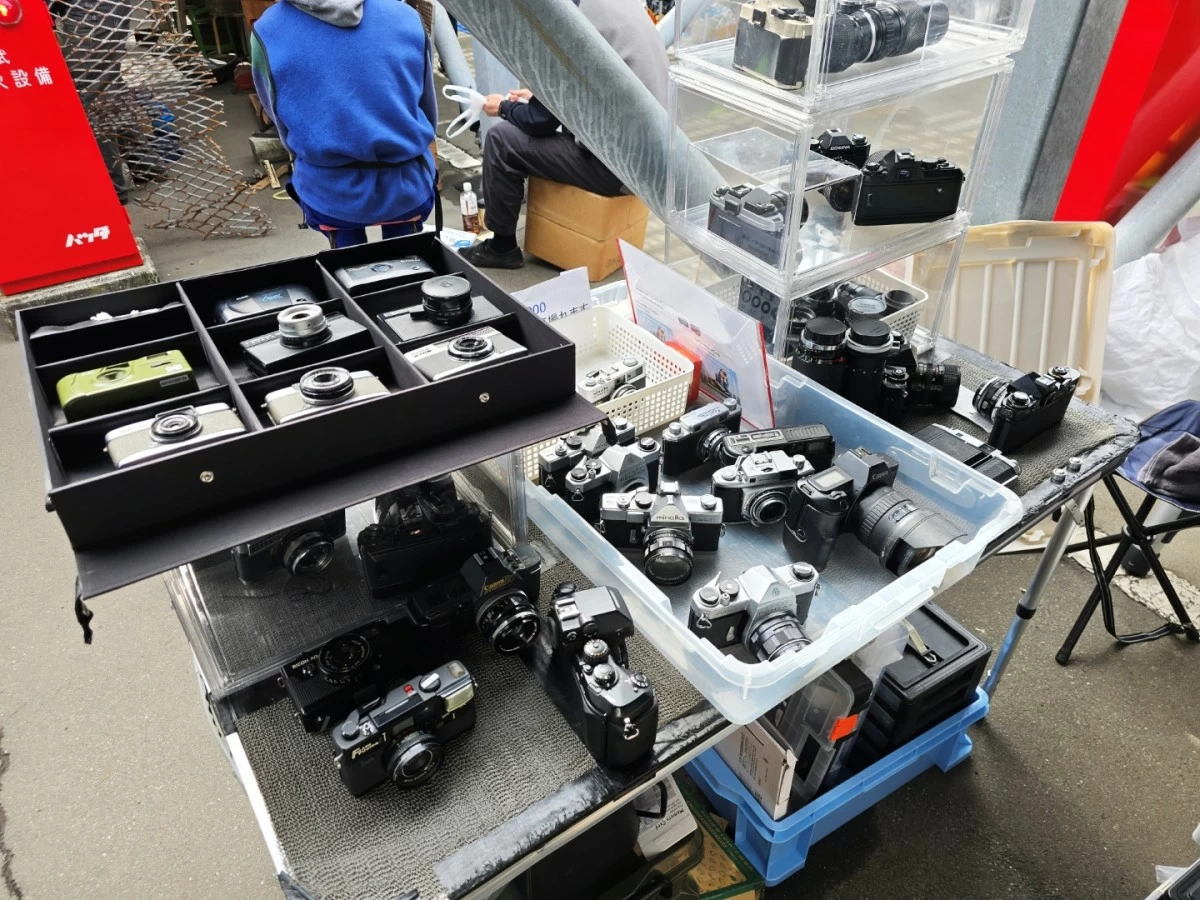
Further in, and right underneath the steel beams of the elevated parking structure, the stalls fill with old technology, toys, vinyl records, and electronics. Film cameras fill tables in every direction. Boxes hold point-and-shoots, compact digitals, and decades-old SLRs from Nikon, Minolta, Canon, Pentax, and Olympus. Prices range from the equivalent of a few thousand pesos for late-2000s compacts to around ₱70,000 for older, high-end Leica models I knew nothing about. I didn’t buy any, but I stayed longer than I expected, drawn in by how much attention visitors gave to machines that remain valued long after their prime.
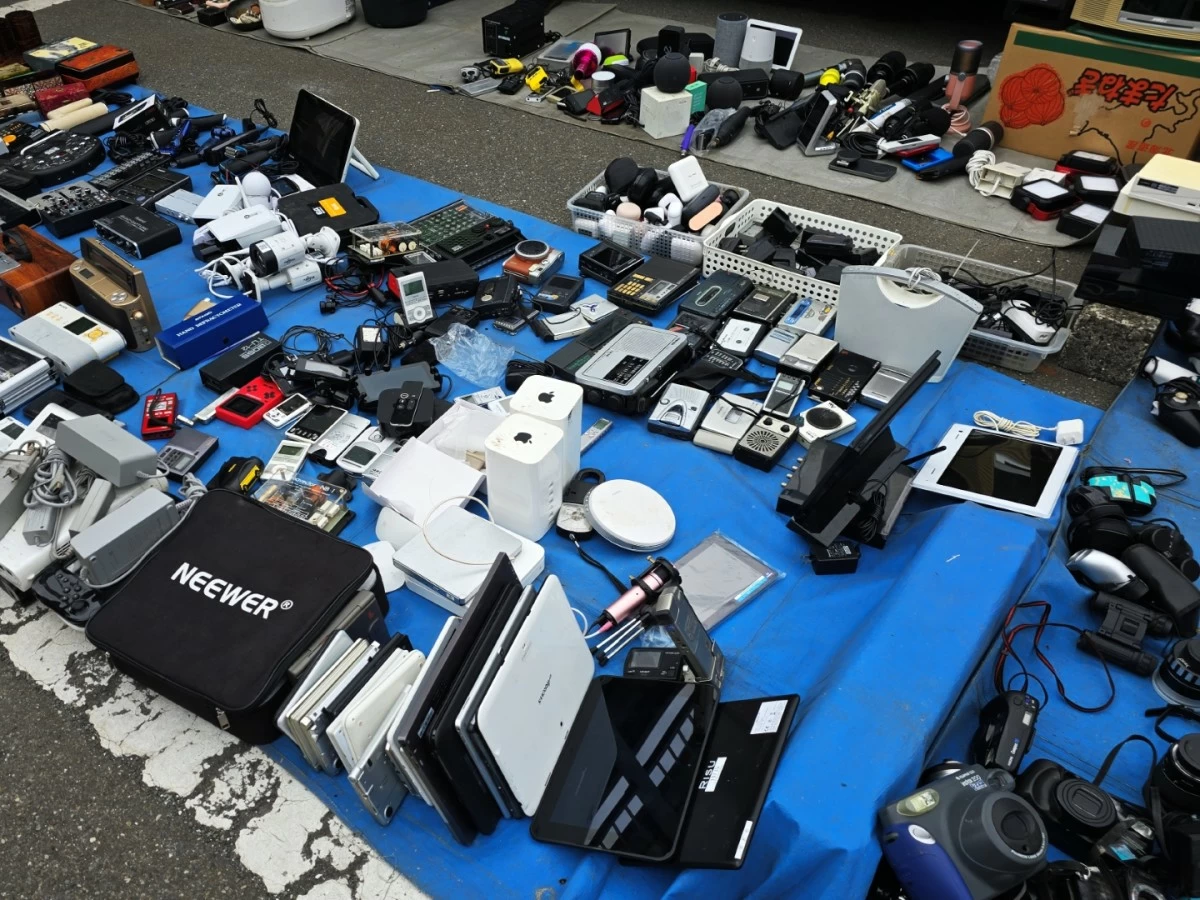
Electronics find new life here as well. Old PCs, radios, cassette recorders, and early camcorders sit beside a Gakken electronic block kit from the 1970s, its circuit grid exposed. You could tell it had once belonged to someone who learned to build simple circuits on it, a reminder of how domestic tinkering shaped Japan’s relationship with technology.
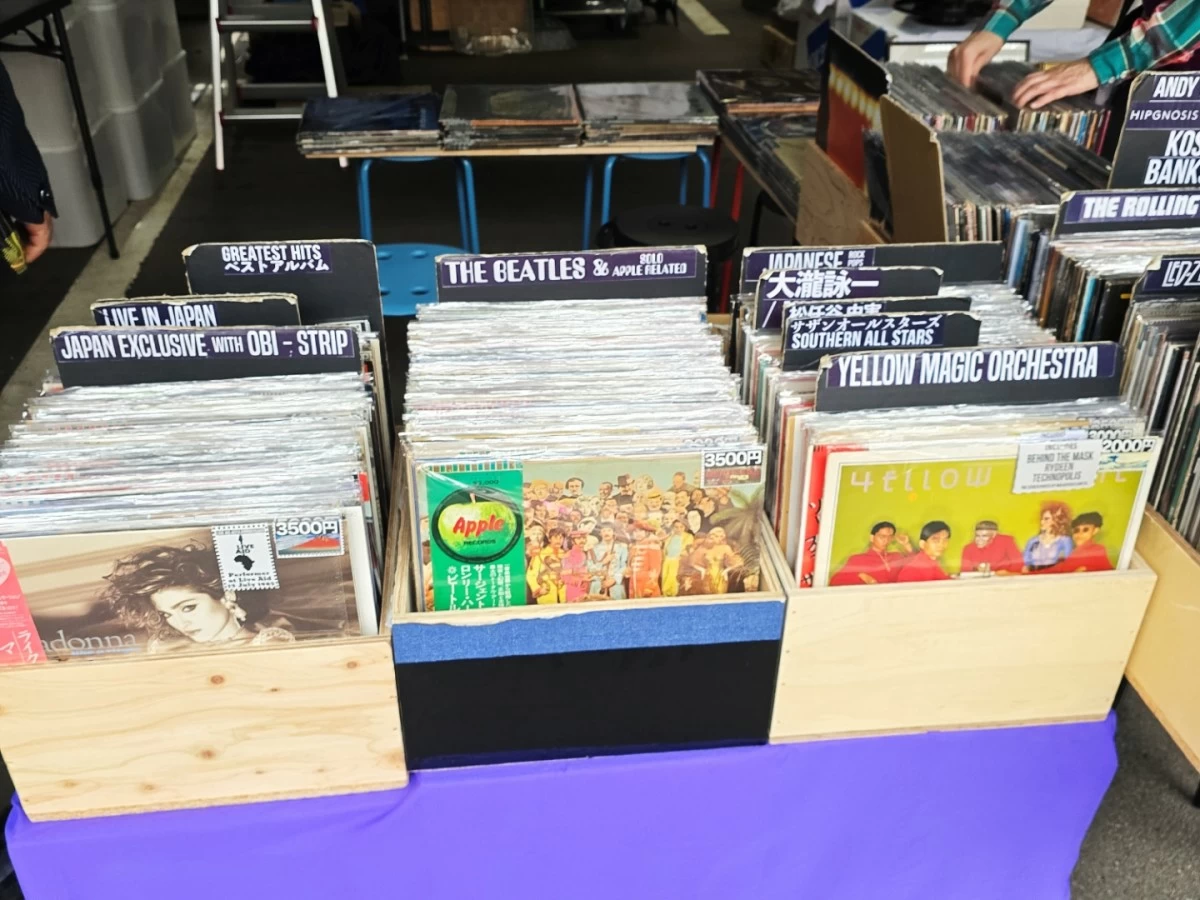
The pop culture sections were interesting as well. Vinyl collectors flip through crates marked Beatles, YMO, Talking Heads, Fleetwood Mac, and Madonna. Nearby, a seller displays boxed toys, including an original POPY Voltes V set selling for around 400,000 yen (approximately ₱152,000 for a toy from the late 70s). It was the kind of rarity you stop to admire before moving on. Another vendor showcased collectible watches, including an exclusive 1990s ASAHI Beer Company Casio CMD-10 infrared remote watch priced at about 750 USD (₱44,236).
I left with smaller but meaningful finds. Four 1.5-inch cars priced at around ₱35 each: a Mazda Cosmo Sport, a BMW 2002, an Initial D Red Suns Mazda FC3S RX-7, and a first-generation Toyota Carina. I also picked up a 2003 special-edition RX-7 magazine and a still-boxed Tomica Limited 1972 Japanese GP set featuring a Mazda Savanna RX-3 and a Nissan KPGC110 Hakosuka Skyline.
One moment that stayed with me had little to do with the items. I approached a stall managed by a seller who was clearly not Japanese. While helping customers, he spoke English with a somewhat French accent. I said hello, and when he confirmed I was Filipino, he surprised me with a casual “Kamusta ka?”
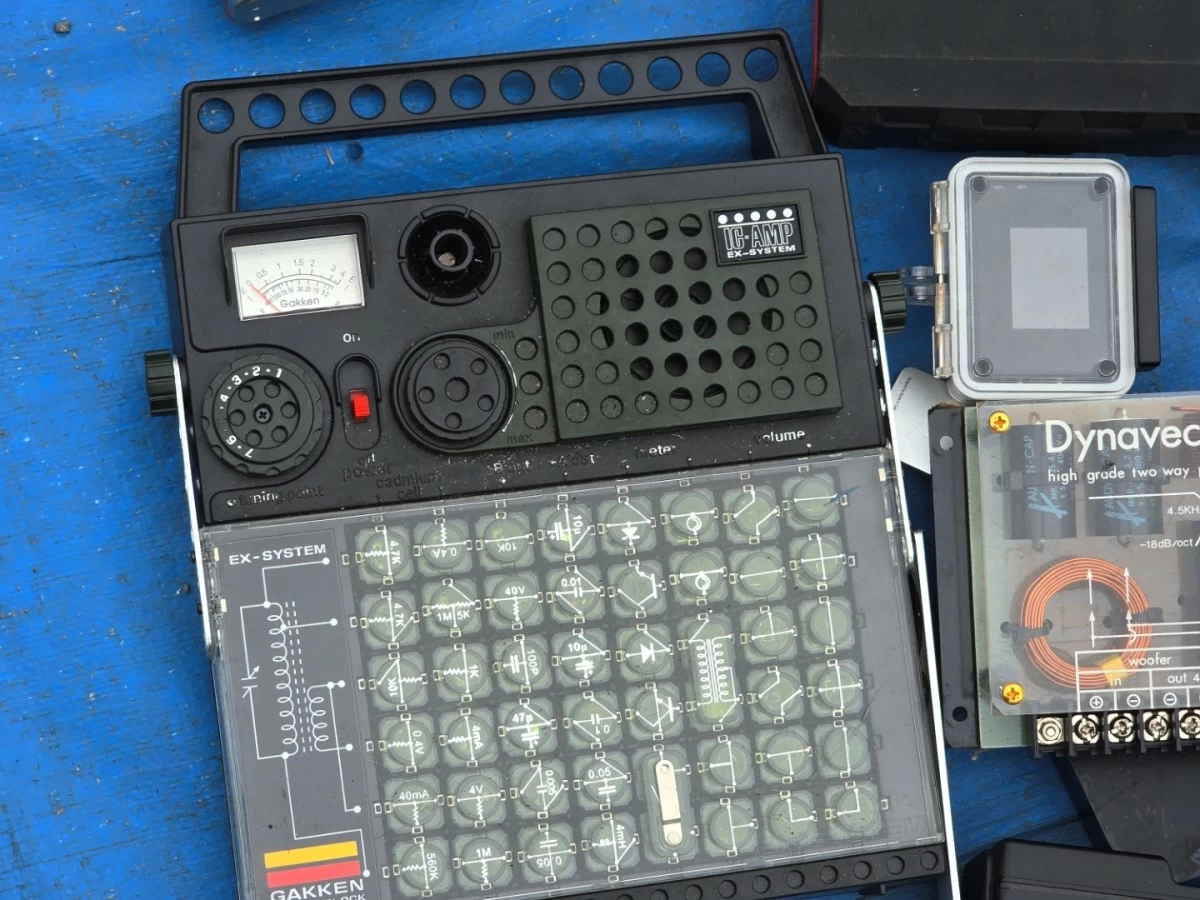
A 1970s Gakken electronics kit shows Japan's early dominance in electronics education.
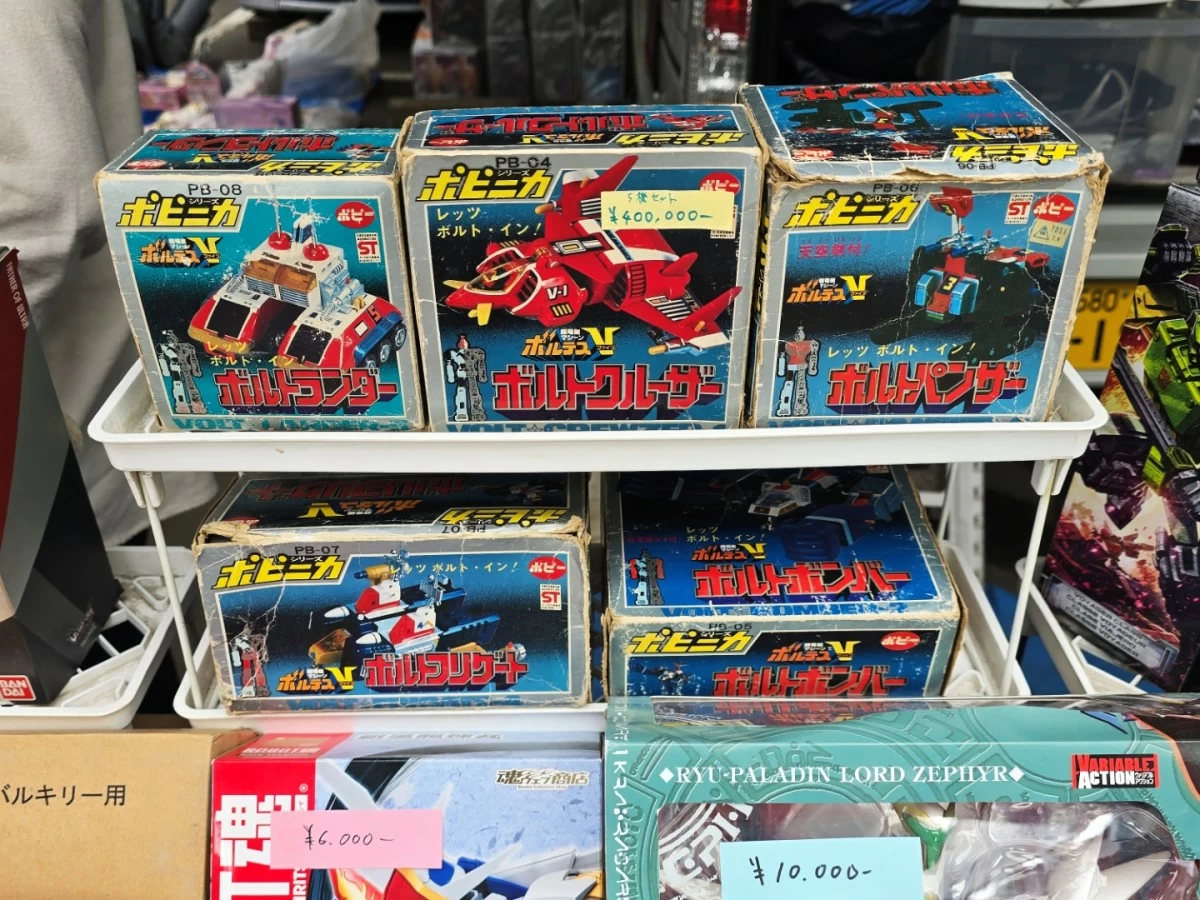
A late-70s POPY Voltes V set selling for around ₱152,000.
His name was Sai, half-Iranian and half-American, living in Japan for longer than he could remember, but having moved around in many other countries, France being one of them. He runs an art gallery in Tokyo during the week and has been doing the flea market for 10 years simply because he enjoys it. His wares were a mix of textiles, old watches, and Japanese pottery.
Talking to him, even briefly, grounded the place in a personal way. It showed how the market works not only as a recycling ecosystem, but also as a community shaped by the people who choose to spend their weekends here. Objects move from person to person, and with them, the stories.
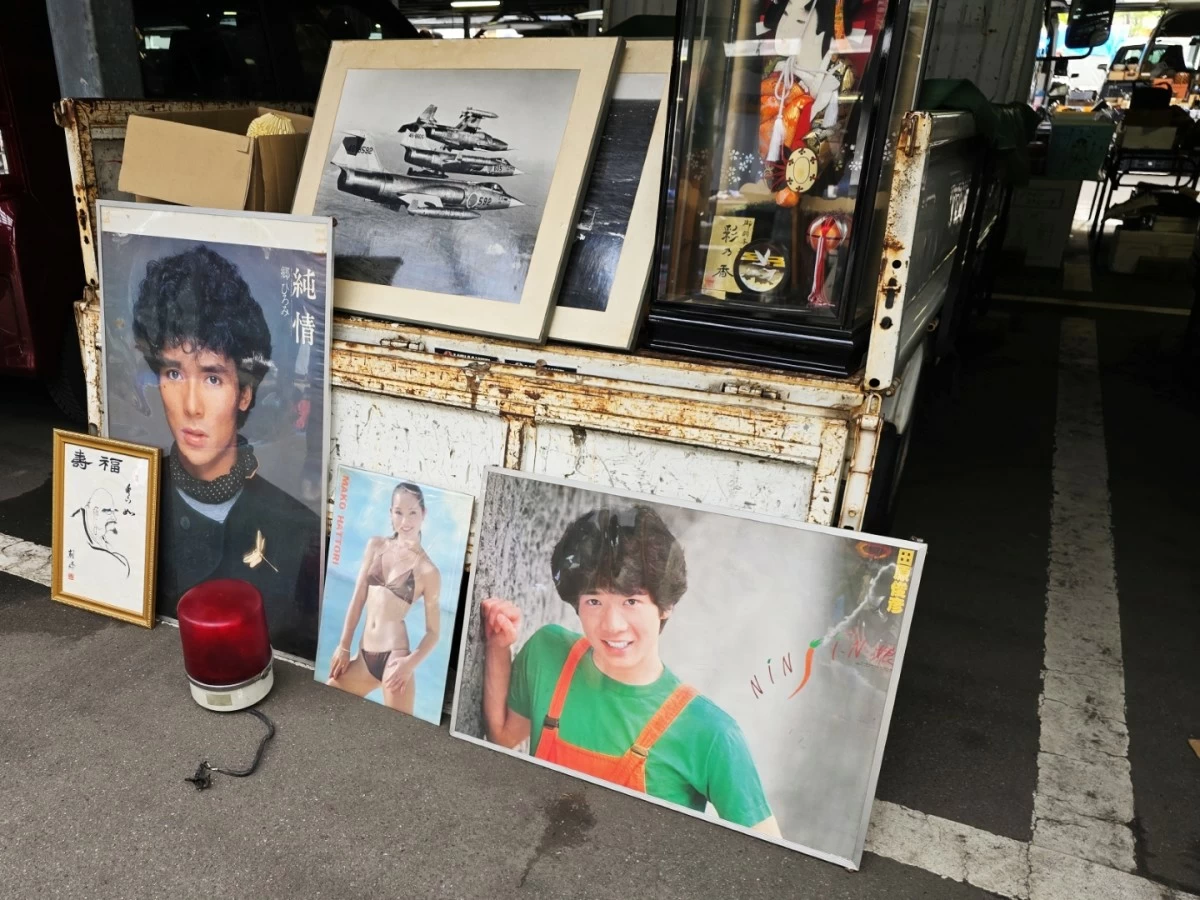
By the time I left, I understood why the flea market felt different from the parts of Tokyo most visitors know. The city is often framed by its commercial districts, where every corner is an invitation to buy something new. Oi offers the opposite energy. It is a space where the city’s relationship with its past becomes visible, where things are not discarded lightly but are instead given a chance to be rediscovered.
In the middle of that quiet exchange, surrounded by old items and the voices of people who have made this their weekend routine, I felt connected to a side of Tokyo that rarely makes it into brochures. In its own way, the market reflects an approach similar to Kintsugi, where something old is not erased or hidden but allowed to move forward with its history and defects visible. Objects here are not simply resold. They are carried into new hands with their imperfections intact, giving them a place in someone else’s life rather than being left behind.