






Manila Bulletin
 Business
Trade & Industry
US grants tariff exemptions for over $1-billion Philippine farm exports
Business
Trade & Industry
US grants tariff exemptions for over $1-billion Philippine farm exports
Business
Trade & Industry
US grants tariff exemptions for over $1-billion Philippine farm exports
US grants tariff exemptions for over $1-billion Philippine farm exports
Published Nov 18, 2025 06:34 pm


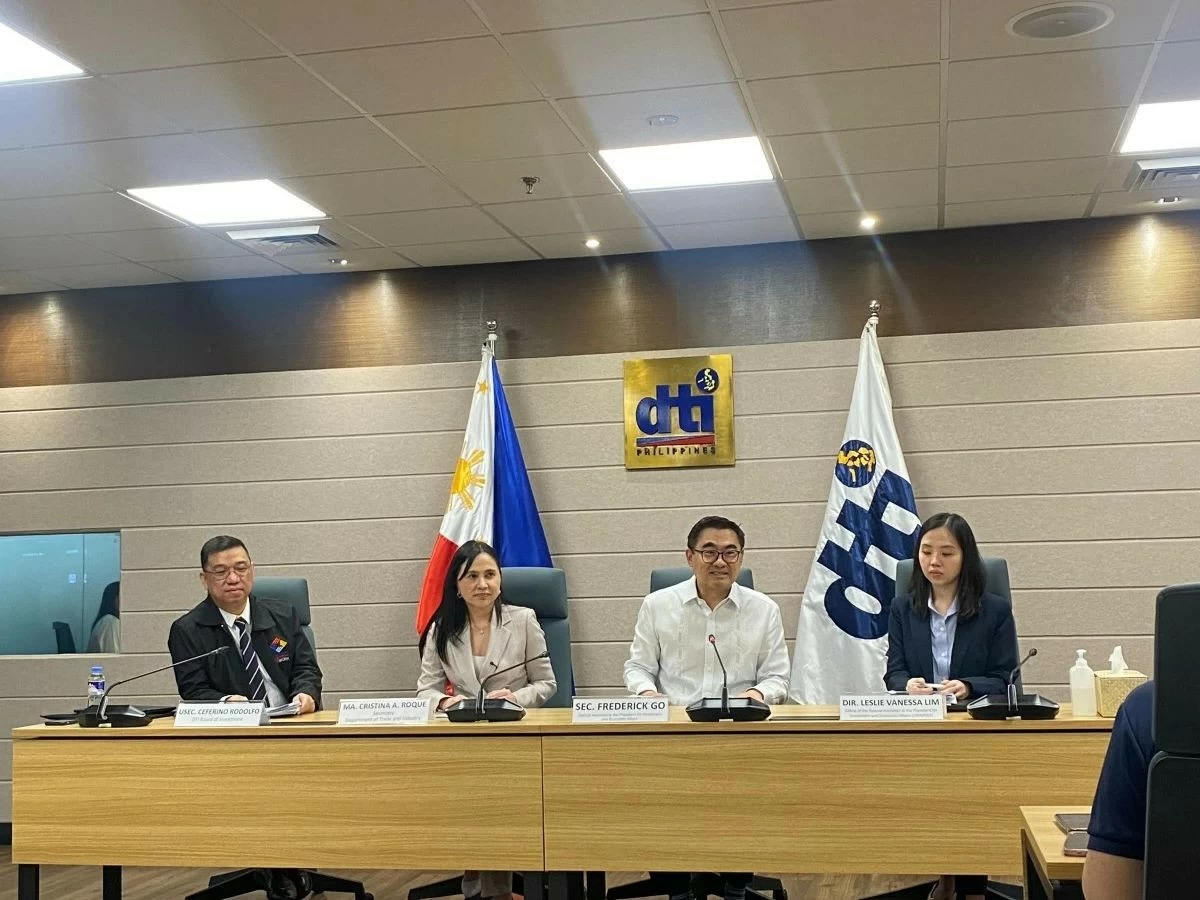
Despite a 19-percent United States (US) tariff on Philippine goods, over $1-billion worth of agricultural export products have been granted exemptions, giving a much-needed boost to local farmers.
“Based on the US data, the exempted agricultural products amount to over $1 billion or $1.03 billion–so it’s a very significant export number,” outgoing Special Assistant to the President for Investment and Economic Affairs (SAPIEA) and newly appointed Department of Finance (DOF) Secretary Frederick D. Go told a press conference on Tuesday, Nov. 18.
“It’s a $1-billion worth of exports that’s exempted from the receipt of tariffs. I think it’s a good number. Let’s try to take it. We need the good news. This is good for the country. It’s good for our farmers. It’s good for the agricultural sector. Let’s support,” he added.
Among the products exempted from US tariffs are coconut (copra) oil, both crude and other than crude—the country’s top agricultural export to the US. Other exempted items include fruit juices, processed pineapples, desiccated coconuts, prepared or preserved coconuts, bananas (other than pulp), dried guavas, mangoes, mangosteen, frozen tuna fillets, rice wafer products, and various confectionery products.
Coconuts make up the bulk of shipments, accounting for about 60 percent of the $1-billion export value, followed by coconut water and pineapples.
Go emphasized that while this tariff exemption is expected to boost the local agricultural sector, its effects will not be immediate. He noted that agriculture, by nature, requires longer planning, careful logistics, and time to yield results.
For investment, he added that “news like this is what investors are looking for–good news like this to encourage them to make significant investments in the agricultural sector.”
Department of Trade and Industry (DTI) Secretary Cristina Roque highlighted that last Friday, Nov. 14, US President Donald Trump signed an executive order (EO) granting additional exemptions from US reciprocal tariffs, specifically covering agricultural products that are not locally produced in the US.
“This decision to expand tariff exemptions for a wide range of key Philippine agriculture products provides important relief for our exporters and reinforces the strength of our trade relationship,” she added.
Roque expressed satisfaction over the latest Trump EO, noting that it now exempts most of the country’s agricultural exports to the US from reciprocal tariffs.
She added that the exempted products generated over $1 billion in export value in 2024 and are a lifeline for many communities across the Philippines, highlighting that the agricultural sector supports thousands of Filipino farmers, micro, small, and medium enterprises (MSMEs), and rural workers. She added that Trump’s EO provides not only immediate relief but also renewed confidence and stability.
“By keeping these products competitive in the US market, the exemption helps protect livelihoods, preserve jobs across our agricultural value chains, and create opportunities for communities that rely heavily on exports for income and growth,” Roque said.
Roque highlighted that this development builds on previous exemptions granted to semiconductor exports, which account for nearly 25 percent of the country’s shipments to the US, valued at around $2.5 billion to $3 billion each year.
She added that while engagement with the US continues, the recent development reflects constructive dialogue and underscores the strong partnership and ongoing confidence in the Philippines’ economic ties with the US.
Roque emphasized that the bilateral partnership is growing stronger, particularly in semiconductors, electronics, and other strategic goods. “This cooperation strengthens our relationship with the US and contributes to a stronger, more prepared region in the face of global challenges,” she added.
(Ricardo M. Austria)