

ADVERTISEMENT

Remittances top $3 billion in September as holiday season kicks off

Published Nov 17, 2025 01:56 pm

At A Glance

  • Cash sent home by overseas Filipinos rebounded to $3.12 billion in September, emerging as the second-largest remittances this year, trailing July's peak, driven by a surge in inflows on the back of the holiday season kick-off.
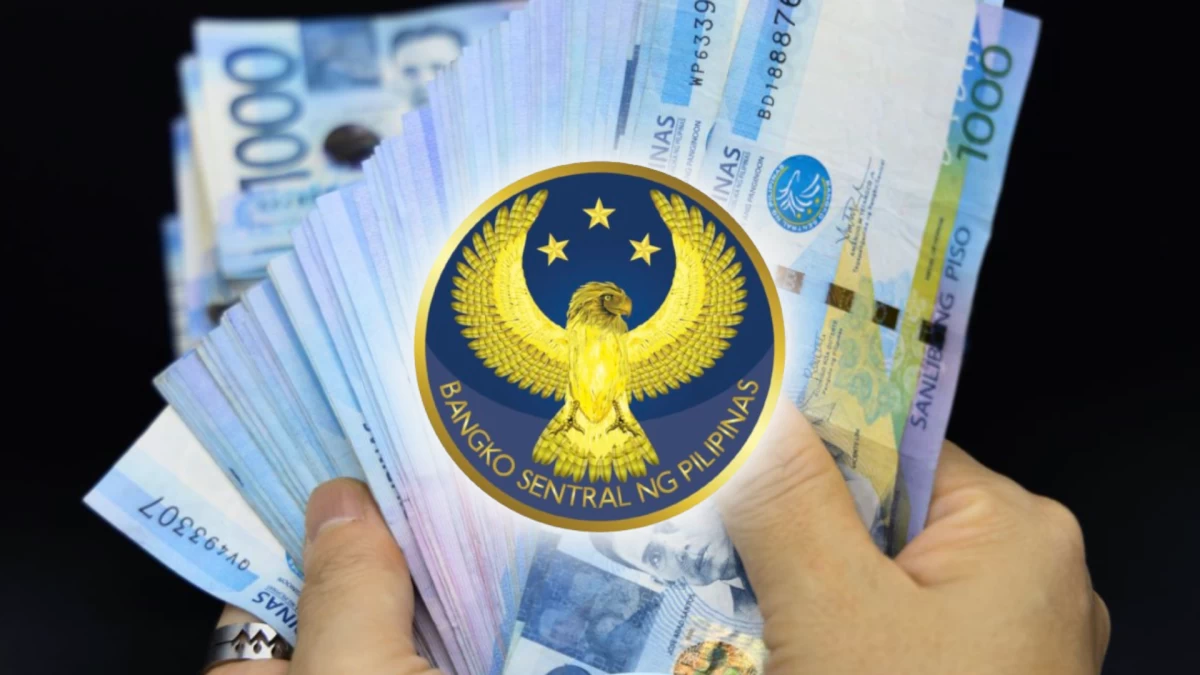
Cash sent home by Filipinos working and living abroad rebounded to $3.12 billion in September, emerging as the second-largest monthly remittances so far this year, just trailing July’s peak, driven by a surge in inflows on the back of the holiday season kick-off.
The latest Bangko Sentral ng Pilipinas (BSP) data released on Monday, Nov. 17, showed overseas Filipinos’ (OFs) total cash remittances in September were 3.7-percent higher than the $3.01 billion recorded in September last year. It also posted the fastest monthly growth in three months, matching June’s rate.
As of end-September, cumulative cash remittances increased by 3.2 percent to $26.03 billion from $25.23 billion in the same period last year. Notably, the year-to-date remittances also emerged as the largest in year-to-date figures since 2022.
This is equivalent to 73.3 percent of the central bank’s full-year remittance forecast of $35.5 billion this year.
As of the third quarter of 2025, the BSP projected cash remittances to expand by three percent this year from $34.5 billion last year. It also forecasts remittances to grow by three percent to $36.6 billion next year. These projections reflect a rosier outlook for remittances, a major source of United States (US) dollars for the country.
At end-September, cash remittances were predominantly from the US, accounting for 40.4 percent of total; followed by Singapore, 7.1 percent of total; Saudi Arabia, 6.4 percent; Japan, 4.9 percent; and the United Kingdom (UK), 4.8 percent.
Several money transfer centers in countries abroad send money through partner banks, known as correspondent banks, most of which are based in the US, the central bank noted.
It added that remittances sent through money couriers are recorded under the country where their main offices are based—often the US—rather than the actual country of origin.
“Therefore, the US would appear to be the main source of OF remittances because banks attribute the origin of funds to the most immediate source,” the BSP explained.
Higher cash remittances were also a key driver of the increase in personal remittances. These include “cash sent through banks and informal channels, along with remittances in kind.”
Personal remittances increased by a faster 3.8 percent to $3.46 billion in September from $3.34 billion a year earlier.
Year-to-date, personal remittances also climbed by 3.2 percent to $28.97 billion from $28.07 billion a year ago.
“Cash remittances picked up in September as overseas hiring held steady in key sectors and Middle East deployments continued to normalize. Seasonal needs also played a role, with many households preparing for school and holiday expenses,” SM Investments Corp. (SMIC) group economist Robert Dan Roces explained.
Concurring with Roces, Oikonomia Advisory and Research Inc. economist Reinielle Matt Erece said the uptick in remittances was driven by increased transfers to spend during holiday celebrations.
“We may expect overseas Filipino workers (OFWs) to send in their earnings to their families here for the celebrations and gatherings. We may expect the trend to grow stronger during October and December before stabilizing come New Year,” Erece further said.
Roces also said the peso’s easing in September offered only a modest conversion boost—“a dollar did translate to a bit more in peso terms, but this was a small nudge rather than a major driver of the increase.”
A stronger US dollar and lingering political turmoil are expected to still put pressure on the local currency in the near term. As such, Roces said “any foreign exchange (forex)-related lift to remittances could be limited and will not offset broader risks to inflation and sentiment.”
ADVERTISEMENT
.most-popular .layout-ratio{ padding-bottom: 79.13%; } @media (min-width: 768px) and (max-width: 1024px) { .widget-title { font-size: 15px !important; } }

{{ articles_filter_1561_widget.title }}

.most-popular .layout-ratio{ padding-bottom: 79.13%; } @media (min-width: 768px) and (max-width: 1024px) { .widget-title { font-size: 15px !important; } }

{{ articles_filter_1562_widget.title }}

.most-popular .layout-ratio{ padding-bottom: 79.13%; } @media (min-width: 768px) and (max-width: 1024px) { .widget-title { font-size: 15px !important; } }

{{ articles_filter_1563_widget.title }}

{{ articles_filter_1564_widget.title }}

.mb-article-details { position: relative; } .mb-article-details .article-body-preview, .mb-article-details .article-body-summary{ font-size: 17px; line-height: 30px; font-family: "Libre Caslon Text", serif; color: #000; } .mb-article-details .article-body-preview iframe , .mb-article-details .article-body-summary iframe{ width: 100%; margin: auto; } .read-more-background { background: linear-gradient(180deg, color(display-p3 1.000 1.000 1.000 / 0) 13.75%, color(display-p3 1.000 1.000 1.000 / 0.8) 30.79%, color(display-p3 1.000 1.000 1.000) 72.5%); position: absolute; height: 200px; width: 100%; bottom: 0; display: flex; justify-content: center; align-items: center; padding: 0; } .read-more-background a{ color: #000; } .read-more-btn { padding: 17px 45px; font-family: Inter; font-weight: 700; font-size: 18px; line-height: 16px; text-align: center; vertical-align: middle; border: 1px solid black; background-color: white; } .hidden { display: none; }
function initializeAllSwipers() { // Get all hidden inputs with cms_article_id document.querySelectorAll('[id^="cms_article_id_"]').forEach(function (input) { const cmsArticleId = input.value; const articleSelector = '#article-' + cmsArticleId + ' .body_images'; const swiperElement = document.querySelector(articleSelector); if (swiperElement && !swiperElement.classList.contains('swiper-initialized')) { new Swiper(articleSelector, { loop: true, pagination: false, navigation: { nextEl: '#article-' + cmsArticleId + ' .swiper-button-next', prevEl: '#article-' + cmsArticleId + ' .swiper-button-prev', }, }); } }); } setTimeout(initializeAllSwipers, 3000); const intersectionObserver = new IntersectionObserver( (entries) => { entries.forEach((entry) => { if (entry.isIntersecting) { const newUrl = entry.target.getAttribute("data-url"); if (newUrl) { history.pushState(null, null, newUrl); let article = entry.target; // Extract metadata const author = article.querySelector('.author-section').textContent.replace('By', '').trim(); const section = article.querySelector('.section-info ').textContent.replace(' ', ' '); const title = article.querySelector('.article-title h1').textContent; // Parse URL for Chartbeat path format const parsedUrl = new URL(newUrl, window.location.origin); const cleanUrl = parsedUrl.host + parsedUrl.pathname; // Update Chartbeat configuration if (typeof window._sf_async_config !== 'undefined') { window._sf_async_config.path = cleanUrl; window._sf_async_config.sections = section; window._sf_async_config.authors = author; } // Track virtual page view with Chartbeat if (typeof pSUPERFLY !== 'undefined' && typeof pSUPERFLY.virtualPage === 'function') { try { pSUPERFLY.virtualPage({ path: cleanUrl, title: title, sections: section, authors: author }); } catch (error) { console.error('ping error', error); } } // Optional: Update document title if (title && title !== document.title) { document.title = title; } } } }); }, { threshold: 0.1 } ); function showArticleBody(button) { const article = button.closest("article"); const summary = article.querySelector(".article-body-summary"); const body = article.querySelector(".article-body-preview"); const readMoreSection = article.querySelector(".read-more-background"); // Hide summary and read-more section summary.style.display = "none"; readMoreSection.style.display = "none"; // Show the full article body body.classList.remove("hidden"); } document.addEventListener("DOMContentLoaded", () => { let loadCount = 0; // Track how many times articles are loaded const offset = [1, 2, 3, 4, 5, 6, 7, 8, 9, 10]; // Offset values const currentUrl = window.location.pathname.substring(1); let isLoading = false; // Prevent multiple calls if (!currentUrl) { console.log("Current URL is invalid."); return; } const sentinel = document.getElementById("load-more-sentinel"); if (!sentinel) { console.log("Sentinel element not found."); return; } function isSentinelVisible() { const rect = sentinel.getBoundingClientRect(); return ( rect.top < window.innerHeight && rect.bottom >= 0 ); } function onScroll() { if (isLoading) return; if (isSentinelVisible()) { if (loadCount >= offset.length) { console.log("Maximum load attempts reached."); window.removeEventListener("scroll", onScroll); return; } isLoading = true; const currentOffset = offset[loadCount]; window.loadMoreItems().then(() => { let article = document.querySelector('#widget_1690 > div:nth-last-of-type(2) article'); intersectionObserver.observe(article) loadCount++; }).catch(error => { console.error("Error loading more items:", error); }).finally(() => { isLoading = false; }); } } window.addEventListener("scroll", onScroll); });

Sign up by email to receive news.