






Manila Bulletin
 Business
The Stock Market
PLDT eyes REIT for $1-billion data centers, calling AI asset 'painful' to sell
Business
The Stock Market
PLDT eyes REIT for $1-billion data centers, calling AI asset 'painful' to sell
Business
The Stock Market
PLDT eyes REIT for $1-billion data centers, calling AI asset 'painful' to sell
PLDT eyes REIT for $1-billion data centers, calling AI asset 'painful' to sell
Published Nov 17, 2025 12:00 am
|
Updated Nov 15, 2025 01:15 pm


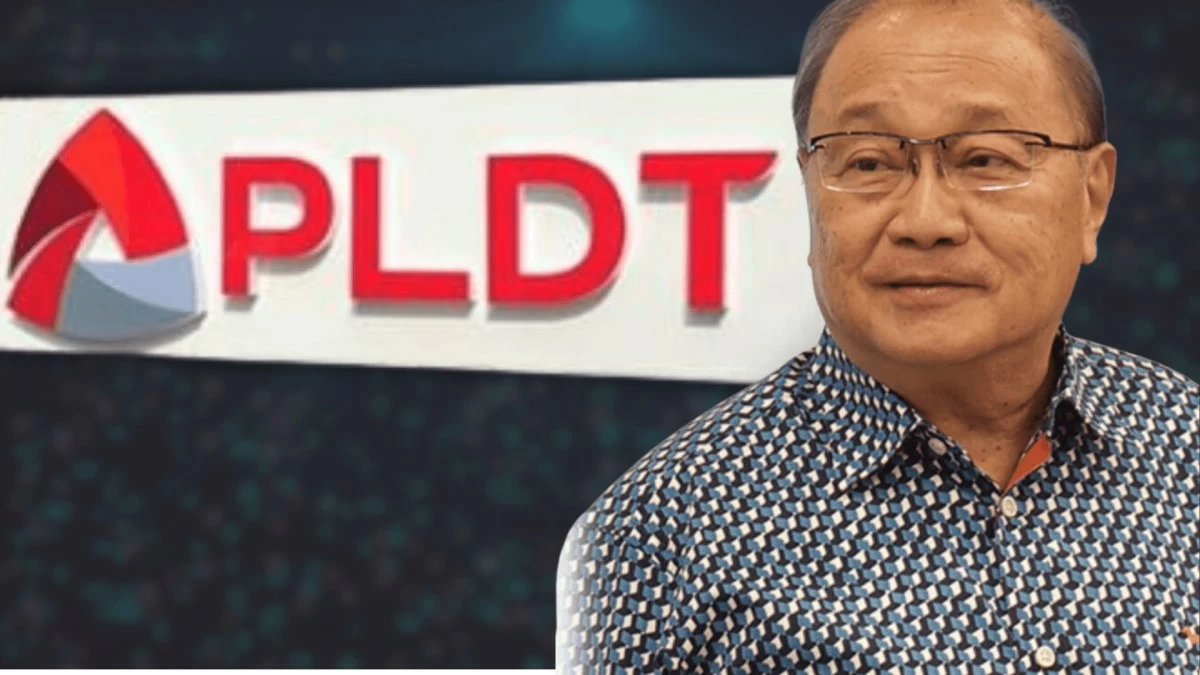
PLDT Inc. Chairman, President and CEO Manuel V. Pangilinan
Telecommunications firm PLDT Inc. is considering listing a real estate investment trust (REIT) for its data center business, alongside the potential sale of a minority stake, as it seeks to raise fresh capital and reduce its substantial debt load.
PLDT Chairman and Chief Executive Officer Manuel V. Pangilinan said these two options are the only ones the company is currently exploring for the data center unit, which he valued at over $1 billion.
“Either look for a significant minority who could help the business bring in the hyperscaler locators into the Philippines,” Pangilinan told reporters last week. “And number two, is to REIT all of the data centers under one bundle.”
Pangilinan had floated these same two options last year, but later opted to offload a 49 percent stake. Negotiations with a foreign company for the minority share subsequently fell through. This followed a decision to shelve earlier plans to sell a stake—including a majority share sought by Japan's Nippon Telegraph and Telephone Corp. (NTT)—as the company shifted its focus to expanding the business.
PLDT, through its subsidiary VITRO Inc., operates 11 data centers with a total capacity of 100 megawatts (MW), making it the largest data center provider in the Philippines. Half of this capacity comes from its hyperscaler data center in Santa Rosa, Laguna, which has a 50 MW capacity and is the country’s first artificial intelligence (AI)-ready facility.
VITRO is planning to build additional data centers, with the next facility expected to have a capacity of up to 100 MW. Pangilinan, however, noted that the company will not wait for these expansion efforts, stating that the current portfolio is substantial enough for a REIT listing.
REITs are firms that own income-generating real estate assets, providing investors with returns derived from the rental income of the underlying assets.
Pangilinan admitted that a REIT listing or selling a portion of VITRO is “painful,” as the unit is “probably the most attractive piece of business now for PLDT.”
“Painful, because the future is AI (artificial intelligence). And the focal point of AI are your data centers, your ability to process data, curate data, on a bigger scale, a faster scale,” he added.
Nevertheless, generating fresh capital is key to managing the company’s finances. PLDT’s debt stood at ₱297.54 billion as of September.
“I think we're in for tougher times ahead and it's best that we create some liquidity for PLDT to reduce [debt]. What we don't want to see is a credit downgrade for PLDT,” Pangilinan said.
Global debt watcher Moody's Ratings previously retained PLDT’s Baa2 rating and stable outlook, citing the company’s telco market dominance and strong financial standing. However, Moody's flagged that PLDT’s policy of high shareholder returns and high capital expenditure (capex) would likely strain its free cash flow.
PLDT achieved positive free cash flow by the end of September, the first time since 2018, coinciding with a drop in its capex to ₱43 billion compared to ₱52.3 billion the previous year. The company has since decreased its full-year capex guidance to around ₱60 billion from an initial range of ₱68 billion to ₱73 billion.
To further manage its debt, PLDT is also planning to sell more than 200 idle assets, including former offices. PLDT Chief Financial Officer Danny Yu declined to disclose the monetary value of these properties.