ADVERTISEMENT

This homegrown brand brings Filipino weaving heritage to Paris

Published Nov 16, 2025 10:37 pm
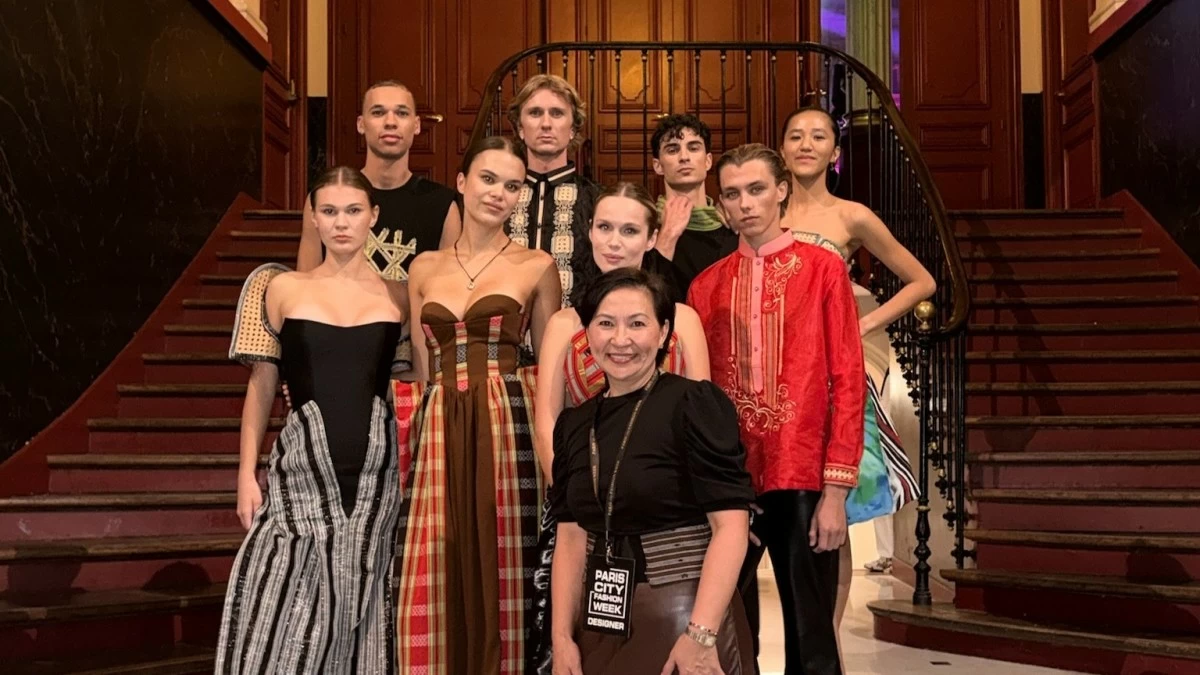
On one of fashion’s most prestigious stages, a proudly Filipino brand stood out for its authenticity, artistry, and cultural heart. Tapis and Baag, founded by designer and cultural advocate Ginalyn Brown-Tayag, made waves at Paris Fashion Week 2025, bringing the timeless beauty of Inabel fabric fused with Solihiya weaves from the Cordilleras to the global runway.

Weaving heritage, wearing identity
The story of Tapis and Baag began in 2023, when Ginalyn was moved to act after seeing cheaply-made fabrics imitating indigenous patterns. “It disturbed me deeply,” she recalls. “That moment became a turning point. I wanted to create a platform that would promote genuine handmade Inabel, as well as celebrate the weavers behind it.”
Her connection to weaving runs deep. Growing up in Baguio City in the Philippines, she was surrounded by the rhythmic hum of looms and the artistry of women creating beauty from thread. “Those moments became the foundation of my creative vision,” she shares. “Tapis and Baag is, in many ways, a return to my roots—a tribute to generations who came before me and a promise to carry their craft forward.”
A global stage for Filipino artistry
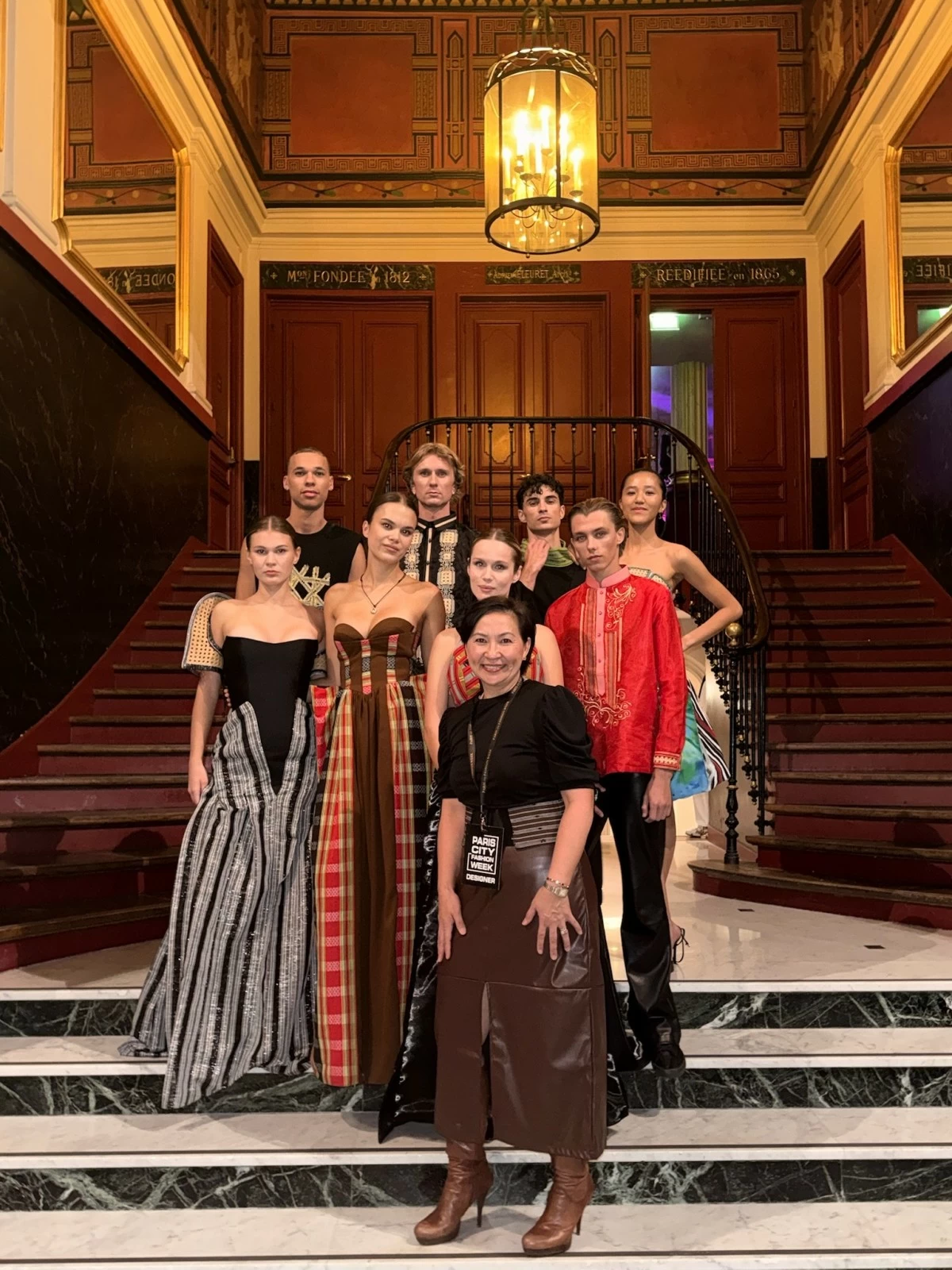
For Paris Fashion Week 2025, Tapis and Baag unveiled a collection that blended elegance and movement with the strength and soul of Inabel. The pieces were lighter, more fluid, and refined, yet each thread carried a story of Filipino resilience and creativity.
“Standing side by side with some of the world’s most celebrated designers was humbling and empowering,” says Ginalyn. “To see our weaves on that runway, to hear the applause, and to feel the pride of our culture being recognized, it was an unforgettable moment of Pinay Pride.”
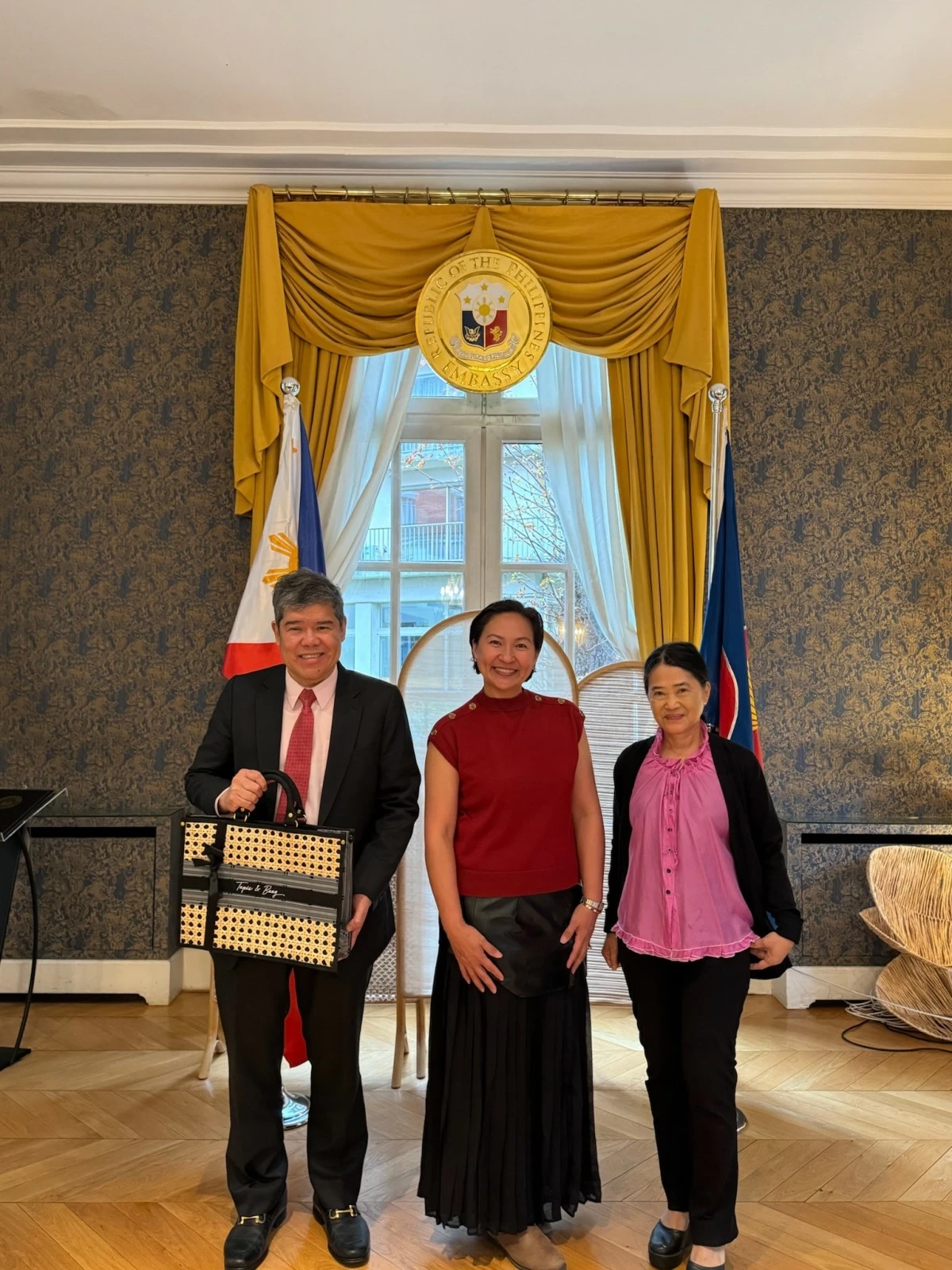
Among the brand’s most cherished memories was receiving support from the Philippine Embassy in France. “Their presence and encouragement meant so much to us,” she shares. “It was a true symbol of unity, pride, and representation for our country.”
Championing the hands behind the threads
Beyond fashion, Tapis and Baag is deeply rooted in advocacy. Each piece is created in close collaboration with local weavers, artists, and artisans across the country.
The brand also supports Benguet State University in the Philippines, donating a loom and helping weaving students showcase their creations on international runways, including LA Fashion Week.
“Our mission is to protect and promote Filipino craftsmanship,” Ginalyn muses. “Every piece we create carries the story of our weavers. Every runway we step on is a platform to make sure their artistry is seen, valued, and celebrated.”
Beyond Paris: Continuing the mission
Balancing heritage and modern design is key to the brand’s success. Each Inabel fabric is authentically handwoven, but the silhouettes and styling are reimagined for today’s global audience. “We want people to see that these fabrics are more than fashion; they carry history, culture, and identity,” she explains.
With Paris behind it, Tapis and Baag continues its global journey, next appearing at LA Fashion Week to close the 2025 season. Yet, amid growing international recognition, the brand remains grounded in its purpose: to uplift communities and preserve Filipino heritage.
“What I discovered is that the world values authenticity,” says Ginalyn. “When you create from your roots, your work will always stand out.”
For her, fashion is more than fabric—it is a story of connection. “Wearing your heritage means carrying your story with pride,” she reflects. “Every weave and pattern has meaning, and when you wear it, you’re keeping that history alive. That’s the true beauty of Filipino fashion.”
Inabel is a traditional handwoven textile from Northern Luzon in the Philippines, crafted from cotton yarns often dyed with natural plant-based pigments and woven on wooden looms using time-honored techniques passed down through generations.

Related Tags

fashion and beauty Paris Tapis and Baag
ADVERTISEMENT
.most-popular .layout-ratio{ padding-bottom: 79.13%; } @media (min-width: 768px) and (max-width: 1024px) { .widget-title { font-size: 15px !important; } }

{{ articles_filter_1561_widget.title }}

.most-popular .layout-ratio{ padding-bottom: 79.13%; } @media (min-width: 768px) and (max-width: 1024px) { .widget-title { font-size: 15px !important; } }

{{ articles_filter_1562_widget.title }}

.most-popular .layout-ratio{ padding-bottom: 79.13%; } @media (min-width: 768px) and (max-width: 1024px) { .widget-title { font-size: 15px !important; } }

{{ articles_filter_1563_widget.title }}

{{ articles_filter_1564_widget.title }}

.mb-article-details { position: relative; } .mb-article-details .article-body-preview, .mb-article-details .article-body-summary{ font-size: 17px; line-height: 30px; font-family: "Libre Caslon Text", serif; color: #000; } .mb-article-details .article-body-preview iframe , .mb-article-details .article-body-summary iframe{ width: 100%; margin: auto; } .read-more-background { background: linear-gradient(180deg, color(display-p3 1.000 1.000 1.000 / 0) 13.75%, color(display-p3 1.000 1.000 1.000 / 0.8) 30.79%, color(display-p3 1.000 1.000 1.000) 72.5%); position: absolute; height: 200px; width: 100%; bottom: 0; display: flex; justify-content: center; align-items: center; padding: 0; } .read-more-background a{ color: #000; } .read-more-btn { padding: 17px 45px; font-family: Inter; font-weight: 700; font-size: 18px; line-height: 16px; text-align: center; vertical-align: middle; border: 1px solid black; background-color: white; } .hidden { display: none; }
function initializeAllSwipers() { // Get all hidden inputs with cms_article_id document.querySelectorAll('[id^="cms_article_id_"]').forEach(function (input) { const cmsArticleId = input.value; const articleSelector = '#article-' + cmsArticleId + ' .body_images'; const swiperElement = document.querySelector(articleSelector); if (swiperElement && !swiperElement.classList.contains('swiper-initialized')) { new Swiper(articleSelector, { loop: true, pagination: false, navigation: { nextEl: '#article-' + cmsArticleId + ' .swiper-button-next', prevEl: '#article-' + cmsArticleId + ' .swiper-button-prev', }, }); } }); } setTimeout(initializeAllSwipers, 3000); const intersectionObserver = new IntersectionObserver( (entries) => { entries.forEach((entry) => { if (entry.isIntersecting) { const newUrl = entry.target.getAttribute("data-url"); if (newUrl) { history.pushState(null, null, newUrl); let article = entry.target; // Extract metadata const author = article.querySelector('.author-section').textContent.replace('By', '').trim(); const section = article.querySelector('.section-info ').textContent.replace(' ', ' '); const title = article.querySelector('.article-title h1').textContent; // Parse URL for Chartbeat path format const parsedUrl = new URL(newUrl, window.location.origin); const cleanUrl = parsedUrl.host + parsedUrl.pathname; // Update Chartbeat configuration if (typeof window._sf_async_config !== 'undefined') { window._sf_async_config.path = cleanUrl; window._sf_async_config.sections = section; window._sf_async_config.authors = author; } // Track virtual page view with Chartbeat if (typeof pSUPERFLY !== 'undefined' && typeof pSUPERFLY.virtualPage === 'function') { try { pSUPERFLY.virtualPage({ path: cleanUrl, title: title, sections: section, authors: author }); } catch (error) { console.error('ping error', error); } } // Optional: Update document title if (title && title !== document.title) { document.title = title; } } } }); }, { threshold: 0.1 } ); function showArticleBody(button) { const article = button.closest("article"); const summary = article.querySelector(".article-body-summary"); const body = article.querySelector(".article-body-preview"); const readMoreSection = article.querySelector(".read-more-background"); // Hide summary and read-more section summary.style.display = "none"; readMoreSection.style.display = "none"; // Show the full article body body.classList.remove("hidden"); } document.addEventListener("DOMContentLoaded", () => { let loadCount = 0; // Track how many times articles are loaded const offset = [1, 2, 3, 4, 5, 6, 7, 8, 9, 10]; // Offset values const currentUrl = window.location.pathname.substring(1); let isLoading = false; // Prevent multiple calls if (!currentUrl) { console.log("Current URL is invalid."); return; } const sentinel = document.getElementById("load-more-sentinel"); if (!sentinel) { console.log("Sentinel element not found."); return; } function isSentinelVisible() { const rect = sentinel.getBoundingClientRect(); return ( rect.top < window.innerHeight && rect.bottom >= 0 ); } function onScroll() { if (isLoading) return; if (isSentinelVisible()) { if (loadCount >= offset.length) { console.log("Maximum load attempts reached."); window.removeEventListener("scroll", onScroll); return; } isLoading = true; const currentOffset = offset[loadCount]; window.loadMoreItems().then(() => { let article = document.querySelector('#widget_1690 > div:nth-last-of-type(2) article'); intersectionObserver.observe(article) loadCount++; }).catch(error => { console.error("Error loading more items:", error); }).finally(() => { isLoading = false; }); } } window.addEventListener("scroll", onScroll); });

Sign up by email to receive news.