






Manila Bulletin
 Philippines
National
Oceana urges probe into possible negligence over Tañon Strait wastewater spill
Philippines
National
Oceana urges probe into possible negligence over Tañon Strait wastewater spill
Philippines
National
Oceana urges probe into possible negligence over Tañon Strait wastewater spill
Oceana urges probe into possible negligence over Tañon Strait wastewater spill
By Jel Santos
Published Nov 16, 2025 01:12 pm


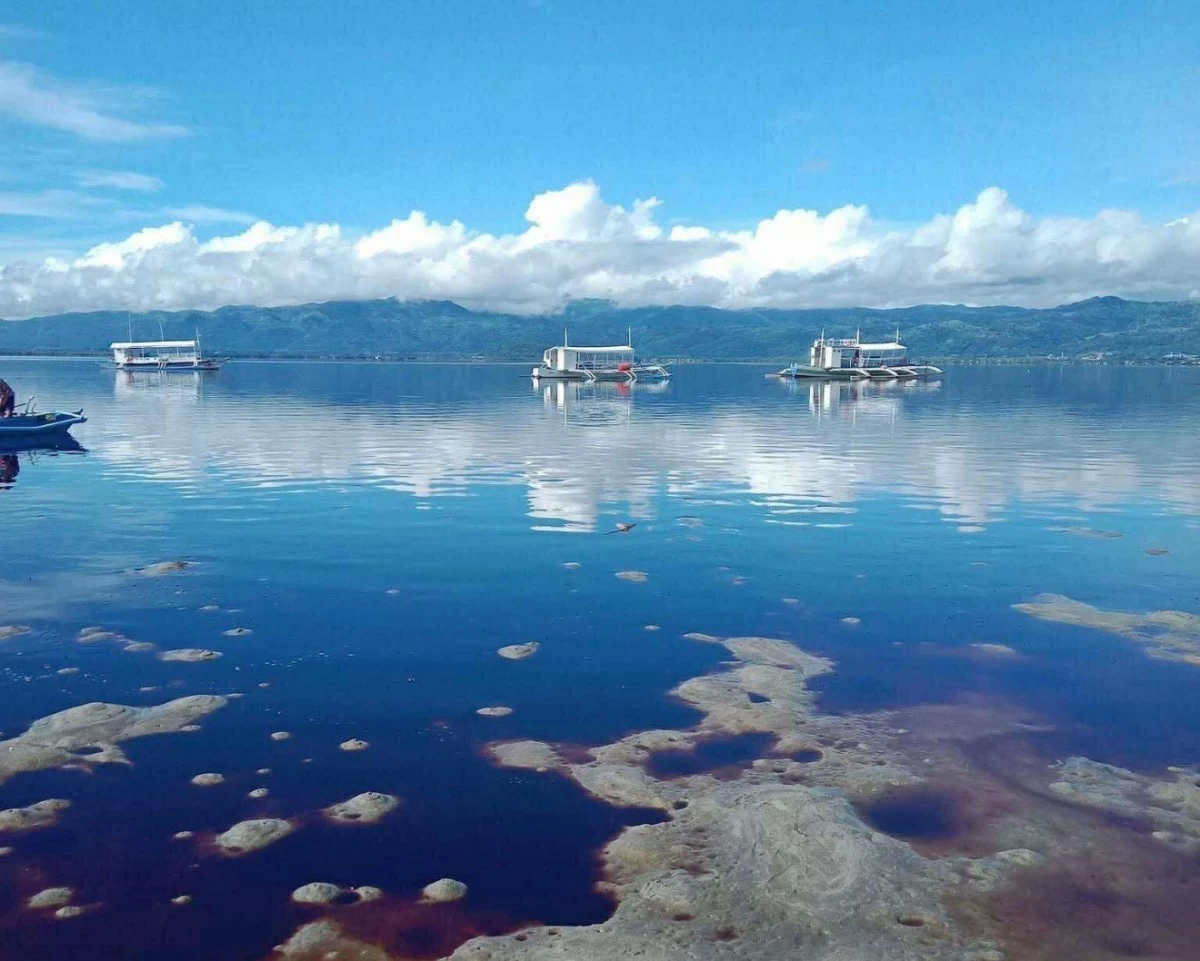
(PHOTO: PAMALAKAYA NEGROS)
International marine conservation group Oceana has urged the government to launch an investigation into the “possible negligence and accountability” of a distillery firm and responsible agencies following a catastrophic wastewater spill that continues to devastate the Tañon Strait Protected Seascape (TSPS).
“This incident strikes on three fronts: environmental collapse, brewing public health emergency, and economic devastation. Fishing bans may be necessary due to the potential long-term contamination caused by the vinasse spill. Even fish that survive initial exposure may carry toxins, posing possible risk to food safety and public health,” Von Hernandez, the vice president of Oceana, said in a statement.
Vinasse, a byproduct of ethanol production, is known for its high organic load and toxicity. It can persist in the water column and sediments, deplete oxygen, and release compounds that can kill marine organisms.
Oceana said the distillery company “bears full responsibility” for what it described as a preventable disaster, citing a similar spill in 2018 which the group said showed “a pattern of negligence that minor fines failed to correct.”
The marine protection group added it had received reports that vinasse leakage and fish kills had already been occurring even before the incident was officially reported on Oct. 24, noting that the Department of Environment and Natural Resources (DENR), the TSPS Protected Area Management Board, and other concerned agencies “should have immediately acted on it.”
Under the Philippine Clean Water Act (Republic Act 9275), entities that discharge pollutants into water bodies may face fines of up to P200,000 per day and possible imprisonment. Gross negligence resulting in contamination may warrant fines of up to P500,000, alongside mandatory containment and cleanup at the polluter’s expense. The amended Philippine Fisheries Code (RA 10654) also imposes administrative fines reaching P500,000, plus an additional P15,000 for every day the violation continues.
Lawyer Rose-Liza Eisma-Osorio, Oceana’s senior director for campaigns and legal and policy, said that under these laws, the distillery firm must fund comprehensive cleanup operations, compensate affected communities for health impacts and lost livelihoods, pay maximum penalties, and implement proper wastewater management protocols.
Operating within a protected seascape under the Expanded National Integrated Protected Areas System (E-NIPAS Act or RA 11038) also carries stricter safeguards and heavier penalties for violations, she added.
Osorio stressed the need for government accountability, saying the DENR should release the distillery firm’s Environmental Compliance Certificate (ECC) and Environmental Impact Statement.
She said several key issues must be clarified, including what safeguards were required under the ECC and why these measures were not enough to prevent such a large-scale disaster.
According to reports, the spill has affected 6,000 hectares and displaced 5,000 fisherfolk across 19 coastal villages. It has also caused an estimated 12 tons of fish kills and forced the suspension of all fishing and tourism activities in the area.
“We’re witnessing the destruction of fishing grounds and spawning habitats that will impact marine and fisheries resources in the country’s largest marine protected area, for years,” Hernandez added.
Oceana explained that, unlike oil spills that float on the surface and can be contained, vinasse mixes easily with water and settles into sediments, making cleanup far more complex.
The group said the acidic industrial waste carries extreme chemical and biological oxygen demand (COD and BOD), and may contain high levels of nitrogen, phosphorus, and potassium that trigger microbial blooms which rapidly deplete oxygen.
As contaminated waters persist, Oceana warned that fish and invertebrates are expected to continue dying.
It added that coral reefs, mangroves, and seagrass beds—critical spawning and nursery habitats—face long-term damage that threatens food security and the livelihoods of communities relying on the Tañon Strait.
Earlier, progressive group Pambansang Lakas ng Kilusang Mamamalakaya ng Pilipinas (Pamalakaya) called on the government to provide economic subsidies, including long-term compensation, to around 3,000 fishers whose livelihoods have been badly affected by the ethanol spill in Bais City, Negros Oriental.
It added that fishers and their families have been suffering the effects of the contamination since the ethanol leaked into North Bais Bay on Oct. 27, adding that most fishing households in Bais City and Manjuyod remain unable to go out to sea.