






Manila Bulletin
 Philippines
National
Bishop urges Marcos to halt large-scale mining in Nueva Vizcaya
Philippines
National
Bishop urges Marcos to halt large-scale mining in Nueva Vizcaya
Philippines
National
Bishop urges Marcos to halt large-scale mining in Nueva Vizcaya
Bishop urges Marcos to halt large-scale mining in Nueva Vizcaya
By Jel Santos
Published Nov 16, 2025 01:32 pm


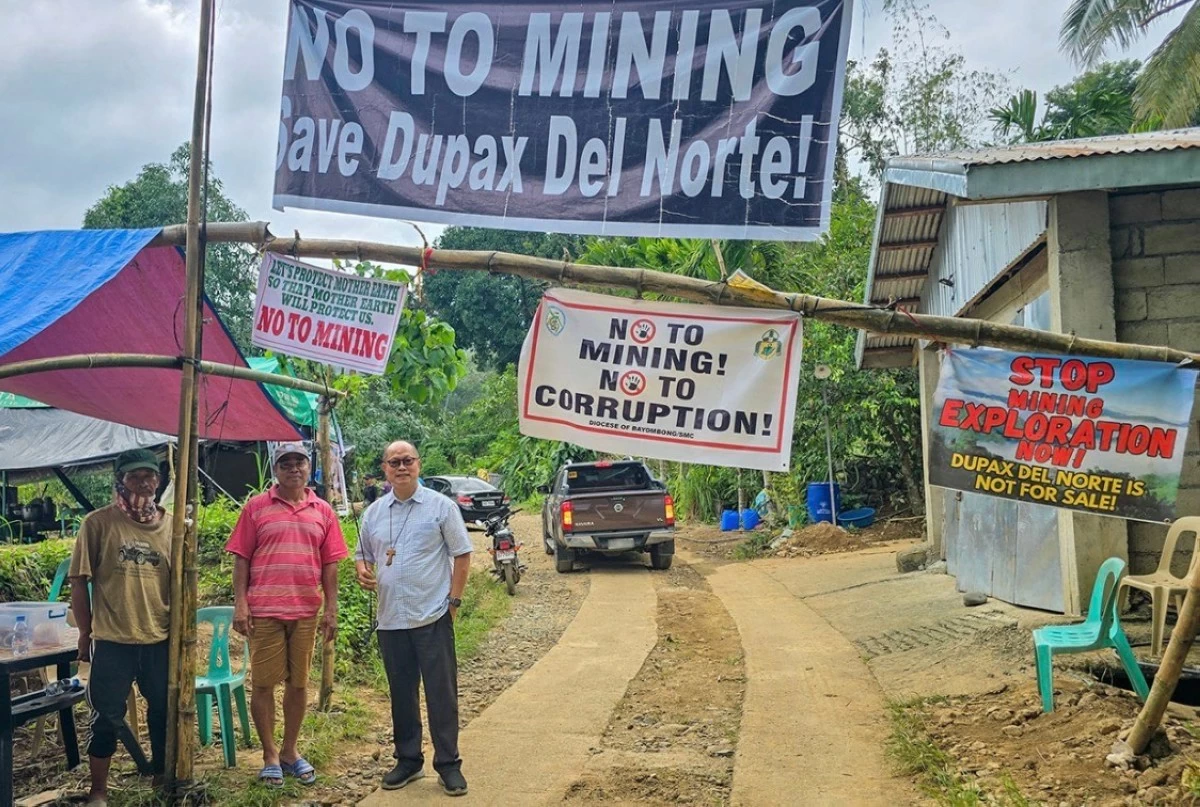
(PHOTO: DIOCESE OF BAYOMBONG)
Warning of worsening ecological damage in Nueva Vizcaya, Bishop Jose Elmer Mangalinao of Bayombong urged President Marcos to stop large-scale mining operations that he said imperil forests, rivers, and the communities that depend on them.
“We are appealing to the president… Let us not give big companies the opportunity to continue destroying Nueva Vizcaya,” Mangalinao said in a video message he delivered on Nov. 14 while visiting a remote Dupax del Norte village, where locals have maintained a barricade to oppose a mining project.
Villagers, according to the bishop, have abandoned work for weeks to guard their land, driven not by financial gain but by their commitment to protect their environment and secure their future.
“There is no question of money. There’s no question of profit. But simply to desire to protect the environment, livelihood, and life,” Mangalinao said.
He warned that at least 14 other mining companies are seeking entry into Nueva Vizcaya, while more than 60 firms have expressed interest in operating across Region 2 — a scale he said could overwhelm communities and natural ecosystems.
As such, Mangalinao underscored the urgency of environmental protection in the wake of recent disasters that have devastated many parts of the country.
“May our hearts and minds awaken to realize we do not need to destroy the environment to survive,” he added.
According to a CBCP News report, the Mines and Geosciences Bureau in August granted Woggle Corp. an exploration permit covering 3,100 hectares in Dupax del Norte, where the company is reportedly targeting gold and copper deposits.
Woggle, an affiliate of British mining firm Metals Exploration Plc., already operates in the province through its subsidiary FCF Minerals, which runs a gold-molybdenum mine, it added.
The Diocese of Bayombong has also expressed concern over expansion plans by Canadian-Australian miner OceanaGold in Kasibu town, saying the renewed interest in large-scale mineral extraction increases pressure on upland communities and watersheds in the province.